
8th-generation 'All New ES' goes on sale in South Korea
First electric sedan starts at 71.6 million won
1.3 million won cheaper than hybrid equivalent
Range of 478 km per charge; efficiency of 6.0 km/kWh
Hybrid fuel economy of 19.4 km/L
Body grows 165 mm; front end fully redesigned
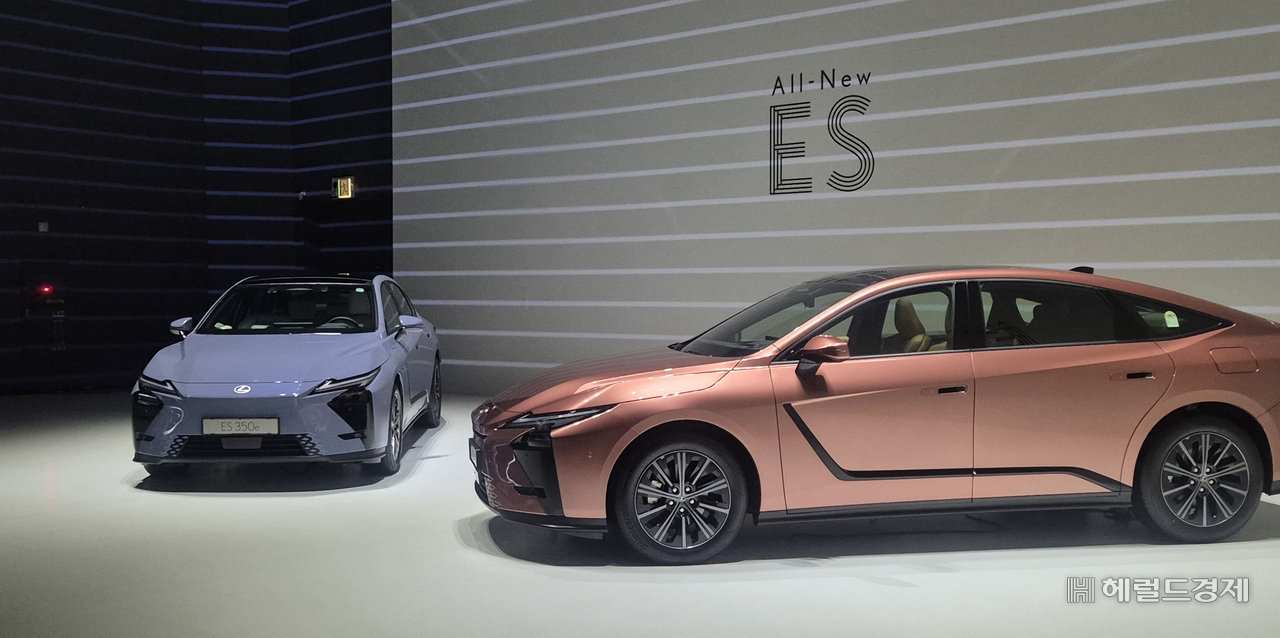
Lexus, which has built its foothold in South Korea's premium sedan market on the strength of its hybrid lineup, is now pushing into the battery electric vehicle segment with its flagship ES model. For the first time in the ES nameplate's history, the brand has launched an electric version — and priced it below the existing hybrid.
Lexus Korea held a media conference Tuesday at Walker Hill Hotel & Resorts in Gwangjin-gu, Seoul, to officially launch the All New ES, the eighth-generation full model change.
The new model is offered across nine trims in total, spanning the all-electric ES 350e and ES 500e as well as the hybrid ES 350h. The lineup reflects Lexus's "multi-pathway" strategy of broadening customer choice based on individual charging circumstances.
The ES has been Lexus's signature sedan since the brand's founding in 1989. It debuted in South Korea in 2001, and the ES 300h, launched in 2012, helped drive the growth of the imported hybrid sedan market here.
"The ES has grown alongside Korean customers over the past 25 years and established itself as the model that defines Lexus," said Lexus Korea President Konyama Manabu. "The All New ES marks a new turning point — built on the trust we have earned — by expanding electrification choices all the way to BEV. It will be the model that shows the new direction Lexus is heading."
The standout feature is the pricing. The entry-level Premium trim of the all-electric ES 350e starts at 71.6 million won ($53,600), which is 1.3 million won less than the same trim of the hybrid ES 350h at 72.9 million won. That is an unusual pricing structure given that electric vehicles typically cost more than comparable hybrids due to battery costs.
The ES 350e ranges from 71.6 million to 83.9 million won, while the high-performance all-wheel-drive ES 500e is priced from 77 million to 84.9 million won. The hybrid ES 350h is priced between 72.9 million and 80.8 million won. The Luxury trim is an exception — the electric version costs 2.4 million won more than its hybrid counterpart.
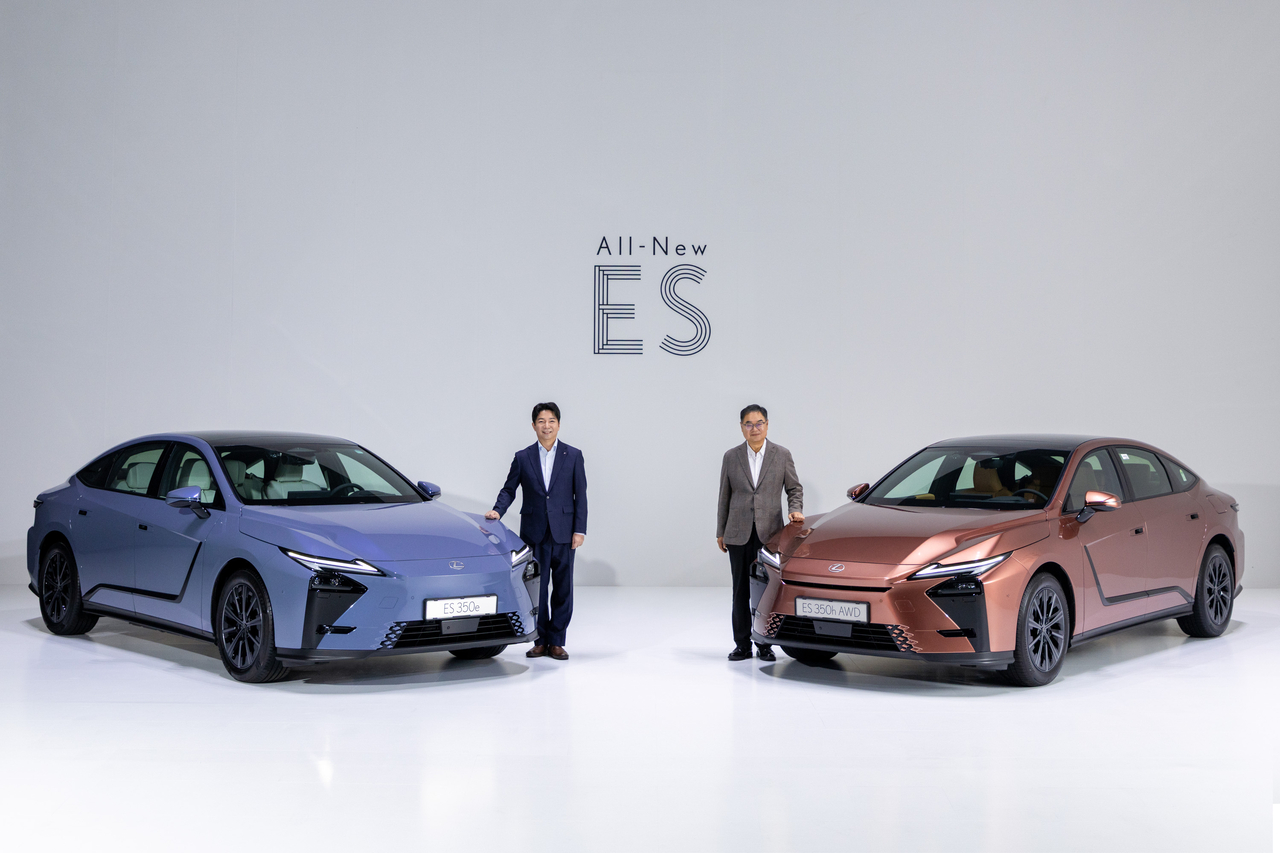
On the decision to price the base electric model below the hybrid, Konyama pointed to the psychological barriers consumers still face when considering an EV purchase. While EV adoption in South Korea is growing, he said, many buyers remain hesitant due to limited experience with charging and day-to-day operation. "We set the price so customers can weigh which option better suits their lifestyle and make their own choice," Konyama said. "We want battery EVs to be seen as just another option in the regular lineup."
The ES 350e is equipped with a 74.69 kWh lithium-ion battery and can travel up to 478 kilometers on a single charge. Combined energy efficiency is 6.0 km/kWh and maximum output is 227 horsepower. It supports DC fast charging at up to 150 kW, and charging from 10 to 80 percent takes approximately 28 minutes.
One potential drawback is the 400V charging architecture, which puts the ES 350e at a relative disadvantage in ultra-fast charging compared with rival EVs that use 800V systems. Lexus International Senior Chief Engineer Chiashi Kohei addressed the point directly. "We could have installed a larger battery and a higher-voltage system, but a heavier system is not necessarily better," he said. The priority, he explained, was striking the right balance among vehicle weight, driving efficiency and ride comfort rather than maximizing charging speed.
The ES 500e places motors at both the front and rear axles for a combined maximum output of 347 horsepower. It uses the electronic all-wheel-drive system "Direct4" and offers a range of 415 to 435 kilometers per charge.
The hybrid powertrain has also been updated. The ES 350h adopts a sixth-generation 2.5-liter hybrid system that has been made more compact and lightweight. Total system output is 247 horsepower and combined fuel economy is 19.4 km/L — strong efficiency figures despite the larger body. An AWD variant has been added as well, applying the electronic all-wheel-drive system "E-Four" to the ES hybrid for the first time.
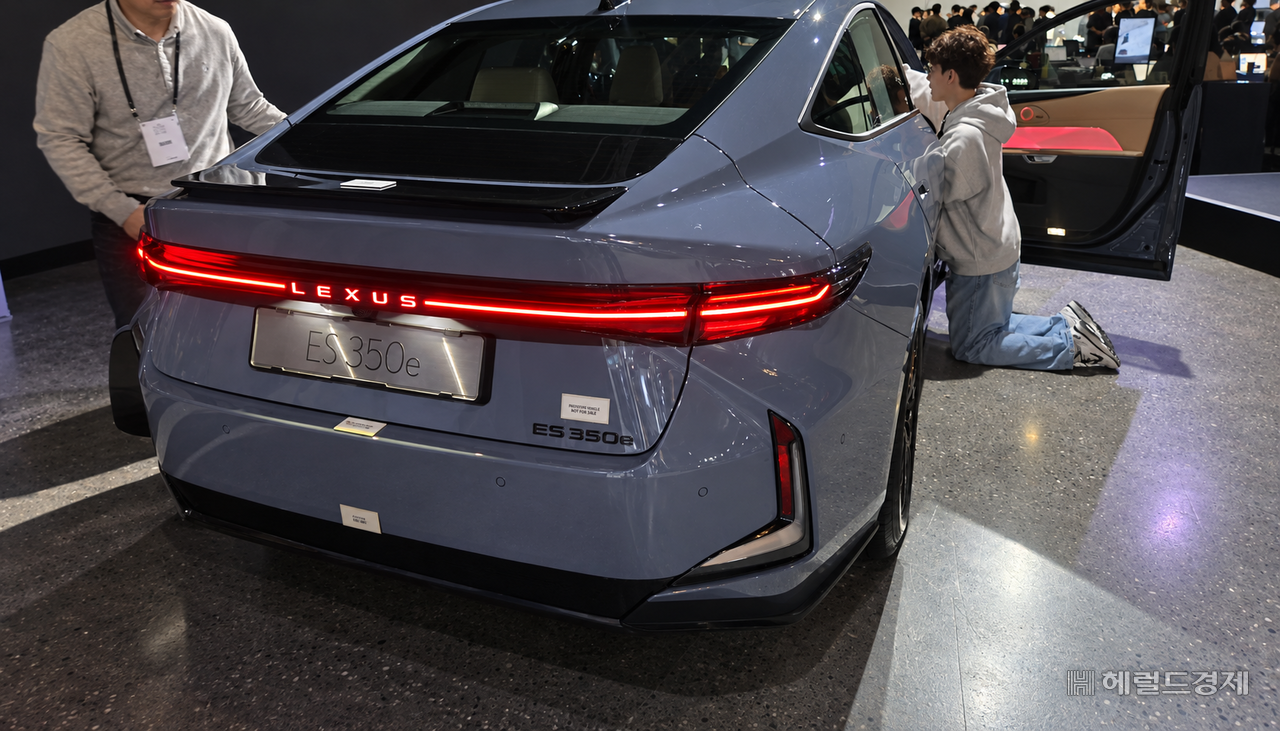
The new ES goes well beyond grafting an electric drivetrain onto an existing platform — it was comprehensively redesigned from the ground up.
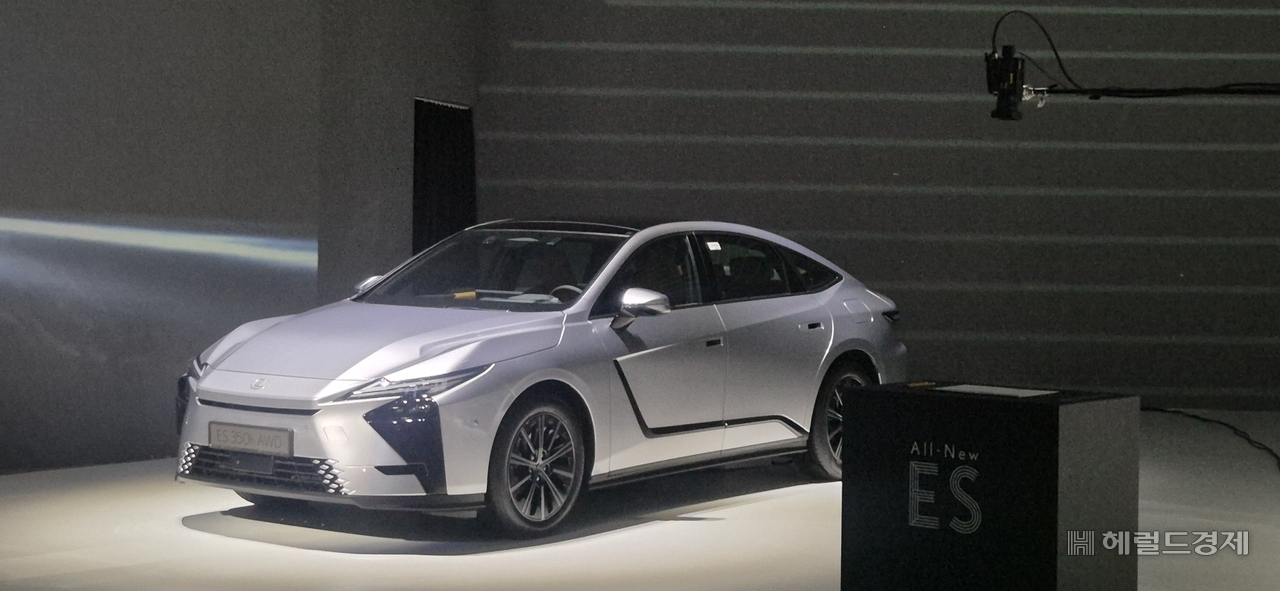
The body has grown substantially. Overall length is 5,140 mm, up 165 mm from the previous model, while width increases 55 mm to 1,920 mm. The wheelbase stretches 80 mm to 2,950 mm — dimensions that rival Lexus's own flagship LS sedan and put the new ES 135 mm longer than the Genesis G80, though its wheelbase falls 60 mm short of the G80's.
Asked whether the larger body risks overlapping with the flagship LS, Chiashi said the distinction between models has shifted. "In the past, price and size defined the segment, but today each model's role matters more," he said. The ES, he explained, is focused on delivering a comfortable, fatigue-free ride experience over long journeys.
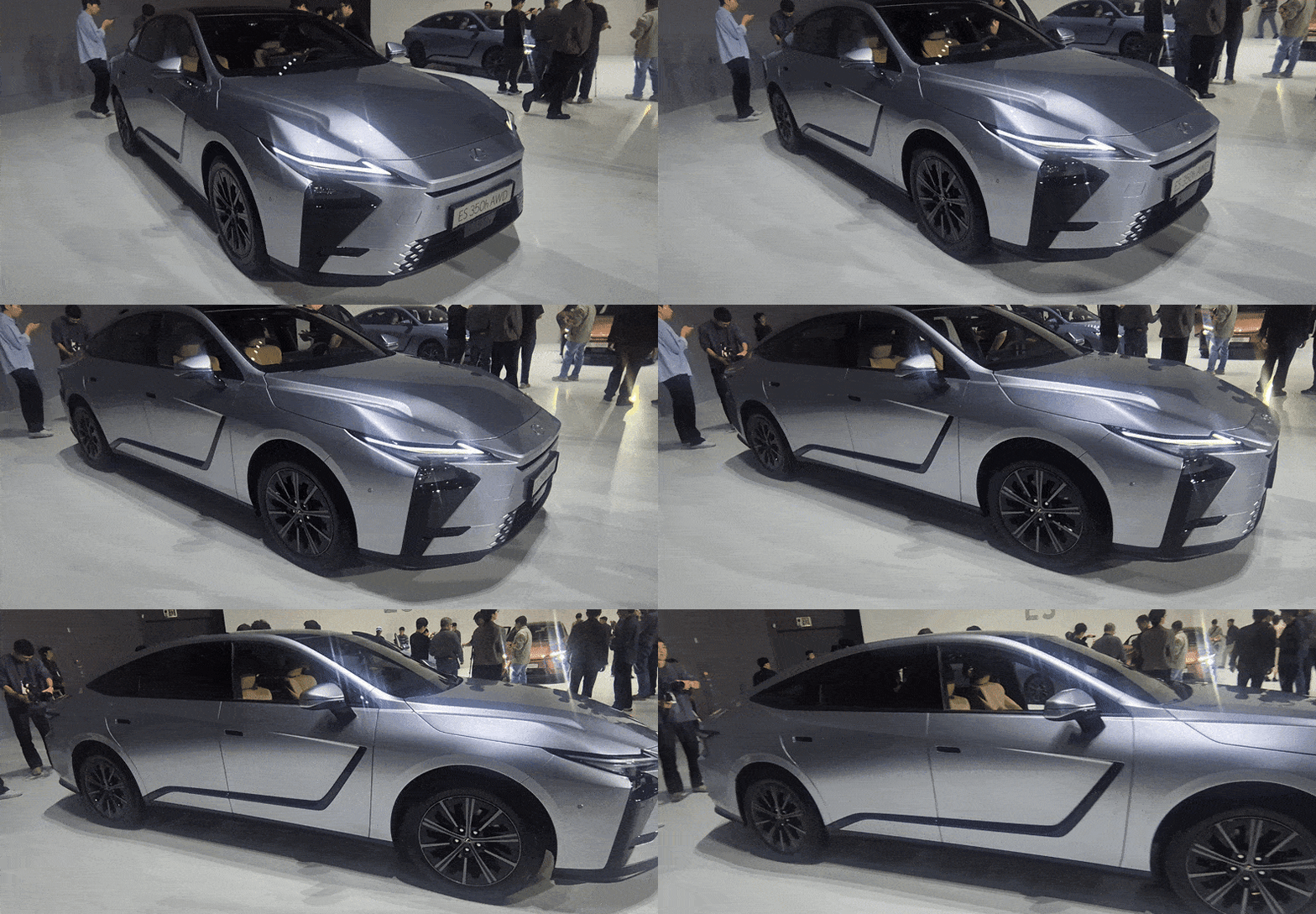
On the exterior, the front adopts the "Spindle Body" design, which extends the existing spindle grille motif across the entire body. L-shaped daytime running lights sit at the front, while a full-width horizontal lamp runs across the rear.
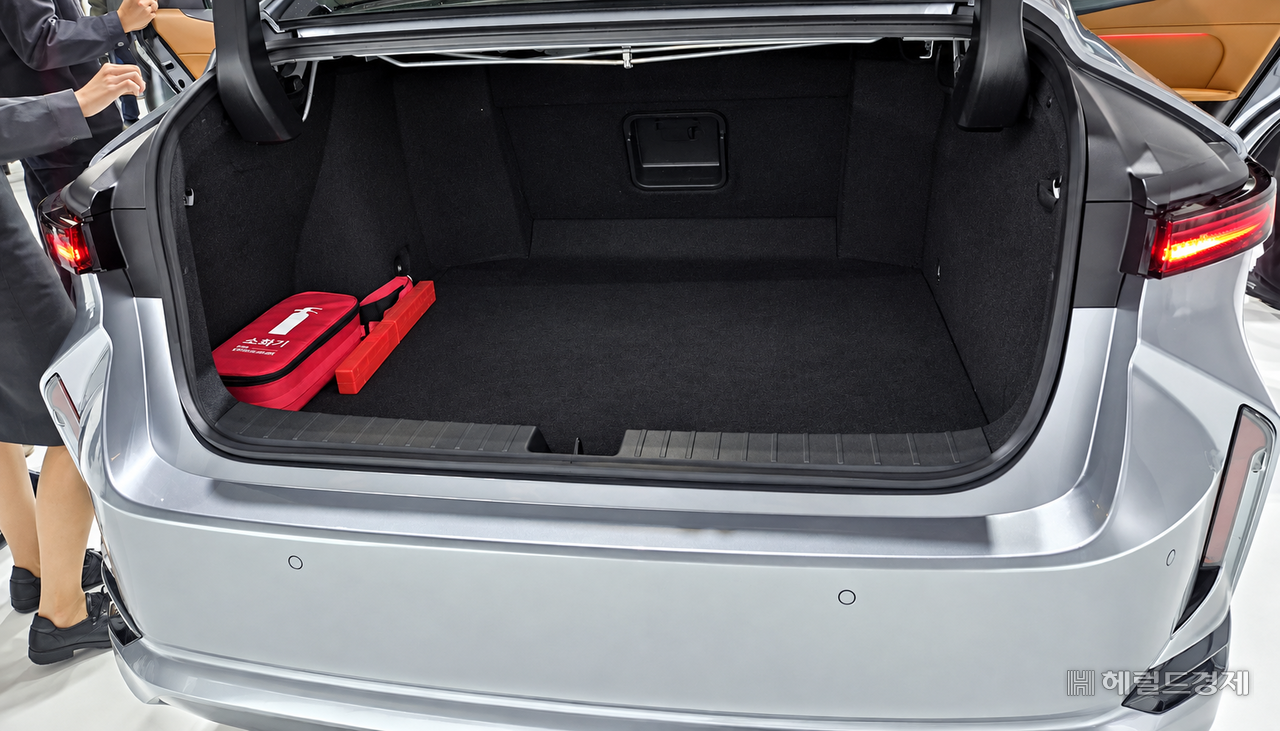
Driving dynamics and ride quality have also been refined. The new GA-K platform increases body rigidity and reduces vibration, and the rear suspension adopts a five-link multi-link setup — a first for the ES. Electric variants in the Luxury trim and above receive an adaptive variable suspension that adjusts damping force in response to road conditions and driving situations.
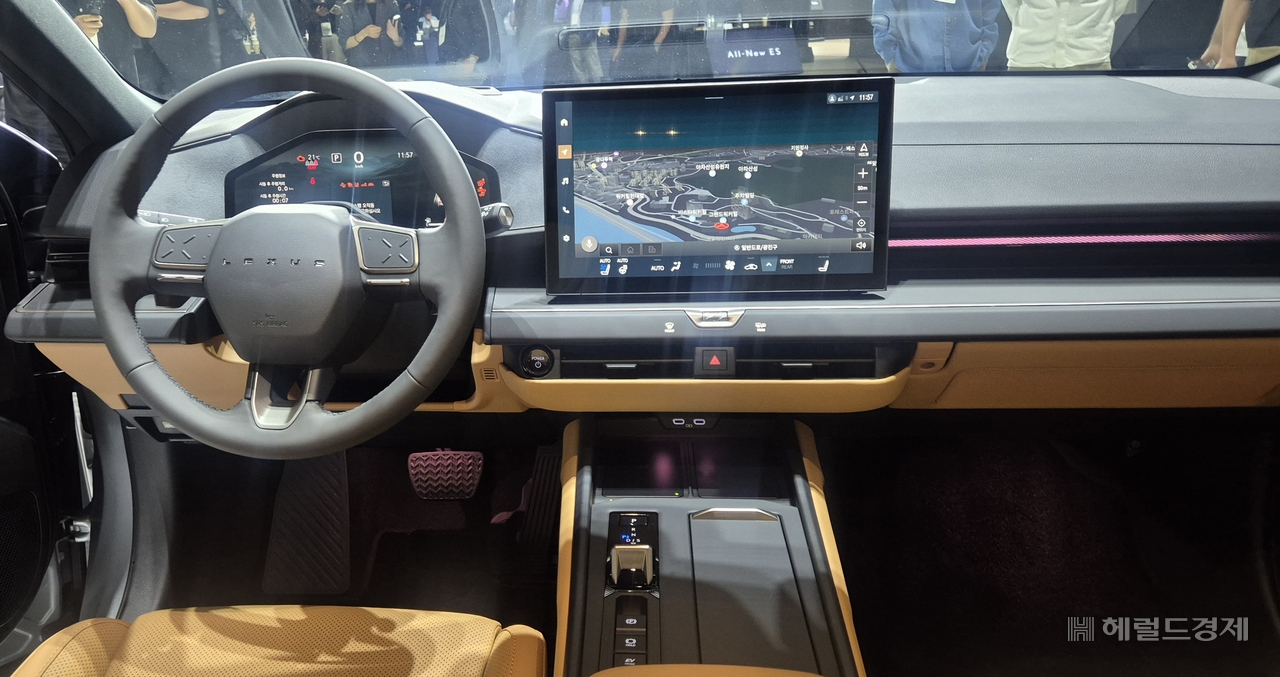
The interior centers on a 12.3-inch digital instrument cluster and a 14-inch central touchscreen. A "Responsive Hidden Switch" system keeps controls concealed within the cabin's surface until a hand approaches, at which point icons appear — preserving tactile usability while keeping the interior design clean.
The top-spec ES 350e VIP comes with a "Rear Comfort Package" comprising rear-seat reclining, a right-seat ottoman, ventilated and massage seats, a soft headrest and a three-zone climate control system — catering to rear passengers as much as to the driver.
"Lexus Connect," developed in collaboration with LG Uplus, supports remote start, climate control and charging status monitoring. The system also offers AI voice recognition powered by Naver Clova and an emergency call function.
Alongside the launch, Lexus Korea moved to ease buyer concerns about battery longevity and resale value. The company warrants the EV battery for 10 years or 200,000 kilometers. Customers who meet conditions such as regular inspections can also enroll in "Lexus Care BEV Plus," which extends the same coverage to major drive and charging components.
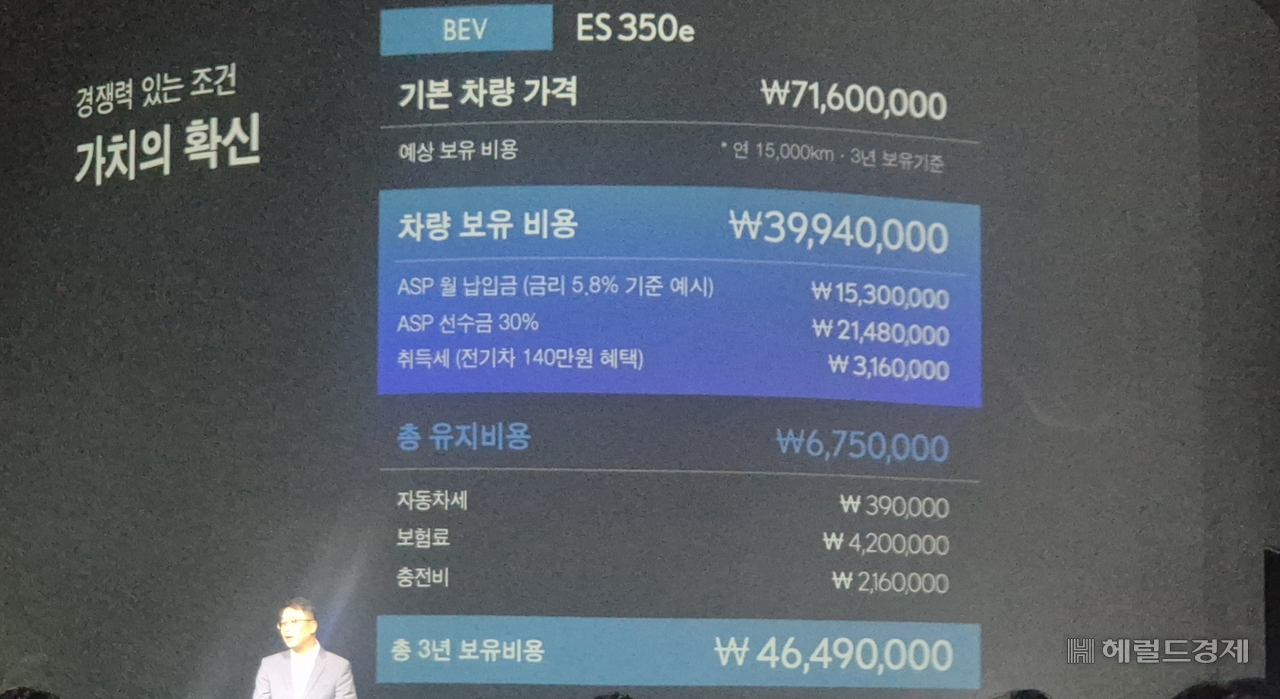
A residual-value guarantee financing product called "Amazing Switch" has been extended to the electric lineup as well. For the ES 350e, it guarantees up to 60 percent of the vehicle's value after three years, with monthly payments starting at around 420,000 won under a 30 percent down payment and 20 percent deposit structure.
"What matters most, I believe, is the value of this car three years from now," said Lexus Korea Executive Vice President Kang Dae-hwan, describing the strategy as one that looks beyond the purchase price to total cost of ownership.
kwater@heraldcorp.com




