
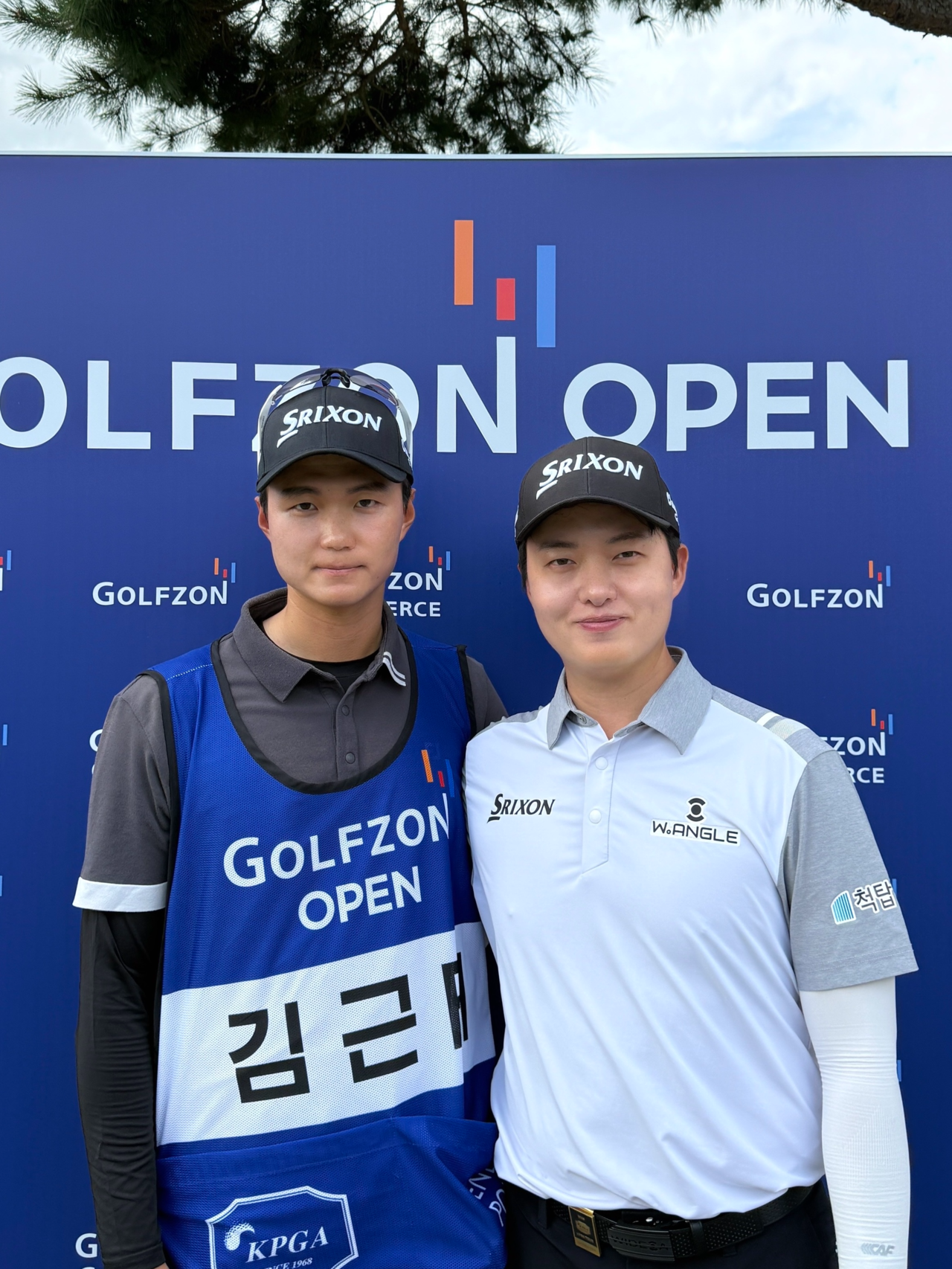
A golfer with an unusual background has earned a spot on the Korea Professional Golf Association tour — a stage long considered the exclusive domain of elite junior prospects groomed through the traditional development pipeline.
That golfer is Lee Dae-gyu, born in 1998. After studying fashion design at university and preparing for an ordinary office career, Lee picked up a golf club again in 2021 — and in just over four years earned full KPGA tour membership, a credential widely regarded as harder to obtain than threading a needle.
What makes his story particularly striking is his reason for attempting it. Lee did not set out simply to survive on tour. He entered this grueling gauntlet as a deliberate learning experience — one he hopes will one day make him the finest golf instructor in the country, someone who understands both competitive players and amateurs from the inside.
His return to golf began almost by accident. After completing his military service during the COVID-19 pandemic, Lee took up golf again as a hobby, partly with an eye toward landing a job at a golf apparel brand. He had briefly played as an elementary school student, but his first formal round in 14 years, in July 2021, produced a score of 88.
A teaching pro who noticed his potential told him: "You're shooting in the mid-to-high 80s now — if you commit for five years, there's a 50-50 chance you can turn pro." That remark lit a competitive fire. Lee studied his major during the day and spent his evenings at the practice range, and in February 2022 he took a leave of absence from university to pursue golf full time.
Progress came faster than expected. Just one year and eight months into serious training, Lee finished third at the third qualifying tournament in November 2023, carding a 5-under-par final round to earn associate membership. It was a remarkable achievement in a short time — but the road to full membership and tour-pro status was a different matter entirely.
He failed to advance past qualifying in two separate selection events in 2024. In 2025 he made it to the final stage, only to withdraw with an injury. Approaching 30, facing financial strain after leaving his teaching academy job, Lee entered 2026 treating it as his last real chance.
At that point Lee changed his approach entirely. On the advice of a fellow player, he took a caddie bag on the KPGA Tour, putting himself at the center of professional tournament golf. Walking inside the ropes, he observed firsthand how top Korean pros manage pressure, read wind and terrain, and respond to crisis situations — recording his observations like entries in an error log. For an aspiring instructor, those weeks spent watching the country's best players up close became a living textbook.
Drawing on what he had learned on tour, Lee launched a rigorous, data-driven 43-day training block from July 2026 through the qualifying event. He replaced ad hoc practice with a structured routine in which time and intensity were precisely quantified.
Twice a week he played back-to-back 18-hole rounds to test his stamina and focus under match-like conditions. Once a week he played nine holes, using the shorter round to sharpen his short-game touch around the greens.
He also met weekly with a sports psychology professor at his university for 90-minute sessions, building a mental plan to channel competitive anxiety into performance. Once a week he added a 60-minute recovery conditioning and supplementary personal training session to guard against injury.
Timed practice and data review were non-negotiable. Every day he devoted 70 minutes each to full-swing work across all 14 clubs and to putting, following a strict cycle of 30 minutes of practice, a five-minute rest and swing-video review. After each round he analyzed his scorecard data to assess his course-management decisions without sentiment. To match competition hours — roughly 7 a.m. to 2 p.m. — he kept a fixed sleep schedule, going to bed at 1 a.m. and waking before 9 a.m. every day. For the entire 43 days he abstained from alcohol and eliminated unnecessary sources of daily stress.
The preparation paid off. At the KPGA tour-pro qualifying event on Aug. 21, Lee sailed through the qualifying round in 11th place, then posted rounds of 71 (1-under par), 72 (even), 69 (3-under) and 71 (1-under) across the four-day final stage.
Lee made 17 birdies over the four rounds, finishing at 5-under par for a 14th-place result in the final stage — comfortably inside the passing mark. Not once did he post an over-par round, a consistency that reflected the quality of the mental and data-driven training he had built.
His success means more than simply gaining full membership. It demonstrates that even outside the elite junior development system, a golfer who rigorously applies self-assessment and scientific training can reach the highest level of the game.
For Lee, whose ultimate goal is becoming a well-regarded golf instructor, this journey is an irreplaceable asset. He has lived through the beginner's wall, a punishing slump, injury, the perspective of a tour-level competitor, and the combination of sports psychology and physical training needed to overcome each obstacle — all in his own body and mind.
Having broken through the intense pressure of the professional tour himself, Lee's hard-won knowledge — verified data and real competitive experience — is set to become the most powerful guiding philosophy he can offer the golfers he will one day teach.
sports@heraldcorp.com




