
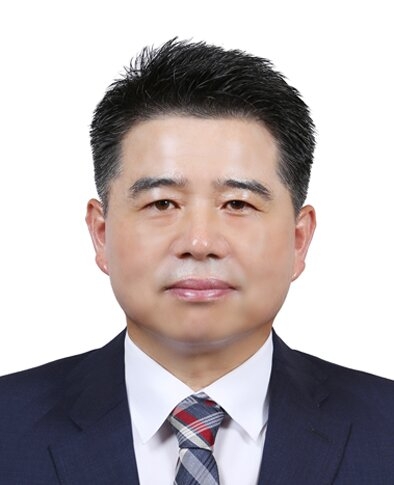
A Gangwon Provincial Assembly member has raised the alarm over a plan to relocate an agricultural company to Gangwon Province for a smart livestock complex project, saying the firm had been a persistent source of odor complaints in Gyeonggi Province for 37 years.
Assembly member Jeong Yeon-cheol raised the issue during a policy question session at the 349th extraordinary session Monday, targeting a relocation plan the Ministry of Agriculture, Food and Rural Affairs announced on Sept. 15 involving an agricultural company based in Gyeonggi Province.
Jeong said the smart livestock complex project calls for developing a 45-hectare egg-laying chicken farm by 2031 to raise 3.2 million birds, with a project budget comprising 17.8 billion won ($13.3 million) in national subsidies, 8.2 billion won in local government funds and 457.9 billion won in corporate self-financing. He said the company slated to relocate had faced continuous odor complaints in Pocheon, Gyeonggi Province, for 37 years.
"Because this company decided to move to Gangwon Province, Pocheon resolved its complaint problem, and the company stands to benefit from rising land values as its former livestock site is reclassified as industrial land," Jeong said. "If a facility has generated long-running complaints in another region, environmental safety, community acceptance and the potential damage to the region's future value must be scrutinized far more rigorously than the outward scale of the project." His remarks carried the clear implication that Gangwon Province should not be taken advantage of.
Jeong also said the planned site — at San 65-2, Sangsami, Taebaek — is surrounded by public-use forest, conservation forest, the Baekdudaegan Protection Zone and a livestock-farming restriction zone, and called it "not common sense" to build a massive poultry farm just 100 meters from the Baekdudaegan Protection Zone. He pressed the provincial government on whether it had examined the risk of water-source contamination, noting the site sits roughly 4 kilometers in a straight line from Dogye Station and at an elevation of about 700 meters above sea level.
Jeong stressed that the Ministry of Agriculture, Food and Rural Affairs' selection was conditional, and pressed the provincial government on whether additional detailed plans — particularly a construction plan and budget review for an access tunnel — had been submitted. He warned that the project budget would be taken up again at the upcoming budget and accounts special committee.
Jeong also offered an alternative proposal for Samcheok's surplus power. He noted that the power generation capacity of Gangwon Province's Yeongdong region reaches about 9,300 MW (9.3 GW), with Samcheok alone accounting for 4,200 MW, but that the area's plants operate at an average utilization rate of only 10 to 30 percent due to the lack of a transmission network. "Samcheok Blue Power, which companies built by taking on debt after the government promised to purchase the electricity, is operating at a utilization rate in the 10 percent range and now has to borrow again just to pay the interest on its loans," he said.
Jeong cited the example of the "Kilby Project" in Texas, where data centers were built next to power plants for direct electricity supply, and proposed applying a Behind the Meter (BTM) model — directly connecting power plants and data centers without going through Korea Electric Power Corp.'s grid — along with long-term power purchase agreements (PPA).
Jeong asked whether the regional specialized regulation strategy meeting held Oct. 2 had discussed linking idle power generation facilities with AI data centers, direct connection via the BTM model, and a proposal to amend the Special Act on Promoting Distributed Energy to expand the scope of distributed energy targets. "Samcheok has power, cooling water, transformer facilities and land next to the power plants — all in one place — with no cost or time burden for building transmission lines and transformer infrastructure," he said. He also urged the provincial government to support regulatory reform to help attract data centers to Samcheok.
Jeong also raised problems with the newly built Samcheok Medical Center. He said 422 defects had been found at the facility, including fire alarm malfunctions caused by electrical short circuits, and that 105 of those defects remained unresolved. The medical center had been relocated and rebuilt, with an opening ceremony held in early April attended by the former governor.
"Large-scale defects at a public medical center are not simply a construction problem — they are a matter of healthcare policy and residential living conditions," Jeong said, adding that the same issue should not be treated as a one-off given that a new medical center in Yeongwol is also being built under the same Build-Transfer-Lease (BTL) model. He proposed designating a separate specialized defect-repair agency with expertise and independence to analyze the causes, compile a "poor construction white paper" and oversee follow-up management.
Jeong also suggested ways to improve the medical center's profitability. He said the funeral home at the facility had been squeezed into a cramped below-ground space due to the nature of the BTL project's space allocation, leading residents to choose far more expensive private funeral homes instead. He called for securing national funding through a functional specialization project to improve the funeral home facilities.
He also flagged the absence of a hospice ward and a cardiovascular center at public medical centers in the Yeongdong region, and urged the provincial government to develop a support plan to address the gap.
On the issue of the public postpartum care center, Jeong said the facility — which had provided integrated childbirth and postnatal care in one place — had not been able to move to the new medical center site. "This is directly tied to the living conditions of young residents," he said. He also argued that the center must be relocated promptly to allow the old medical center site to be demolished and the downtown area redeveloped, and asked the governor to take an active role in resolving the pending issues between the province and Samcheok city.
Jeong said air pollution management at cement factories is focused on only some categories of pollutants, such as dust, nitrogen oxides and hydrogen chloride, and asked whether dioxins are subject to regular monitoring.
He also noted that concerns over dioxin and heavy metal emissions have been raised continuously since synthetic resin waste and waste tires began to be used as supplementary fuel. "If the supplementary fuel has changed, the pollutants being monitored and regulated must change as well," he said.
abc@heraldcorp.com




