Kang Sin-cheol speaks to reporters Tuesday; mine-clearing operation complicated by disputed MDL baselines; Foreign Ministry's push for new sanctions hits resistance from Unification Ministry
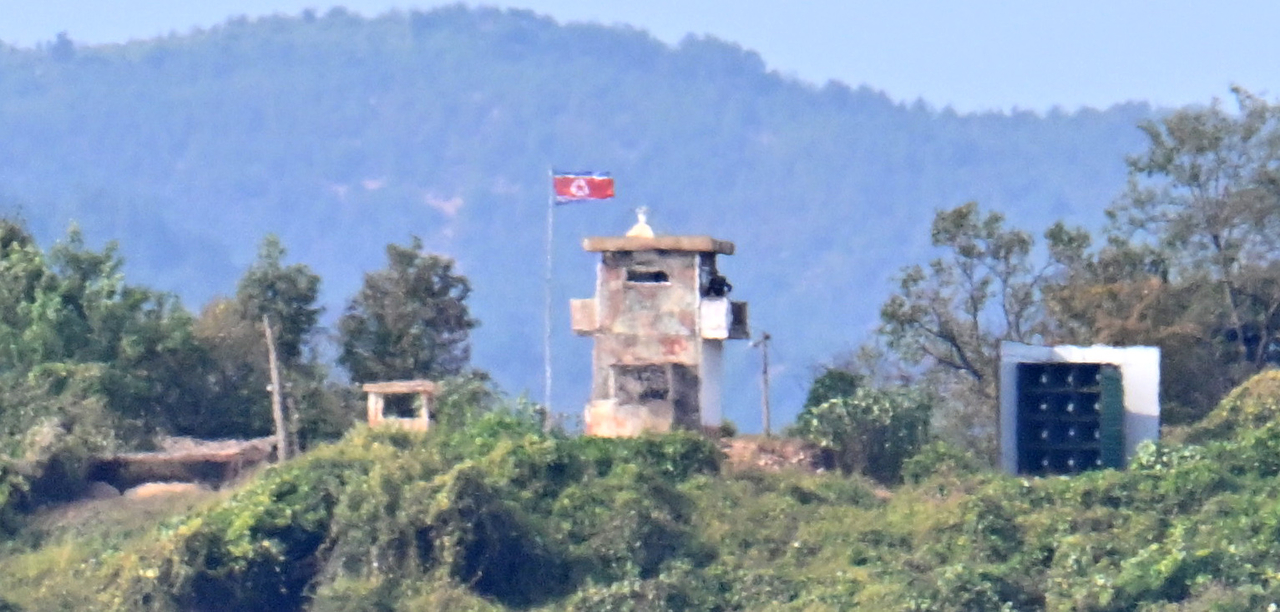
Defense Minister Kang Sin-cheol warned Tuesday of further action against North Korea over a landmine explosion in the Demilitarized Zone, declaring that "all responsibility lies with North Korea." However, the military's initial response — a mine-clearing operation — faces complications because South Korea, North Korea and the United Nations Command each use different baselines for the Military Demarcation Line, leaving open the possibility of a physical clash between the two Koreas. Divisions within the government over follow-up measures have also raised questions about how far Seoul can realistically go.
Speaking to reporters on his way into work Tuesday, Kang said South Korean troops "suffered serious injuries from mines that North Korea planted as part of what it calls border fortification, while carrying out a legitimate operation."
On the military's mine-clearing operation conducted Monday, he said it was "a necessary measure taken by the military" and stressed that Seoul "will respond to any act that threatens national security."
He declined to elaborate on specific follow-up steps, saying only that "necessary measures will be taken" while adding that he was "considering various options" and could not say more at this time.
The Joint Chiefs of Staff concluded Monday that a North Korean landmine buried south of the MDL was the cause of the incident. The UN Command recognized the minefield as a violation of the Armistice Agreement, and South Korean forces subsequently destroyed and cleared it — the first time the military has directly removed North Korean mines south of the MDL.
A central complication is that there is no single agreed MDL baseline. South Korea's military uses the MDL as drawn on military maps, while the UN Command applies a line constructed by connecting coordinates established in 2016. A third line connects the marker signs installed at the time of the Armistice Agreement, and the three do not align. The military believes North Korea conducts its fortification work based on the marker-sign line or its own internal baseline. Because the military operates on the principle of obtaining UN Command approval before acting, it must go through a verification process for each suspected area.
Kang acknowledged that "there are multiple MDLs" and said that for the two sides to confirm the boundaries, North Korea "needs to come to the table." Pyongyang, however, has not responded to the military talks Seoul proposed in November last year.
Non-military options also appear limited. At a standing committee meeting of the National Security Council on Thursday, Foreign Minister Cho Hyun is said to have proposed expanding the list of unilateral sanctions targets — specifically, adding individuals and entities involved in North Korea's illegal cyber activities, including hacking and virtual asset theft. Unification Minister Jeong Dong-young reportedly pushed back strongly, arguing the proposal had little direct connection to the landmine incident.
Resuming loudspeaker broadcasts toward North Korea, an option being floated in and around the military, also looks difficult. President Lee Jae Myung said in his Armed Forces Day address that his administration would continue measures to reduce military tensions on the peninsula. Residents and local governments in border areas have also expressed opposition to resuming the broadcasts.
rimsclub@heraldcorp.com