'Improve uniform Seoul-region standard,' 'apply differentiated subsidy rates based on fiscal conditions'
Despite ranking last among Seoul districts with a fiscal self-reliance ratio of just 14.1%, Nowon-gu receives lower national subsidies than localities outside Seoul simply because it is part of the capital.
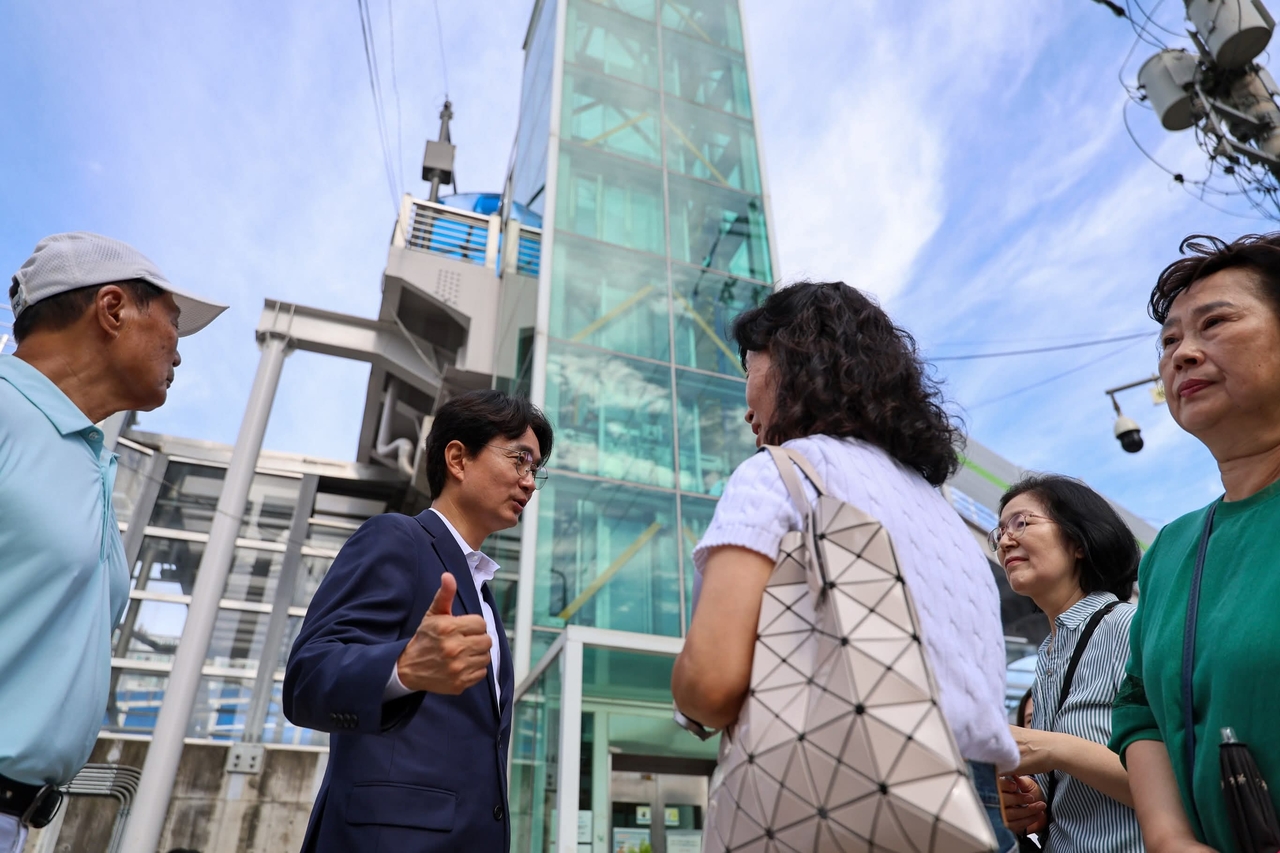
Nowon-gu has formally petitioned the government to reform the national subsidy rates uniformly applied to financially struggling Seoul districts, arguing the current system is fundamentally unfair.
The district contends that applying lower national subsidy rates to Seoul-based local governments solely because they are located in the capital fails to reflect actual fiscal conditions. It is calling for an institutional framework that would allow subsidy rates to be raised on an exceptional basis, taking into account factors such as fiscal self-reliance ratios and welfare spending burdens.
Under the current Enforcement Decree of the Subsidy Management Act, Seoul is treated as a separate category from other regions, with standard national subsidy rates for certain government-funded projects set 20 to 30 percentage points lower than those applied elsewhere. While differentiated subsidy rates that factor in fiscal autonomy and social welfare expenditure indices are partially in place, Nowon-gu says the baseline rates applied to Seoul are so low that they fail to adequately ease the burden on financially vulnerable districts.
The core problem, the district argues, is that all 25 Seoul districts are subject to the same standard despite vastly different fiscal conditions. Nowon-gu says the current structure — in which financially weak Seoul districts bear a heavier local funding burden than relatively better-off local governments outside Seoul — runs counter to the stated purpose of national subsidy programs: balanced regional development.
Nowon-gu's fiscal self-reliance ratio stands at 14.1% based on its 2026 base budget, the lowest among Seoul's 25 districts. Social welfare spending accounts for 67.9% of its total budget of 1.35 trillion won ($1.01 billion), also the highest in Seoul. By contrast, Gangnam-gu, which has a fiscal self-reliance ratio of 53.6%, allocates just 42.3% of its budget to social welfare — yet the national subsidy rate for major welfare programs is a flat 60% for every Seoul district.
The disparity becomes even starker when compared with local governments outside Seoul. For the basic livelihood security benefit program, Nowon-gu operates under a cost-sharing structure of 60% national funding, 28% city funding and 12% district funding, leaving it to cover 17.6 billion won of the program's total cost of 146.2 billion won. Seongnam and Hwaseong in Gyeonggi Province, both with fiscal self-reliance ratios above 50%, receive 90% national funding, 7% provincial funding and 3% municipal funding, leaving them to cover just 3.7 billion won and 1.9 billion won, respectively. The result is that Nowon-gu, with its far weaker finances, shoulders a much heavier burden for nationally led welfare programs than local governments in considerably better fiscal shape.
The imbalance extends well beyond basic livelihood benefits. The same Seoul-versus-regions subsidy split applies to a range of large-scale national health and welfare programs, including infant and toddler childcare fees, national vaccination programs and after-school care services.
Nowon-gu says the current subsidy structure is compounding the burden on financially weak districts at a time when welfare spending demand is rising steadily due to the low birth rate and aging population. The district warns that excessive matching-fund obligations for welfare programs are crowding out resources that could otherwise go toward locally driven projects, residents' long-standing priorities and upgrades to aging infrastructure.
In its petition to the government, Nowon-gu proposed two specific reforms: applying the same national subsidy rates used outside Seoul to any Seoul district whose fiscal self-reliance ratio falls below the national average or below 20 percent; and expanding the use of differentiated subsidy rates for districts where social welfare spending exceeds 60 percent of the total budget.
The district said the proposed reforms are not about securing preferential treatment for any single district, but about achieving the original purpose of national subsidy programs — balanced regional development and rational allocation of local fiscal resources. If the system is reformed, Nowon-gu expects to reduce its district-funded share of major welfare programs and redirect the freed-up resources toward community priorities and infrastructure renewal.
"This petition is not a request for special treatment for Nowon — it is a call for rational fiscal management that closes the gap between policy and reality," Nowon-gu District Mayor Seo Jun-o said. "We will continue to press the government for a subsidy rate framework that reflects Nowon-gu's actual fiscal conditions."
seouldream01@heraldcorp.com