SK Group chairman inspects former military airfield site, pledges to begin construction even if power and water infrastructure is delayed
"Even if electricity and power are delayed, we will start construction first."
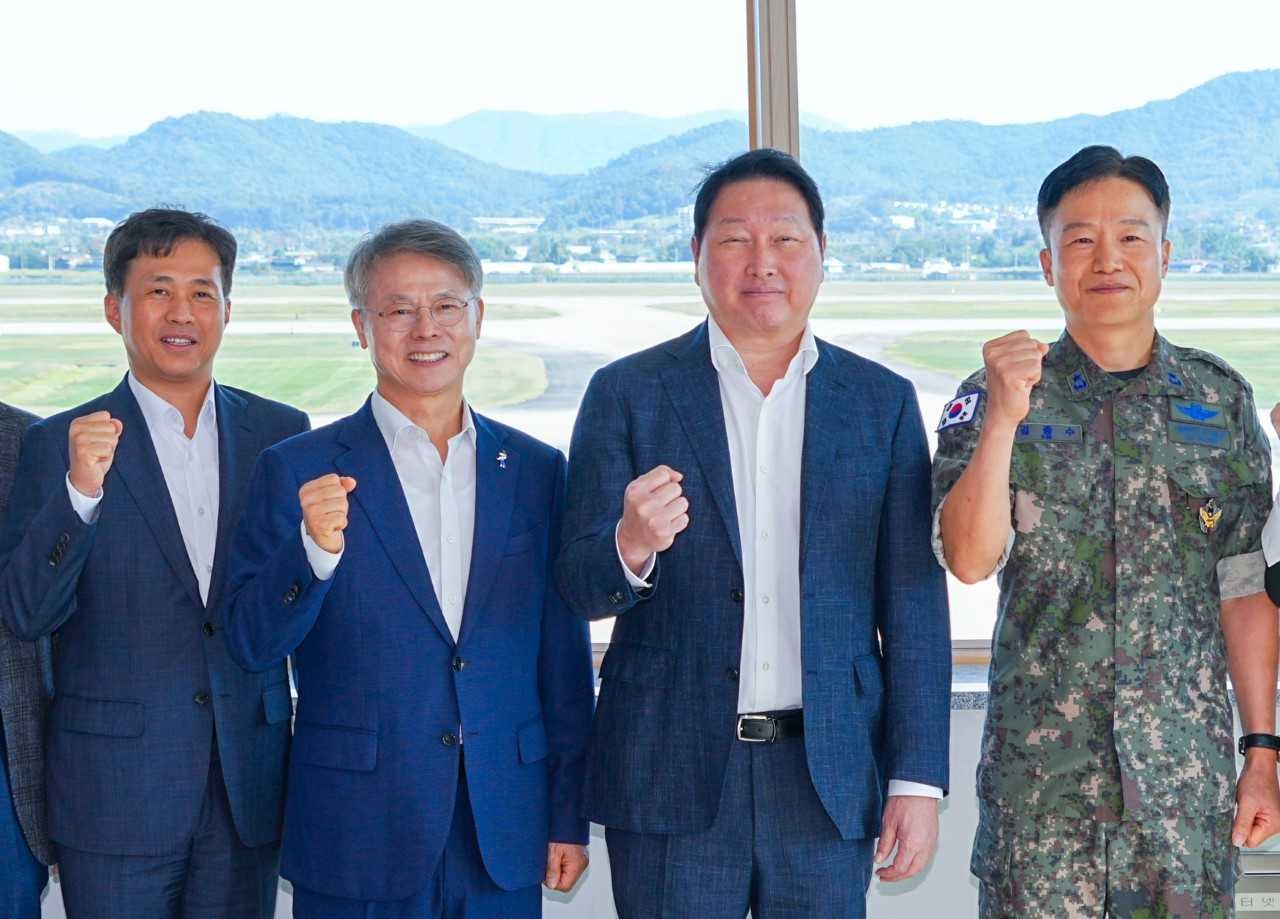
SK Group Chairman Chey Tae-won visited the Gwangju military airfield site — the planned location of the Honam semiconductor cluster — on Friday to reaffirm the conglomerate's commitment to the project.
The visit by the group's top executive was seen as a direct response to recent doubts raised in some quarters about whether SK would follow through on its investment pledge. His on-site remarks are expected to give fresh momentum to the Honam semiconductor cluster development.
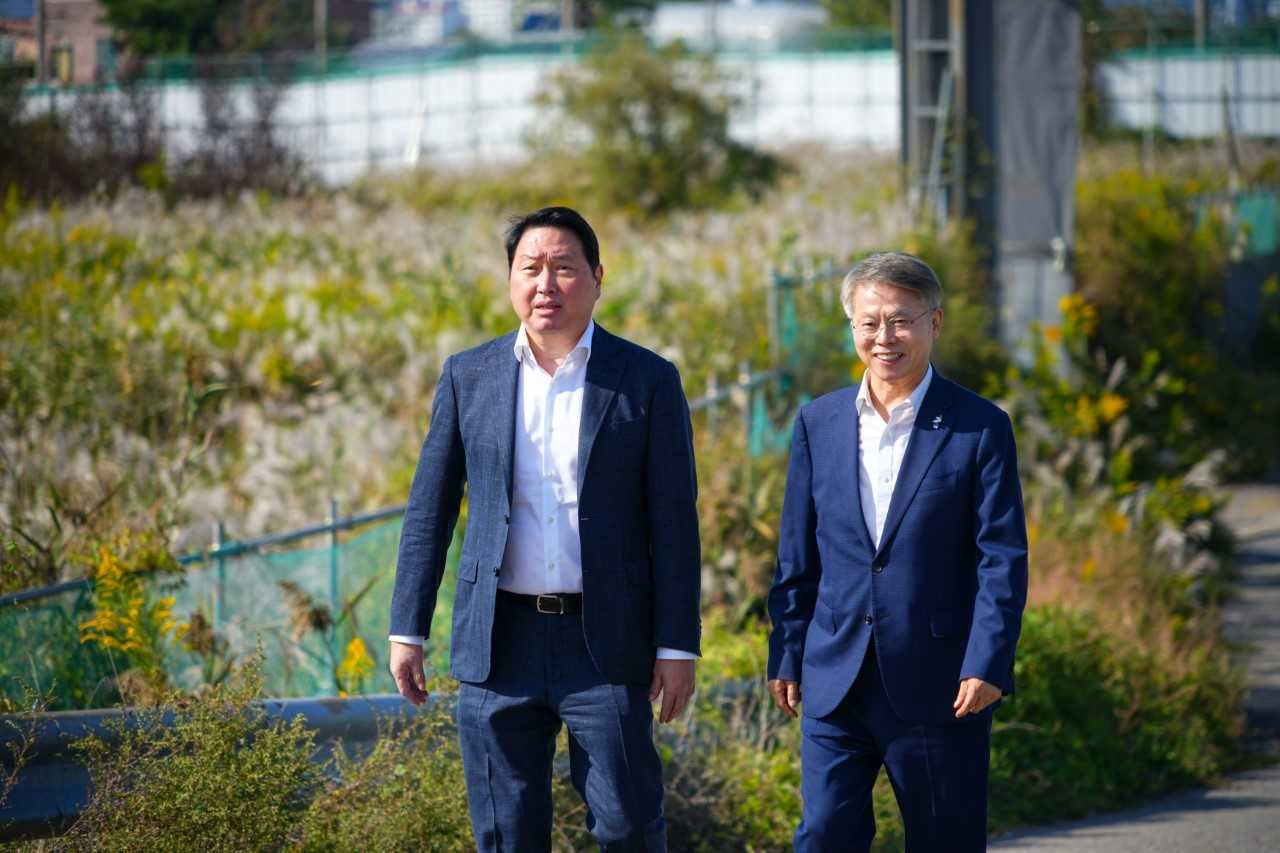
Chey toured the airfield that afternoon alongside South Jeolla-Gwangju Integrated Special City Mayor Min Hyeong-bae and SK hynix executives, reviewing the current state of the site and the conditions for the project.
The group checked on preparations for key infrastructure — including power and water supply — and inspected the section of the airfield where an ammunition depot is slated to be relocated to make way for a semiconductor fabrication plant.
After the tour, Chey said the group would build "at the fastest possible speed" and added that it would break ground ahead of schedule if timing could be aligned, even if water and power supplies were not yet ready.
He also said SK intends to advance the Honam semiconductor project in parallel with the Yongin semiconductor cluster to meet surging demand.
"We expect semiconductor demand to keep growing at a fairly rapid pace," Chey said. "That means we will need additional sites and more fabrication plants. If necessary, it looks like we will have no choice but to build here alongside the Yongin semiconductor cluster."
He also signaled that the scale of the Honam project could expand depending on demand.
"If there is more land and more demand, I fully expect the Honam semiconductor cluster to grow even larger," Chey said.
The visit was significant as it marked the first time the group's chairman personally inspected the semiconductor site, confirmed project conditions on the ground, and publicly committed to moving forward without delay.
Among the skeptics of the Honam semiconductor cluster project, a key concern had been that SK might delay the Gwangju development until after the Yongin cluster was completed, or that global semiconductor market conditions could push the timeline back by years. Chey's visit is seen as having dispelled much of that uncertainty.
SK hynix has visited the military airfield site multiple times to review investment progress and discuss support needs with the South Jeolla-Gwangju city government.
The city said it plans to work closely with the central government and relevant agencies to secure key infrastructure — including the site, power and water supply — in line with the companies' investment schedules, while also pursuing talent development and efforts to create a stable living environment to attract workers.
SK hynix and Samsung Electronics plan to invest 800 trillion won ($597 billion) to build a semiconductor cluster at the military airfield site.
The central government and the South Jeolla-Gwangju city government plan to develop the 8.25-million-square-meter area around the airfield into a national semiconductor industrial complex, with site preparation set to begin in 2027, fab construction in 2028, and the first mass production targeted for 2030.
"Chairman Chey has made his commitment to the semiconductor cluster unmistakably clear," Mayor Min said. "We will provide solid backing — not only for key infrastructure such as the site, power and water, but also for talent development and living conditions — so that SK hynix can build and operate a world-class semiconductor factory in the best possible environment."
sij@heraldcorp.com