Lawmaker Moon Keum-ju flags gaps in public support
Detailed strategies needed at every stage, from research to commercialization
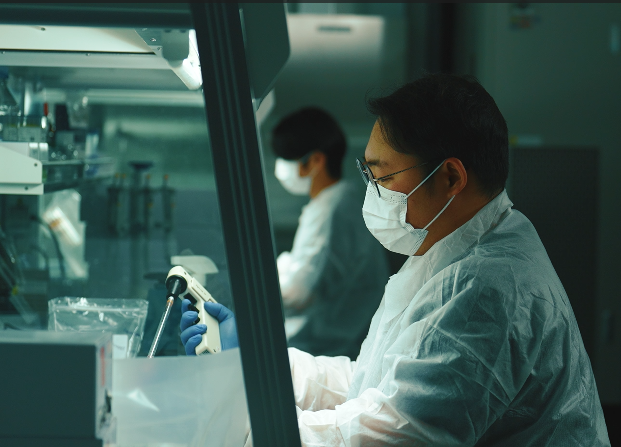
As Gangneung, a coastal hub city in Gangwon Province, pushes to develop a national industrial complex for natural-product biotech, research into marine biotech materials and their applications has been progressing consistently across the country — yet only seven projects have resulted in commercialized products over the past six years.
Despite this, Wonju, Chuncheon and Gangneung, along with local business circles within Gangwon Province, continue to churn out ambitious blueprints and lofty declarations, prompting calls for a more measured and substantive approach.
The National Assembly has raised concerns that public support must be strengthened for the scale-up, standardization and regulatory approval stages — the phases where companies bear the greatest costs and risks after marine biotech research and development is complete.
Rep. Moon Keum-ju of the Democratic Party of Korea, a member of the National Assembly's Agriculture, Food, Rural Affairs, Oceans and Fisheries Committee, cited data submitted by the National Marine Biodiversity Institute of Korea during a national audit, saying that of 31 research projects undertaken, only seven had successfully led to technology transfers and product launches.
According to Moon's office on Friday, even after technology is transferred, many projects fail to reach full commercialization because follow-up support is lacking for subsequent stages such as raw material standardization, formulation, efficacy verification, clinical trials and regulatory approval.
Current technology transfer cases also remain concentrated in small-scale, short-cycle products such as PCR kits, basic cosmetics and simple collection devices.

The critical bottleneck in the marine biotech industry is the scale-up stage — translating laboratory-level research results into actual production processes.
In one documented case involving chlorella, expanding the cultivation volume from 5 liters to 100 liters caused biomass productivity to drop 50 percent, falling from 0.032 to 0.016.
The strong efficacy and productivity confirmed in the laboratory do not hold up when production is scaled to factory levels.
Pilot cultivation and demonstration production at the 100-liter scale requires a minimum of 150 million won ($112,000) and more than a year, making it difficult for small domestic biotech firms with limited capital to manage on their own.
The path to commercialization is also long. Bringing a marine biotech material to market as a health functional food can take eight to 12 years, while pharmaceutical applications may require more than 20 years — a structure that forces private companies to absorb long-term investment risk from the earliest stages.
The industry's heavy reliance on the domestic market is another concern. Domestic sales account for 82 percent of revenue among the 518 companies operating in the marine biotech sector, while dependence on foreign sources for key biotech materials stands at around 70 percent — underscoring the urgency of identifying homegrown materials and building industrial competitiveness.
Moon proposed upgrading the marine biobank's materials database to systematically manage materials in high demand among companies, and establishing a post-transfer support system that goes beyond technology licensing to cover follow-up assistance all the way through to product development.
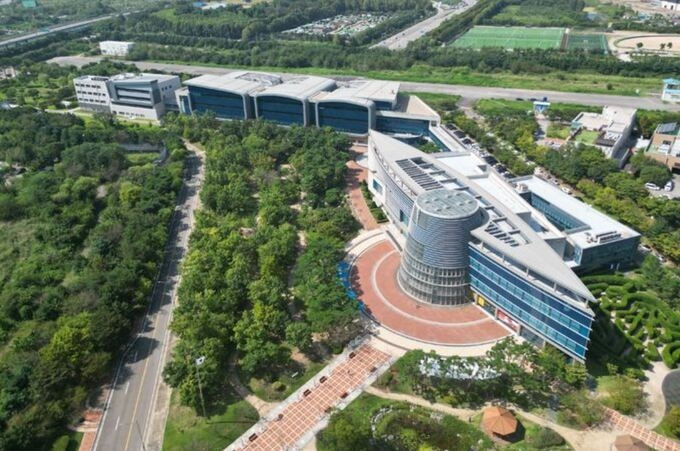
The National Marine Biodiversity Institute of Korea is pursuing projects aimed at upgrading the marine biobank, supporting corporate growth and overseas expansion, and building an industry support platform — positioning itself as a control tower for the marine biotech sector and working to cultivate an industrial ecosystem. The institute is also developing functional materials from marine resources and technologies utilizing microorganisms and microalgae, while advancing work on identifying high-productivity STAR strains, cryopreservation, standardization of 100-liter-scale mass production processes and scale-up cultivation technology.
"Marine biotech is not an industry where discovering one material immediately yields a product," Moon said. "After research results are handed over to companies, they must pass through a long tunnel — raw material standardization, mass production, formulation, efficacy verification, clinical trials and regulatory approval."
"If we continue to focus on the research and development stage while leaving everything after that for companies to sort out on their own, the actual commercialization outcomes will remain limited no matter how many projects — 200 or more — are carried out," Moon added. "Public support is particularly needed at the scale-up and demonstration stages, where small and venture businesses feel the greatest financial burden."
Moon stressed that to develop the marine biotech industry into a future growth engine, success should be measured not by how many research projects were conducted, but by how many materials actually became products and contributed to corporate sales and exports. "The Ministry of Oceans and Fisheries must establish a seamless commercialization framework that supports the entire journey from research and development through scale-up, regulatory approval and product launch," she said.
Gangneung's industrial promotion project, known as G-WAVE, includes a wellness biotech pillar encompassing natural products, food and marine biotech.
A plan to develop a national industrial complex for natural-product biotech in Gangneung has long remained at the review stage with the Korea Land and Housing Corporation, but Gangneung city officials said the project has recently regained momentum, driven by the securing of anchor companies PharmaResearch and Mico Ceramic.

For the natural-product biotech industry to take root and develop on solid footing, Gangneung city will need to plan meticulously at every stage during the preparation period — from complex development and corporate recruitment through research, clinical trials, investor attraction, production, commercialization and overseas market development.
Gangwon Province has a history of controversy, setbacks and allegations surrounding the development of industrial complexes and free economic zones, and policymakers will need to put measures in place to prevent a repeat of such problems.
Gangwon Province recently unveiled a biotech blueprint envisioning the entire province as a biotech cluster — with Chuncheon and Hongcheon focused on in-vitro diagnostics and antibodies, Wonju on digital healthcare, and Gangneung on natural-product biotech. The province said it is also building a "super-regional" biotech ecosystem by combining Incheon's mass production infrastructure and Daejeon's open innovation capabilities, with plans for a phased expansion into global networks.
Yet the province has not disclosed what specific steps or measures will be taken to achieve this vision, leaving residents with little more than rosy declarations and a growing sense of bewilderment.
Moon's national audit findings serve as a reminder to industry policymakers caught up in dreams of a "biotech jackpot" that deeper study, more rigorous research and concrete strategy are urgently needed.
The biotech sector has a long track record of delivering results far short of the blueprints drawn up for it — and those blueprints, when they amount to little more than hype, have repeatedly made the stock market fertile ground for share price manipulation schemes that ultimately collapsed.
abc@heraldcorp.com