District launches 'Fast-Start 100-Day Project' across four sectors and seven initiatives; Bangbae Sindonga reconstruction moved up three months, and 10 youth policies chosen by residents are being turned into real programs; long-term projects including the Wirye–Gwacheon line, underground Gyeongbu arterial road, and Yangjae urban logistics complex gain fresh momentum
One hundred days into the new term, Seocho-gu is picking up speed on its major projects. Ground-breaking on one reconstruction project has been moved up by as much as three months, and 10 youth policy proposals chosen by 1,018 young residents are being turned into concrete programs.
Seocho-gu said it has been using the "Seocho Golden Age 2 Fast-Start 100-Day Project," launched July 1, to resolve pressing issues directly on-site while building momentum for longer-term initiatives through public briefings and public-private working groups.
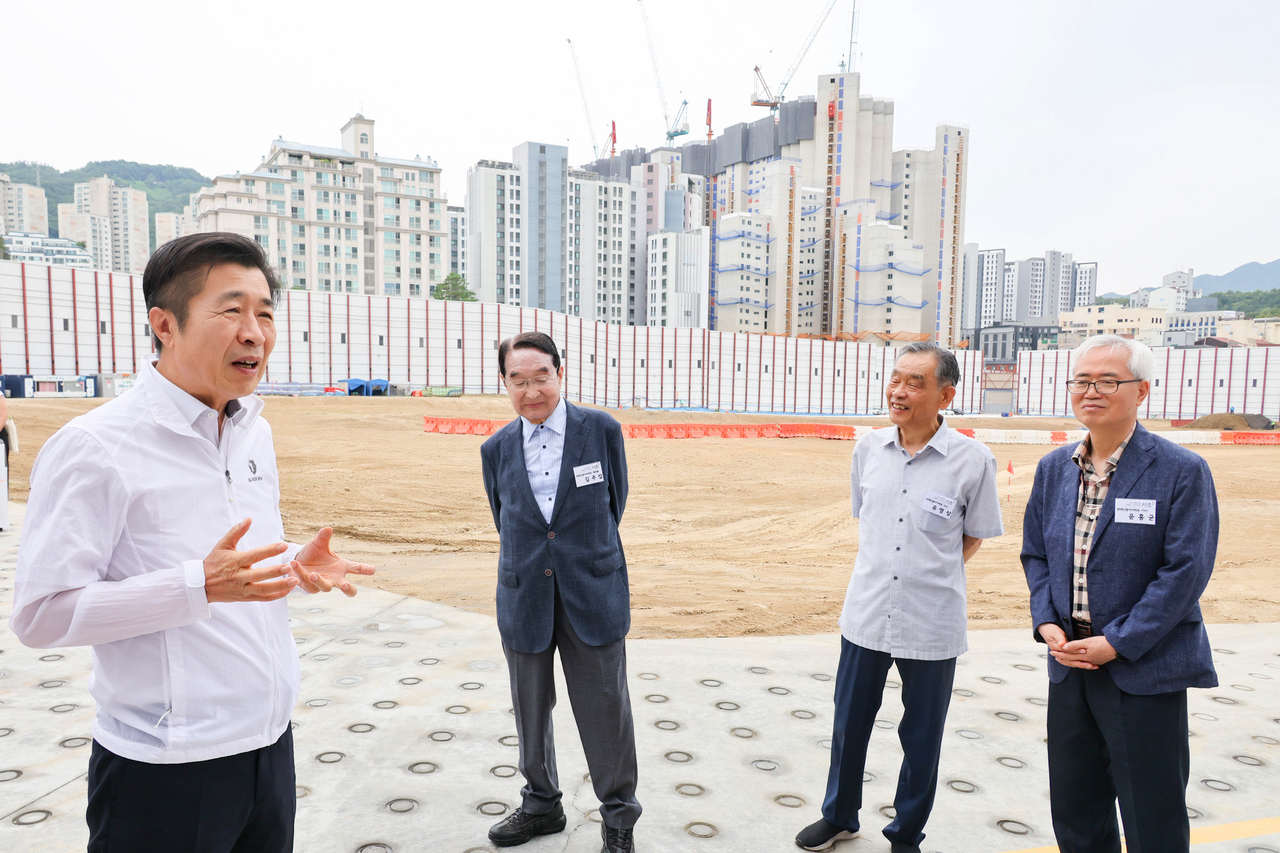
The most visible early results have come in reconstruction. The district mayor's office launched a dedicated "Mobile Reconstruction Rapid Support Team" as its first official act of the new term, and the team has been systematically identifying and clearing obstacles through expert advisory meetings. As a result, the Bangbae Sindonga complex moved its ground-breaking date three months ahead of the original schedule.
The Bangbae District 5 zone also cut its completion timeline by two weeks, and Banpo District 3 by one week. Work continues to resolve the delays holding back Bangbae District 14. The gains reflect a deliberate shift from passive administrative oversight to active on-site intervention to remove bottlenecks.
On Sept. 4, the district held a meeting with associations from eight apartment remodeling projects at the Jamwon-dong community center. Officials and experts listened to concerns from remodeling sites concentrated in the Jamwon and Banpo areas and worked together on solutions, extending the district's support beyond reconstruction to cover the full range of residential renewal projects.
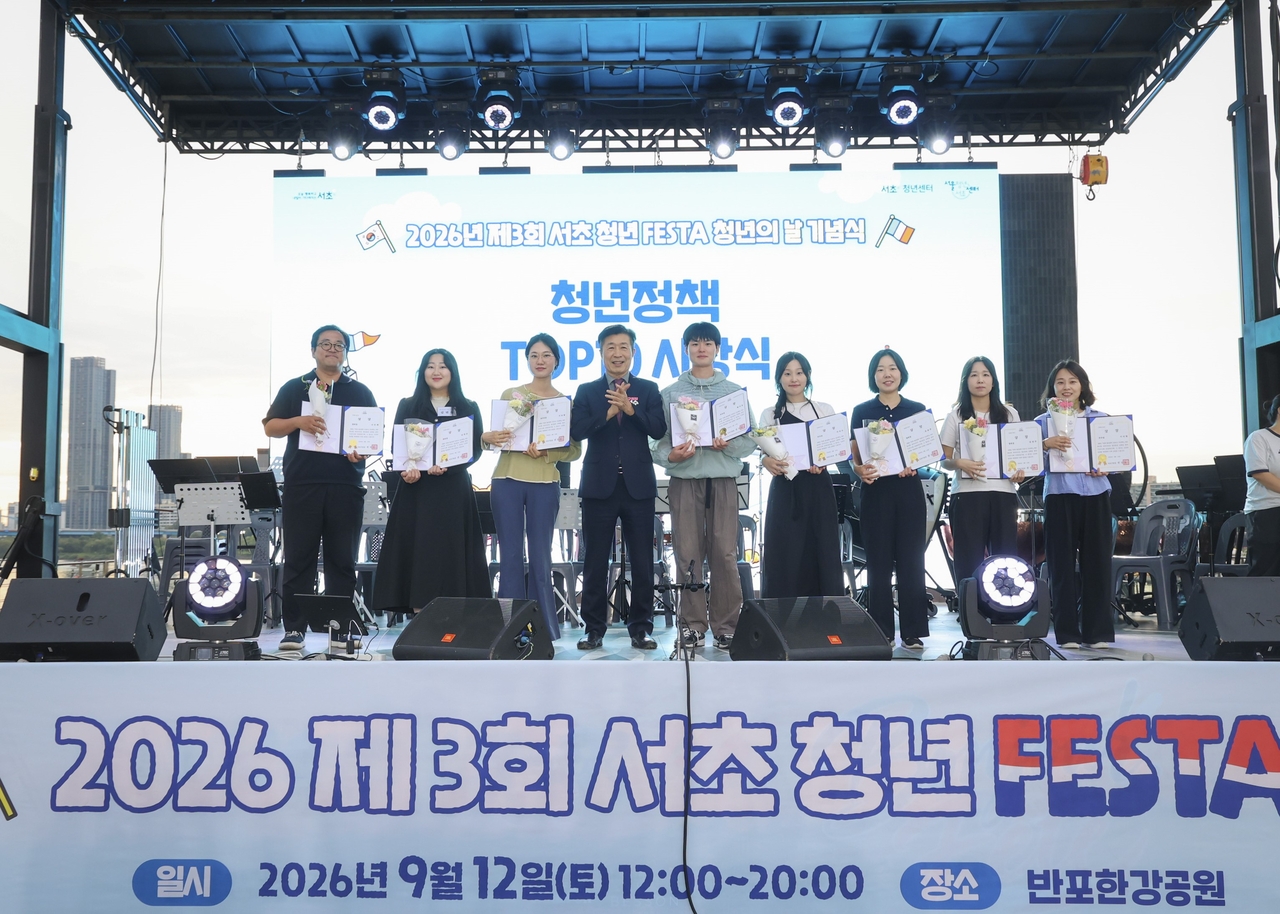
In youth policy, the district has translated direct resident participation into action. Through the "Real Youth Policy Top 10 Project" — developed together with youth engagement bodies — the district collected 59 proposals, held an online vote drawing 1,018 participants, and selected 10 policies for implementation. Award ceremonies tied to the Seocho Youth Festa and cross-departmental collaboration meetings have since moved the chosen proposals rapidly toward execution.
The district plans to combine young residents' ideas with the administrative capacity to act on them quickly. The top-prize winner, Seoripul Curtain Up, will explore ways to support young people attending performances, including same-day discount tickets. The runner-up, Seocho Thursday Bridge, will link job-skills education at the youth center with corporate internships and career consulting as a work-experience support program. A third initiative, Youth Deundeun Seocho, will consolidate three proposals covering life crises, contracts, labor and administrative issues into a single AI lifestyle support service, with young residents participating directly in platform development. The remaining proposals will be incorporated into the 2027 project plan and budget for phased implementation.
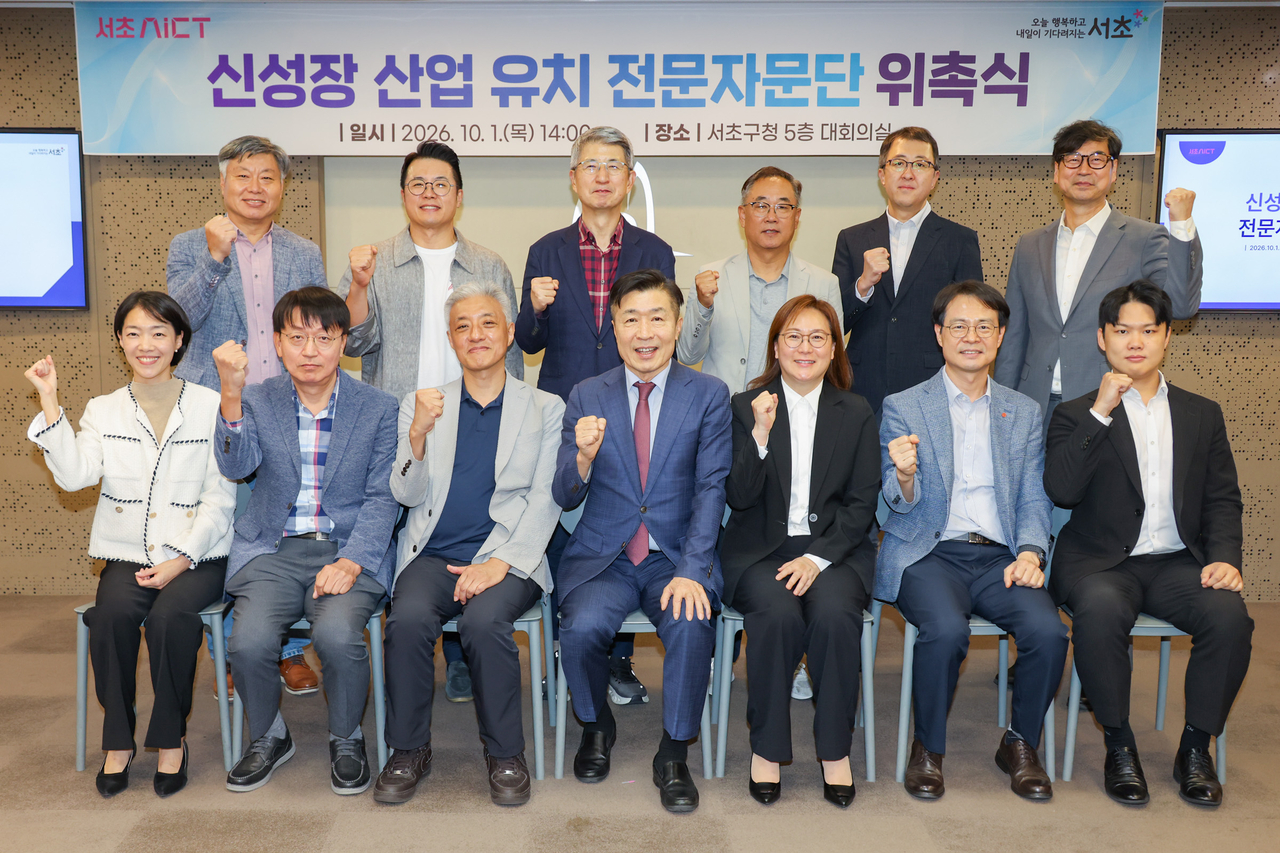
On the AI and emerging-industries front, the district formalized its policy direction Thursday by commissioning a 16-member "New Growth Industries Attraction Advisory Panel." The panel brings together venture investment and finance specialists, executives from large corporations, heads of companies in AI semiconductors, generative AI and robotics, AI and software researchers, national AI research experts, and specialists in start-ups and patents. Drawing on their advice, the district will develop a master plan across four areas — foundation building, investment support, growth support and brand strengthening — to drive new-industry attraction and corporate growth centered on the Seocho AICT Belt.
In the private mixed-use development sector, the district has been laying the groundwork for sustained public engagement and public-private cooperation to keep long-term projects on track.
The district has strengthened its public-private working groups for three major projects: the Wirye–Gwacheon metropolitan rail line, the underground Gyeongbu arterial road, and the Yangjae urban advanced logistics complex. Public briefings held in August drew more than 510 residents for the Wirye–Gwacheon rail session and more than 300 for the Yangjae–Olympic Expressway underground road session, with a wide range of community views collected at both events.
Progress is also continuing on the Seoul Express Bus Terminal mixed-use development. The district has been meeting with the project operator to hear its concerns, consistently conveying to relevant agencies the case for development, and carefully preparing the next steps while monitoring conditions.
Going forward, the district said it will press ahead with its long-term projects on the strength of a 47-member collaborative network — comprising 16 members of the new growth industries advisory panel, 10 members of the Yangjae urban logistics complex public-private council, and 21 members of the Gyeongbu arterial road underground public-private working group — along with sustained communication and consensus-building with residents and relevant agencies.
"Throughout the first 100 days of the new term, we have pushed hard to build momentum on major projects and strengthen our public-private cooperation foundation, all in order to keep the promises we made to Seocho residents," District Mayor Jeon Seong-su said. "Going forward, we will continue to pursue projects at pace, with on-site communication with residents as our top priority, and turn the changes our 420,000 residents can feel in their daily lives into a vivid reality."
seouldream01@heraldcorp.com