Cement, logistics industries cited; remarks seen as relevant to planned AI data center project
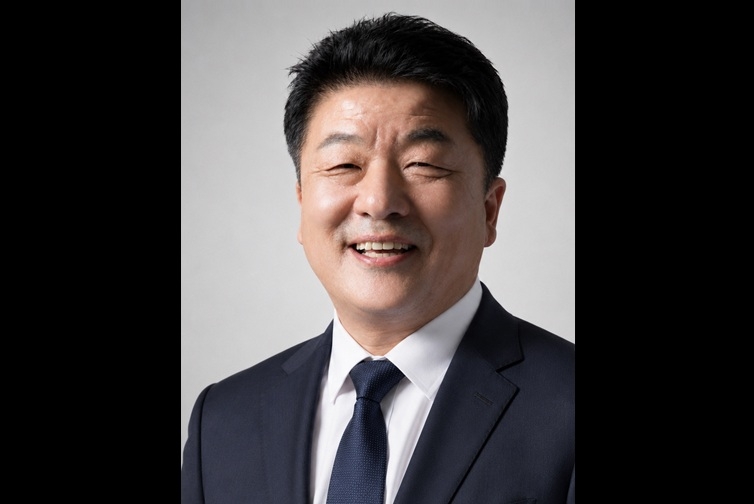
Lee Dong-ho, a lawmaker of the Gangwon Special Self-Governing Provincial Council representing the Democratic Party of Korea and the Donghae constituency, called on the provincial government Tuesday to take responsibility for the environmental burden Donghae has long shouldered in the name of national and regional economic development.
Speaking during a five-minute open-floor address at the first plenary session of the council's 349th extraordinary session Tuesday, Lee said Donghae has served as a key industrial and port city anchoring national backbone industries — including cement and logistics — centered on Donghae Port. Yet the serious environmental costs of that role, including fine dust, particulate matter, noise and waste, have fallen entirely on local residents, he said.
Although Lee's remarks Tuesday focused specifically on cement and logistics, they are seen as broadly relevant to calls from parts of civil society for policy-level protections — at both the central government and provincial level — against potential harm from future large-scale developments, including the planned Donghae AI data center complex valued at around 120 trillion won ($88.3 billion).
Donghae ranks 145th in population among South Korea's 227 basic local governments, yet industrial facilities in the city ranked fourth nationwide in air pollutant emissions in a total measurement system survey of major industrial sites published last year by the Korea Environment Corporation.
The situation is serious enough that a reinvestigation has been underway since 2023, after a National Institute of Environmental Research health impact survey of residents near nine cement factories nationwide confirmed elevated rates of respiratory diseases — including chronic obstructive pulmonary disease — among Donghae residents.
Lee argued that the environmental sacrifices of Donghae residents must not be left as a problem for the local government alone to solve, and that the province must shift its approach from routine emissions-standard checks to proactive, preventive management. He urged the Gangwon provincial government to pursue two core measures.
First, he called for the establishment of an industrial-city-tailored environmental support system — one that expands precision monitoring networks, makes environmental data available to the public in real time to ensure transparency, and drives proactive environmental improvement projects led directly by the province rather than relying on reactive, after-the-fact management.
Lee also urged the province to urgently acquire a marine environmental cleanup vessel. He noted that the Ministry of Oceans and Fisheries reported 4,210 tons of marine debris in the Gangwon region last year, yet not a single one of the 17 marine cleanup vessels operating across eight cities and provinces nationwide is stationed in Gangwon — leaving the region without the capacity for routine collection or rapid response to floating debris during disasters.
"We must not treat the sacrifices of residents hidden behind profit and development as something to be taken for granted," Lee said. "We need to build a structure of mutual benefit in which the guarantee of environmental rights is returned to provincial residents in equal measure to the economic gains." He urged Gangwon Province to recognize Donghae's environmental problems as a challenge for the entire province and to move actively toward concrete policy formulation and budget allocation.
abc@heraldcorp.com