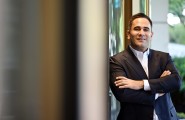
Korea Display Industry Association holds National Assembly policy forum
Samsung Display seeks permanent tax credit extension, power and water support
LG Display calls for direct refund system, improved regional incentive index
Lawmakers from key districts pledge legislative and policy backing
![Samsung Display's Asan campus in South Chungcheong Province [Yonhap]](https://wimg.heraldcorp.com/news/cms/2026/10/01/rcv.YNA.20260629.PYH2026062915020001300_P1.jpg)
The Korea Display Industry Association held a policy forum at the National Assembly to defend the country's technological lead amid intensifying competition from China. Samsung Display and LG Display, the two leading domestic display makers, called for bold tax incentives and infrastructure support. Lawmakers representing districts where display factories are located pledged legislative and policy backing.
The forum, held Thursday at the National Assembly Members' Office Building, was organized around the theme "Display as industrial security, leading the technology gap with AI." It was convened as displays have emerged as national security assets beyond ordinary electronic components — a shift underscored by the US government's decision to designate Chinese display companies as military entities.
Lawmakers from districts home to Samsung Display and LG Display production facilities co-hosted the event: Rep. Park Jeong (Paju B), Rep. Lee Jae-gwan (Cheonan B) and Rep. Jeon Eun-su (Asan B).
During the panel discussion, industry representatives called on the government to expand tax and infrastructure policy support to sustain the country's global technology lead and accelerate investment.
Samsung Display Executive Vice President Heo Cheol said the company is at a critical juncture — advancing productivity through AI-enhanced manufacturing processes while expanding into new form factors such as foldables and preparing for next-generation micro-display technology. "Investment conditions must be dramatically improved through an extension of the carryover period for national strategic technology tax credits, abolition of the sunset clause, and timely infrastructure support including power and water," he said.
The display industry is designated a national strategic technology sector, entitling companies to a base tax deduction of 15 percent on capital investment in business facilities, plus an additional 10 percent deduction on investment exceeding the three-year average. Research and development costs are eligible for corporate tax reductions of up to 40 percent. With the sunset deadline for the national strategic technology tax credit approaching next year, the industry is pressing for its permanent removal.
LG Display Group Leader Lee Han-gu said the company is staking its future on an enterprise-wide AI transformation to secure a decisive competitive edge amid a market shift driven by AI adoption and diversifying demand. "For these efforts to bear fruit, bold policy support is essential — including the introduction of a direct refund system that delivers real benefits in the year of investment, and improvements to the regional preference index that reflect the unique conditions of border areas," he said.
The direct refund system proposed by LG Display — which would return tax credits in cash — has been cited as a policy tool to accelerate timely reinvestment in AI transformation. LG Display also called for improvements to the regional preference index, given that its factory is located in Paju. The index applies differentiated regional support based on distance from Seoul and local conditions.
Lawmakers from key display districts pledged full support at the legislative level. Rep. Park said the National Assembly would take the lead in providing legislative and policy support to help Korean display makers maintain their competitive edge, calling it urgent to secure cost competitiveness through AI-integrated manufacturing process innovation and yield improvements.
Rep. Lee Jae-gwan, who represents Cheonan B where Samsung Display is located, said he would lead policy efforts to create new growth engines for the region and the country by linking the Cheonan-Asan display and semiconductor back-end process specialized complex, and to defend South Korea's global leadership in the industry.
Korea Display Industry Association Vice Chairman Lee Seung-woo said displays have evolved beyond simple electronic components to become a core national security asset connecting and enabling AI and advanced industries, and that the industry stands at a critical crossroads in shaking off China's challenge to preserve its technological lead and global dominance. He called on the National Assembly, the government, companies and research institutions to join forces and develop a systematic strategy to help Korean display makers lead the global market once again.
jeongwan@heraldcorp.com