
[Part 3: Breaking through structural discrimination] ①
Four women with career gaps of over a decade open up about the reality of re-entering the workforce
Sending out résumés to more than 40 employers, yet still struggling to land a job
Income gaps and pension shortfalls leave economic independence out of reach
[Editor's note] The income poverty rate among South Korea's elderly is 2.7 times the OECD average. Older women, in particular, face harsher conditions than their male counterparts. For decades, women were expected to devote themselves to family caregiving and set aside their professional lives. That career interruption eroded their sense of identity as workers and made financial independence harder to achieve. Many now face daily worries about making ends meet. The Herald Business examined how the sacrifices women made in their younger years are being "billed back" to them in the form of poverty and insecurity in old age.

"What scared me more than the financial side was the thought of becoming someone nobody needs."
Kim Jeong-nam, 46, goes in for a medical checkup again today. As her health has declined, she finds herself thinking more often about old age. After taking 13 years off work to raise two children, her deepest fear was not money. It was the possibility that, even as her children grew and needed her less, she herself might not be able to return to society. "I thought if I couldn't go back out into the world and became someone no longer needed at home either, my self-esteem would take a serious hit," she said.
The crises facing women whose careers were interrupted by childcare took different forms for each of them. Some feared they might never be able to re-enter society; others felt paralyzed by résumés left blank for more than a decade. Some only belatedly came to terms with having no income or retirement savings of their own. Their starting points — marriage, childbirth, childcare — were similar, but they all arrived at the same underlying anxiety: the fear of growing old with nothing to show for it.
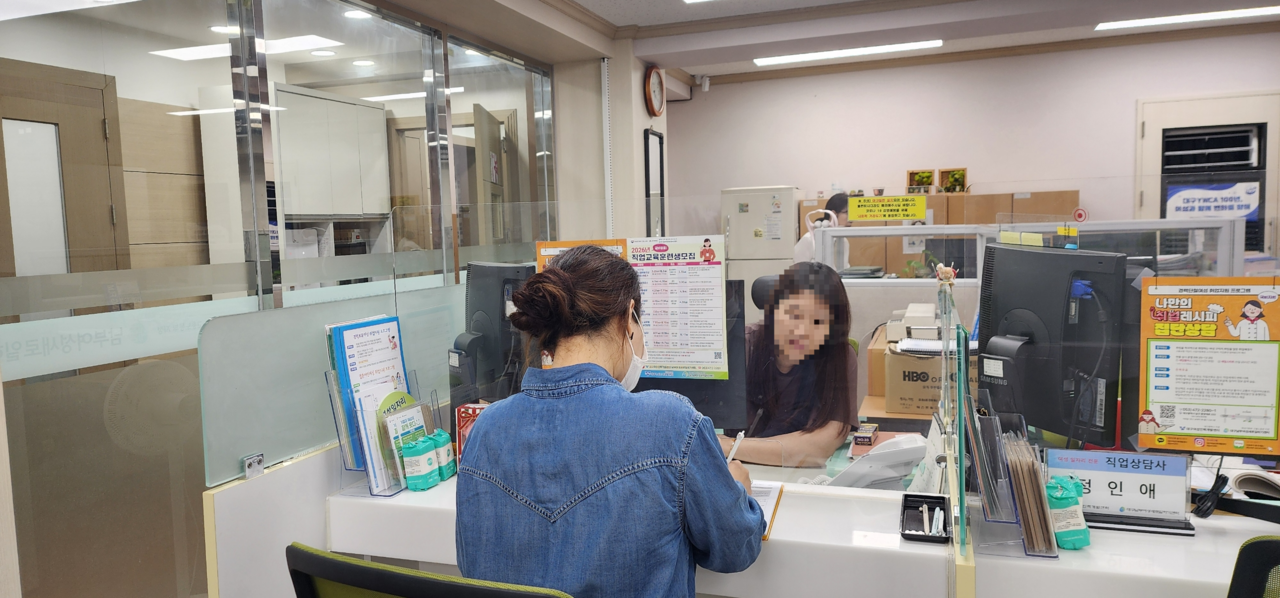
The Herald Business spoke with four women in their 40s who had been out of the workforce for more than a decade due to marriage, childbirth and childcare, and heard firsthand about the realities they face in trying to return to work and prepare for retirement.
After more than a decade raising children, they return as 'entry-level with no experience'
All four women tried to find work again once childcare had wound down, but the long gaps in their employment histories made it nearly impossible to have their previous experience recognized.
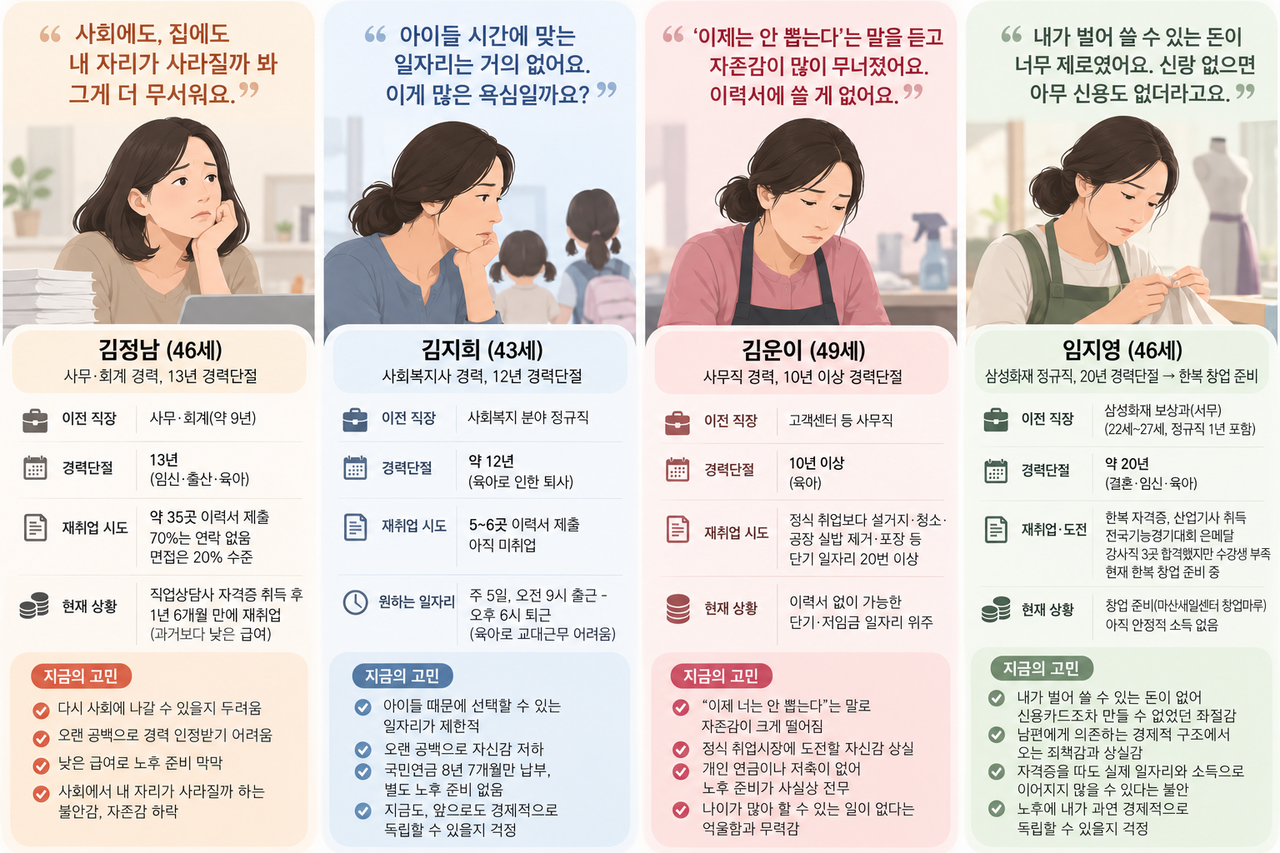
Kim Jeong-nam left her job when she became pregnant after getting married, and the gap stretched to 13 years as she raised two children. She sent her résumé to about 35 employers, but roughly 70 percent never responded, and only about 20 percent led to an interview. Nearly nine years of office and accounting experience she had built up before her break went largely unrecognized.
Even after obtaining a new career counseling certification, it took her another year and a half to land a job. When she finally did, the pay was lower than it had been 13 or 14 years earlier. "I wasn't in a position to think about salary or work-life balance," she said. "I just looked for something I could do and somewhere that would take me."
Kim Ji-hee, 43, had worked full-time in social welfare but quit when neither set of parents was available to look after her child. She had planned to take only a short break, but the gap grew to about 12 years. After receiving counseling and training at a women's workforce development center, she applied to five or six employers — but with her children still young, she cannot manage the shift work her previous career required.
The job she wants is simple: five days a week, 9 a.m. to 6 p.m. Even as she described those terms, she asked, "Is that asking too much?" After such a long absence, her confidence has also faltered — she worries whether she can handle even basic computer tasks, let alone perform a job properly.
Between the two women who disclosed specific numbers, they submitted résumés to more than 40 employers combined. But not every woman with a career break even made it to the stage of sending one out. Kim Un-i, 49, felt that after more than a decade away from work, she had nothing worth putting on a résumé. She had worked at a customer service center before, but after her childcare years ended, she was told bluntly, "We don't hire people like you anymore." She ultimately took more than 20 short-term jobs — dishwashing, cleaning, removing loose threads at a factory, packaging — positions that required no résumé at all.
"I didn't want to get hurt, so I completely lowered my sights," she recalled. "Even if the work was physically hard, I only went for things I could easily get."
Im Ji-young, 46, had been a full-time employee at Samsung Fire when marriage, pregnancy and childcare effectively ended her career for nearly 20 years. She worked a part-time bag sales job for about 10 months in between, but had to quit even that when her eldest child started elementary school and there was no one to provide care.
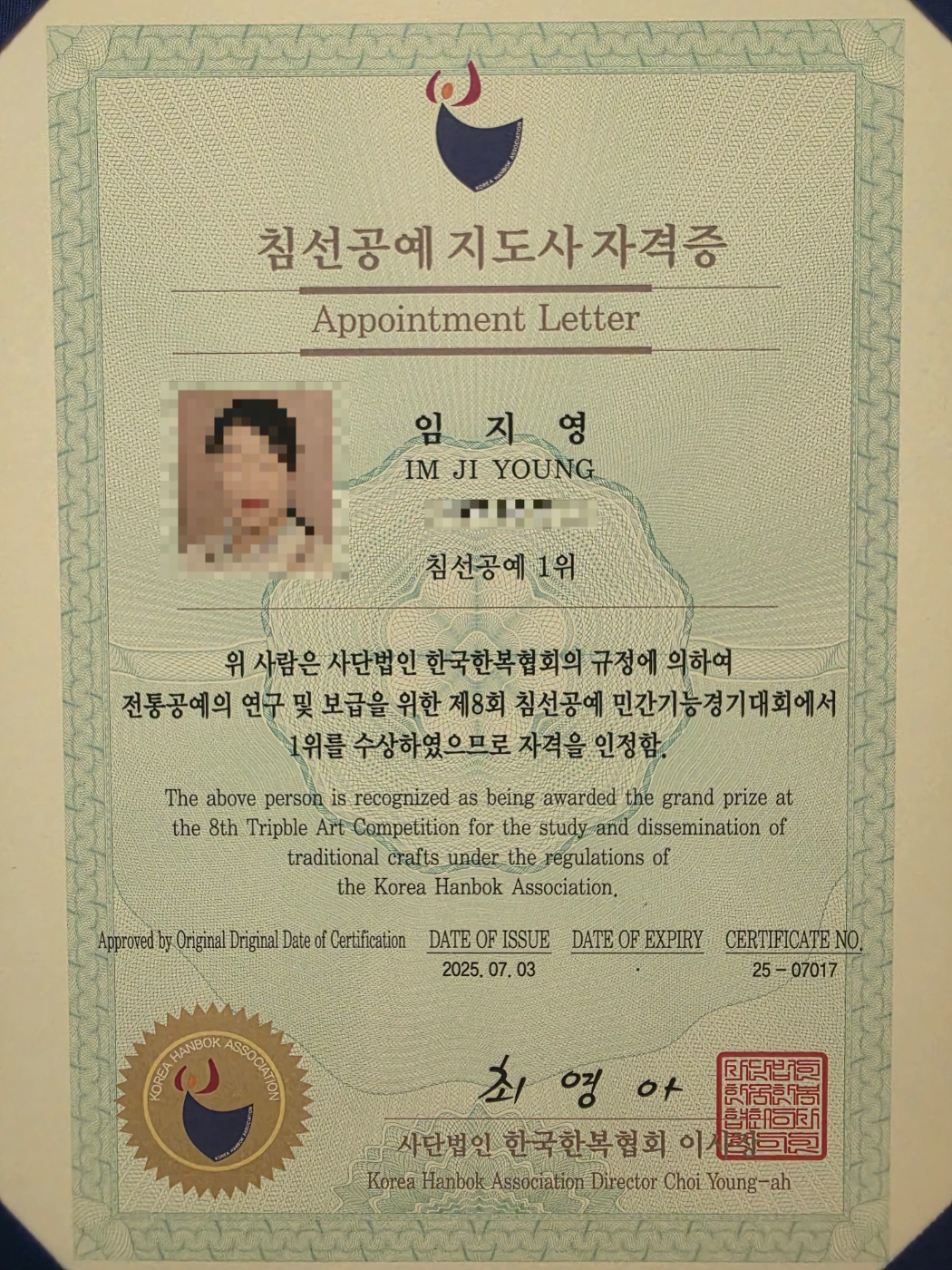
Once her children were older, she earned a traditional needlework instructor certification and won a silver medal at a national skills competition, preparing herself for a new path. She recently interviewed at three places and was accepted at all of them, but two of the instructor positions never opened because not enough students enrolled. She is currently based at the Masan Women's Workforce Development Center's startup incubator, where she is preparing to launch a hanbok business.
Different wounds, same fear: 'What will my old age look like?'
The marks left by years away from work manifested differently for each woman. For Kim Jeong-nam, it was the fear of losing her place in society. For Im Ji-young, it was the loss of financial independence. Kim Ji-hee found her job options constrained by childcare demands, while Kim Un-i lost even the confidence to try competing in the formal job market.
Im Ji-young has never forgotten the moment her own income disappeared after she quit work. She could not spend money freely — not to help her parents, not to buy something for her child. When she applied for a credit card, she was asked for her husband's employment information. "Without my husband, I had no credit of my own," she said. "That's when I started to feel a real sense of disillusionment."
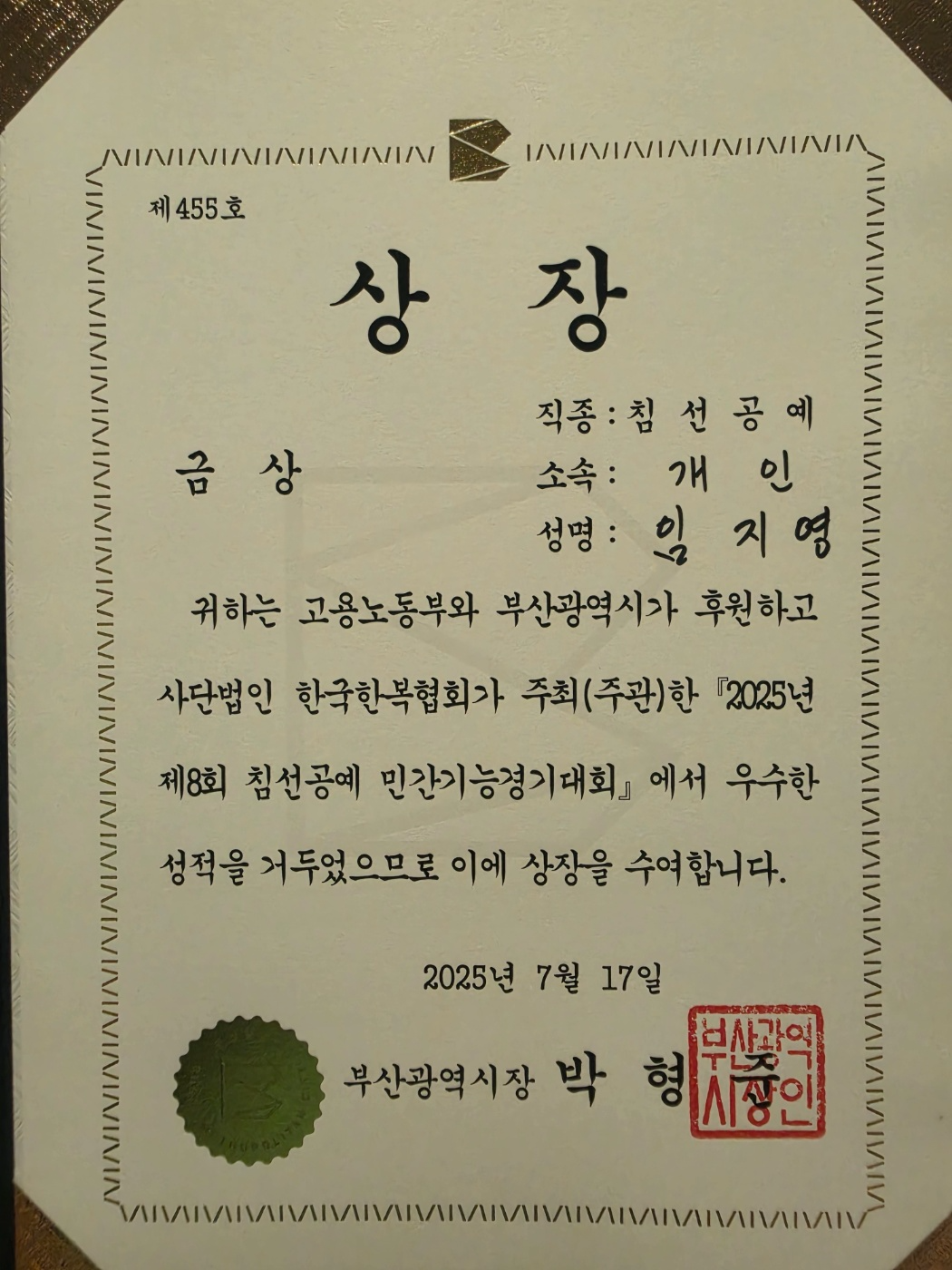
Anxiety about retirement has grown sharper recently. Im had told her husband, "You've supported the family all this time, so when you retire, I'll support us as an instructor." But when the courses she had been hired to teach were canceled due to low enrollment, her thinking shifted. She had come to understand that earning a certification and building skills was no guarantee of actual work or income.
Kim Ji-hee paid into the national pension for eight years and seven months before her career was cut short. Supporting a family of four on a single income left no room for separate retirement savings. To prepare for old age, she needs to start earning again — but the jobs she can realistically apply for are already limited by her childcare responsibilities.
Kim Un-i likewise has no personal pension or savings, and whatever retirement preparation exists is in her husband's name. "When I go to work, the other mothers tell me I look young," she said, "but when it comes down to it, once you're out in the real world, you're told you're too old to do anything." At times, she said, she has caught herself thinking: "What am I even doing? Am I really this useless?"
For some, self-esteem has taken a hit. Kim Jeong-nam's children are now 11 and 16, and while she has more time to herself, the sense that she must reclaim her own life has only grown stronger. "Even if it's a little uncomfortable right now, getting back out into society is the right thing to do," she said. "Later on, there might come a point where I want to but simply can't."
To help women with career breaks return to the labor market, women's workforce development centers and re-employment support centers across the country offer career counseling, vocational training and job placement services. Some centers also run 160- to 300-hour training programs and women's internship schemes.
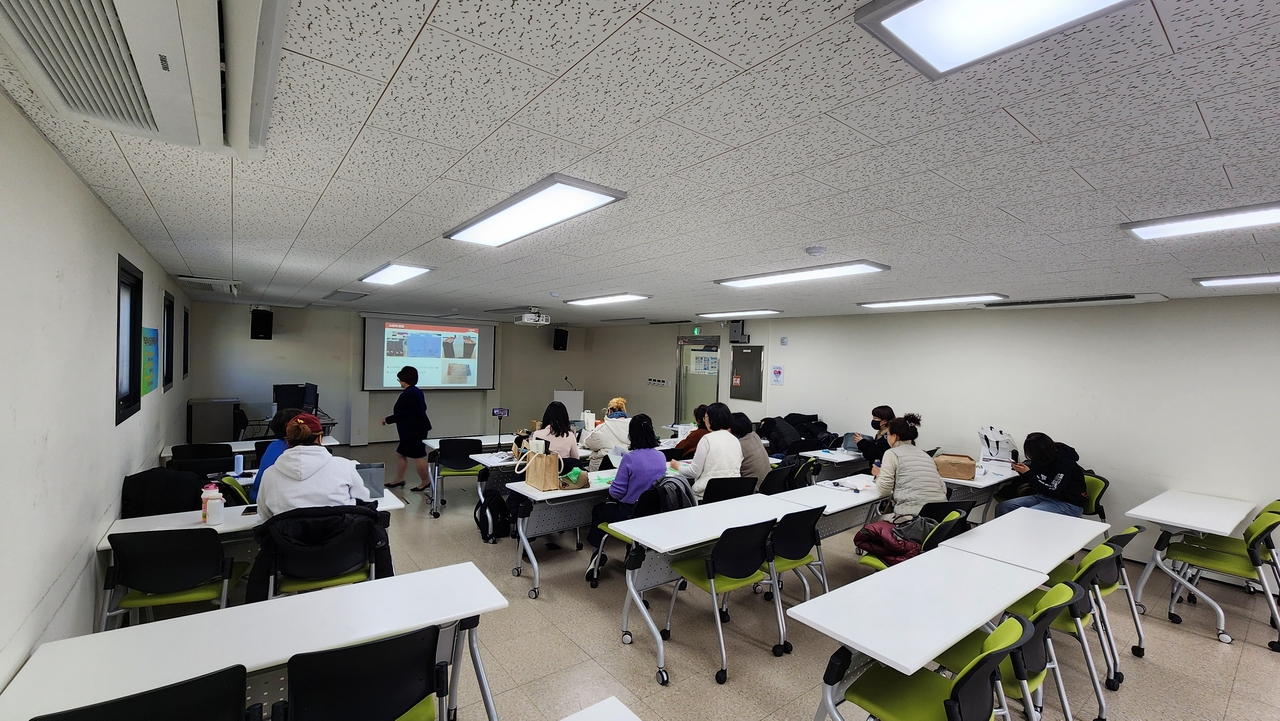
But training and certifications do not automatically translate into stable employment. An official at the Seoul Metropolitan Government's women's workforce development center said the wages for jobs women most commonly seek tend to be set low. "The challenge is figuring out how to help women whose careers keep getting interrupted by childcare maintain some kind of continuous work history," the official said.
The official added that breaking into the general job market for the first time after age 60 is realistically very difficult. "Outside of certain fields like care work, there are few options beyond public employment programs or senior jobs, so the range of available positions is quite narrow," the official said.
The years spent raising children show up on a résumé as nothing but a gap. The longer that gap, the less time remains — not only to rebuild a career and recover lost wages, but also to prepare for retirement. These women earn certifications, complete training programs and keep knocking on doors, yet the path remains far from easy. The fear of old age that these women in their 40s speak of is not some distant, hypothetical future. It has already begun — in the decade-long blank spaces on their résumés.
jookapooka@heraldcorp.com




