Budget up 700 billion won from this year; first-job, career-building support expanded
Youth job-leap incentive extended to regional large firms; AI workers to get 2-year support
Public institutions hired 12,592 new young workers in first half, up about 2,000 from last year
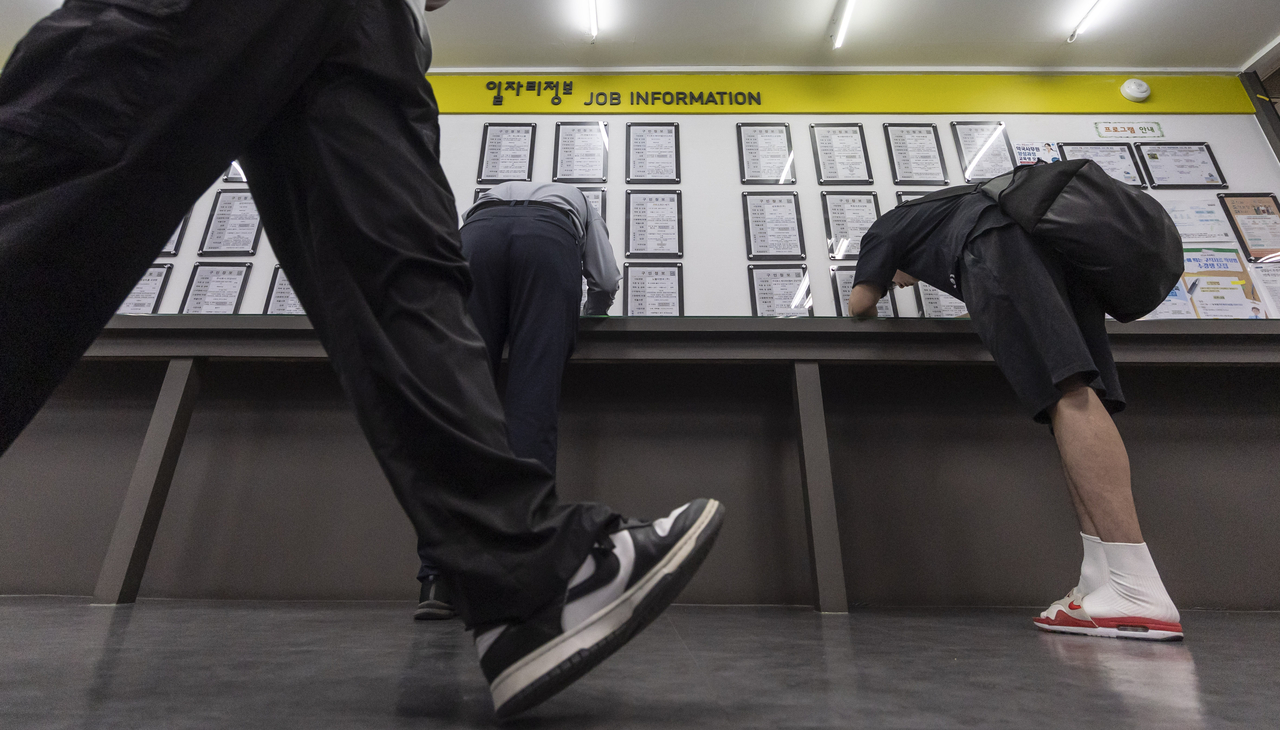
The government has set next year's youth employment budget at 3.3 trillion won ($2.43 billion), an increase of about 700 billion won from this year.
The expansion broadens eligibility for the youth job-leap incentive to include large companies in regional areas and raises the job-retention incentive for regional youth workers to a maximum of 18 million won. A new program will also be introduced to support wages and career development for young workers in AI-related roles for up to two years.
The Ministry of Employment and Labor held the second Special Committee on Youth Employment Promotion of 2026 on Wednesday, chaired by Minister Kim Young-hoon, to discuss the policy direction and key plans for next year's youth employment initiatives. The committee brought together youth representatives, business groups, education organizations, experts and relevant government agencies.
The 3.3 trillion won youth employment budget in next year's government spending plan marks a roughly 26.9 percent increase from this year's 2.6 trillion won. By program, the K-New Deal Academy is allocated 489.5 billion won, the Youth First Employment Support System 379.3 billion won, and the Youth Playground 20.1 billion won.
Policy will be pursued along three tracks: expanding practical skills and work experience, helping young people settle into their first jobs, and supporting advancement to better positions. The aim is to provide continuous support from the job-preparation stage through first employment and career development.
The ministry will strengthen training and work experience through programs such as the K-New Deal Academy, which large companies design directly. A newly introduced Youth Playground initiative will focus on connecting job-ready young people to employment by offering mentoring, community activities and demand-matching with relevant government agencies.
To ease entry into a first job, the youth job-leap incentive will be extended to large companies in regional areas, with the number of eligible recipients significantly expanded. A new first-job career support program will provide wage subsidies and career-building assistance for up to two years to young workers engaged in AI-related roles.
Post-employment support will also grow. A new grant will be created for young workers who find jobs in the greater Seoul area, while the job-retention incentive for regional youth will be raised to a maximum of 18 million won. The ministry also plans to expand an integrated career certification service so that young people working as freelancers or in other non-traditional arrangements can have their experience formally recognized.
The committee also conducted a mid-year review of compliance with the mandatory youth employment quota at public institutions. Public institutions hired 12,592 new workers in the first half of this year, up about 2,000 from the same period last year. Institutions that have repeatedly failed to meet the quota were subject to a focused review of their compliance status this year and their plans going forward.
"A young person's first career is the most reliable investment in society's sustainable growth," Minister Kim said. "The state and society must build a sturdy ladder so that young people can take on challenges without fear of failure."
fact0514@heraldcorp.com