
Running Oct. 16–18 at the Amsa-dong Historic Site and Amsa History Park in Seoul, the three-day festival features era-themed markets, archaeology workshops, talk concerts and more.
The event strengthens its signature prehistoric-culture programming with activities spanning day and night.
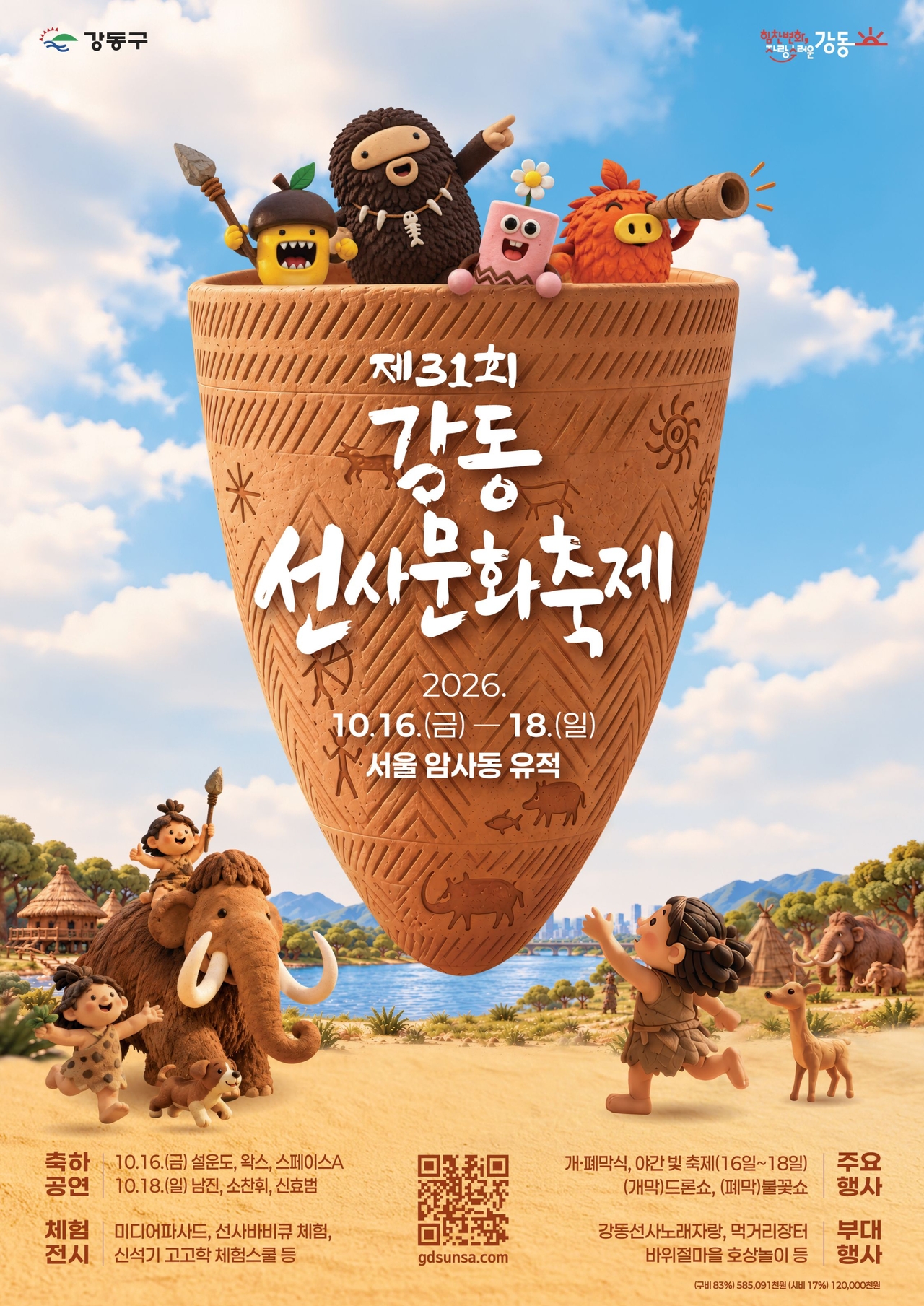
Gangdong-gu will hold the 31st Gangdong Prehistoric Culture Festival from Oct. 16 to 18 at the Amsa-dong Historic Site (875 Olympic-ro) and the surrounding Amsa History Park in Seoul.
This year's festival carries the theme "Amsa, Where Seoul Began," celebrating the historical and cultural significance of the Amsa-dong site — the earliest known place of human settlement in Seoul. The program brings together prehistoric culture from 6,000 years ago and contemporary arts and culture in one place.
The Gangdong Prehistoric Culture Festival is the only Seoul festival selected as a "2026–2027 Preliminary Festival" by the Ministry of Culture, Sports and Tourism, a recognition of its potential to grow into a leading historical and cultural festival representing the capital. Building on that designation, the district plans to strengthen the festival's signature content and identity as it works toward selection as a "2028–2029 Cultural Tourism Festival."
This year's edition focuses on connecting the history that began in Amsa 6,000 years ago with today's arts and culture. The festival grounds will be organized as a space where different eras and cultures converge, blending hands-on prehistoric experiences with contemporary cultural programming to embody the festival's identity as "Amsa, Where Seoul Began."
A newly created "Time-Slip Handcrafted Market" will greet visitors at the festival entrance, with themed zones spanning the Paleolithic and Neolithic periods through to modern and future Gangdong. Emerging artists will also take part, presenting distinctive works and content. From the moment visitors step inside, they can expect an experience that feels like a journey through time.
Inside the Amsa-dong Historic Site, the "Land of Earth" area will offer hands-on encounters with prehistoric life and culture. Through the Neolithic Archaeology School and a range of other programs, visitors can experience what daily life was like for Neolithic people and deepen their understanding of prehistoric culture.
A special talk concert series will also take place on the forest stage within the Amsa-dong Historic Site, where nature and culture come together. On Saturday, the "Prehistoric Stories: Why?" talk concert will explore the mysteries of the prehistoric era. On Sunday, the "Lee Se-dol Talk Concert: The Divine Move" — tied to the district's outreach cultural concert series — will welcome audiences. Visitors can enjoy a distinctive cultural experience amid the natural setting of the historic site.
Near the site entrance, a "Wishes Come True" corner will feature a photo zone and a relaxation space. On opening day, visitors will be invited to leave their personal wishes as part of an interactive program, giving the community a shared role in shaping the festival's meaning.
Opening and closing ceremonies will feature spectacular performances. At the Oct. 16 opening, a drone show will set the stage for trot music legend Seol Un-do, emotional ballad queen Wax and 1990s pop icon Space A — a lineup designed to delight audiences of all generations.
On Saturday, the program continues with a guest performance by the Gangdong District Arts Ensemble, a reenactment of "Bawuijeol Village Hosang Nori" — Seoul Intangible Heritage No. 10 — along with a festival for families with disabilities and the Gangdong Prehistoric Song Contest, offering a full day of performances and participatory events for residents and visitors alike.
On the final day, Sunday, youth cultural and arts clubs will take center stage with the "Prehistoric Rock Festival," which they planned and organized themselves. The closing ceremony will then bring the three-day celebration to a rousing finish with performances by trot legend Nam Jin, powerhouse vocalist So Chan-hwi and explosive singer Shin Hyo-bum.
Throughout the festival, a range of regular and hands-on programs will be available for the whole family. The Neolithic Archaeology School, prehistoric barbecue and other experiential activities will give children and adults alike a chance to immerse themselves in prehistoric culture.
A nighttime light festival making use of the natural landscape of the Amsa-dong site will also be on offer. This year, the existing evening program has been infused with prehistoric cultural elements, with art installations, light, music and video coming together across the site after sunset from Oct. 16 through Oct. 18. Visitors can stroll through the illuminated grounds and experience a special night where 6,000-year-old prehistoric culture meets contemporary art.
District Mayor Lee Su-hee said the Gangdong Prehistoric Culture Festival is "the district's signature cultural event, connecting the past, present and future at Amsa — the place where people first built their lives 6,000 years ago." She added that the district would "deepen awareness of the value of prehistoric culture in keeping with this year's theme of 'Amsa, Where Seoul Began,' and develop the festival into a leading historical and cultural event representing Seoul by adding contemporary arts and culture programming."
She also said the district would "work to raise the festival's competitiveness and quality, using the Ministry of Culture, Sports and Tourism's preliminary festival designation as a springboard toward becoming a full cultural tourism festival," and encouraged visitors to "come with family, friends and loved ones to create special memories at the Amsa-dong Historic Site, where 6,000 years of history breathes and lives."
seouldream01@heraldcorp.com




