Ethiopia dispatched 6,037 troops to help South Korea during the Korean War.
Africa has its own regional body — the African Union, or AU — much as Europe has the EU, and its headquarters are in Addis Ababa, Ethiopia.
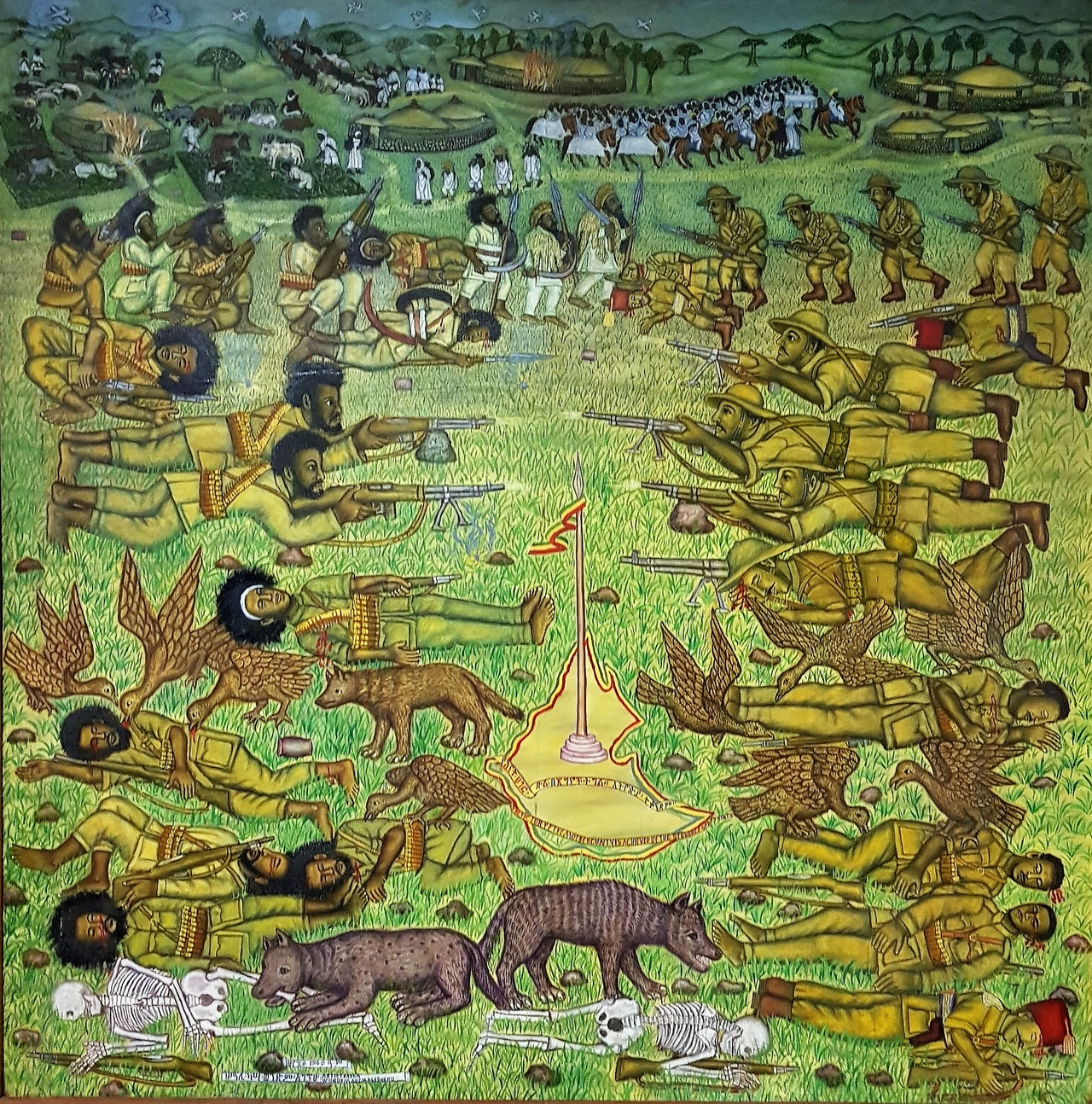
Ethiopia is widely regarded as the continent's central power and the only African nation to send troops to the Korean War. It demonstrated its strength by repelling Italy's invasion on its own, even though Italy entered the scramble for colonial territory late.
Ethiopian soldiers who fought in the Korean War left a remarkable record: 123 killed in action, 536 wounded and zero taken prisoner.
The fact that not a single soldier was captured speaks to the resolve with which they fought for Korea — a fight-to-the-finish commitment to either win or die.
Ethiopian veterans took part in more than 200 engagements on the Korean peninsula and were almost never defeated, according to the Ethiopia Korean War Memorial Hall in Chuncheon.
Trinity Cathedral in Addis Ababa holds the remains of 121 of the 6,037 Ethiopian veterans who served in the Korean War. Korean tourists visit the site to pay their respects, offering the greeting "Ammassaign egnalew" — "thank you" in Amharic. Ethiopia is also the homeland of "Lucy," the ancient human ancestor often called the mother of humanity, whose descendants spread across Asia and Europe to give rise to people today.
Chuncheon serves as a kind of hub for the memory of Ethiopian Korean War veterans, and Ethiopia has become one of the city's defining symbols.
The city is home to the Ethiopia Korean War Memorial Hall and Ethiopia Street, and Chuncheon has built on the bond forged through the war to maintain ongoing exchanges in veterans' affairs and culture.
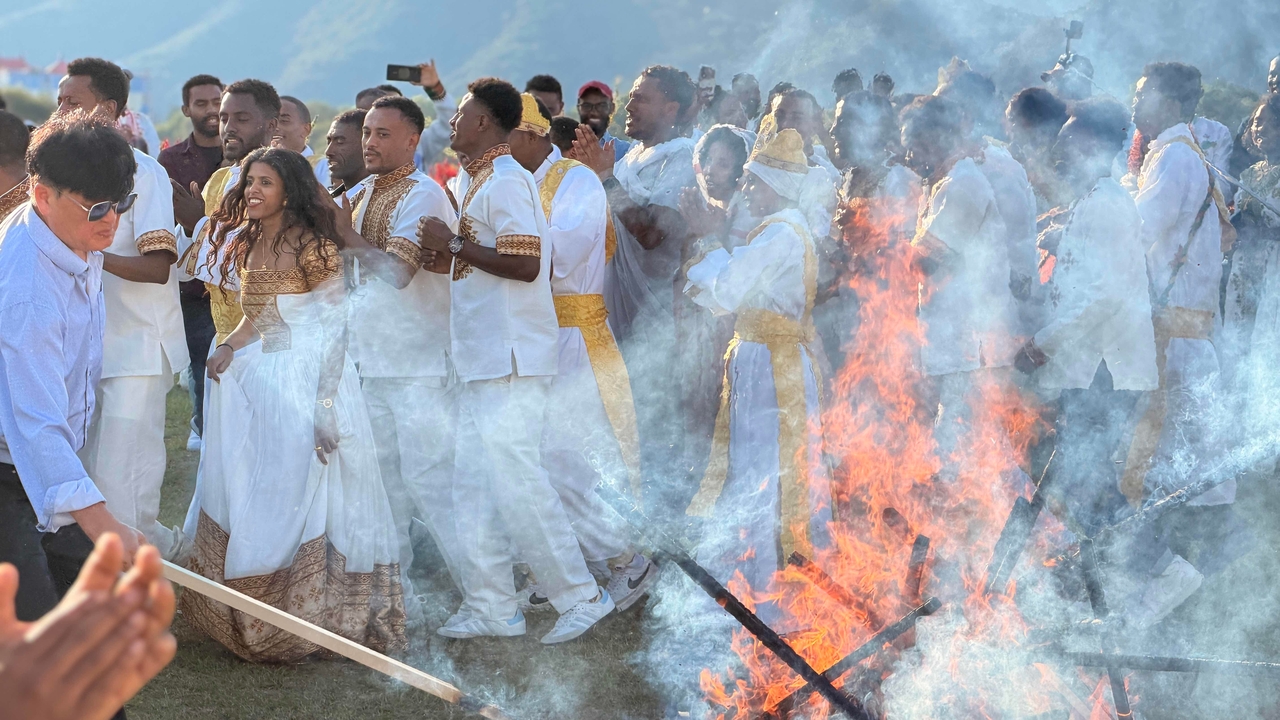
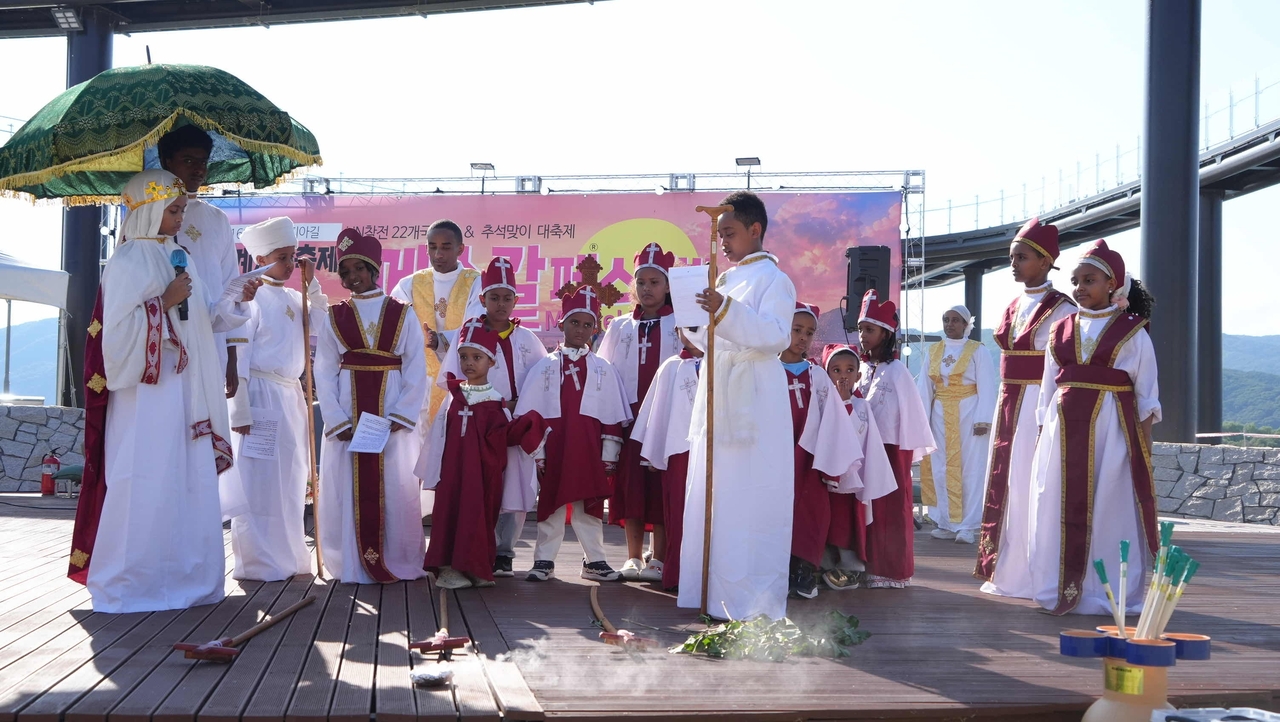
The 16th Ethiopia Meskel Festival, one of Ethiopia's most celebrated traditional festivals, was held Sunday at the Culture Plaza Forest in Chuncheon. For residents of the city, the event feels entirely natural.
Organized by the Ethiopian Orthodox Church and co-sponsored by the Ethiopian Embassy in Korea, Gangwon Province and the city of Chuncheon, the festival drew about 500 members of the local Ethiopian community, who shared their traditions and culture with Chuncheon residents.
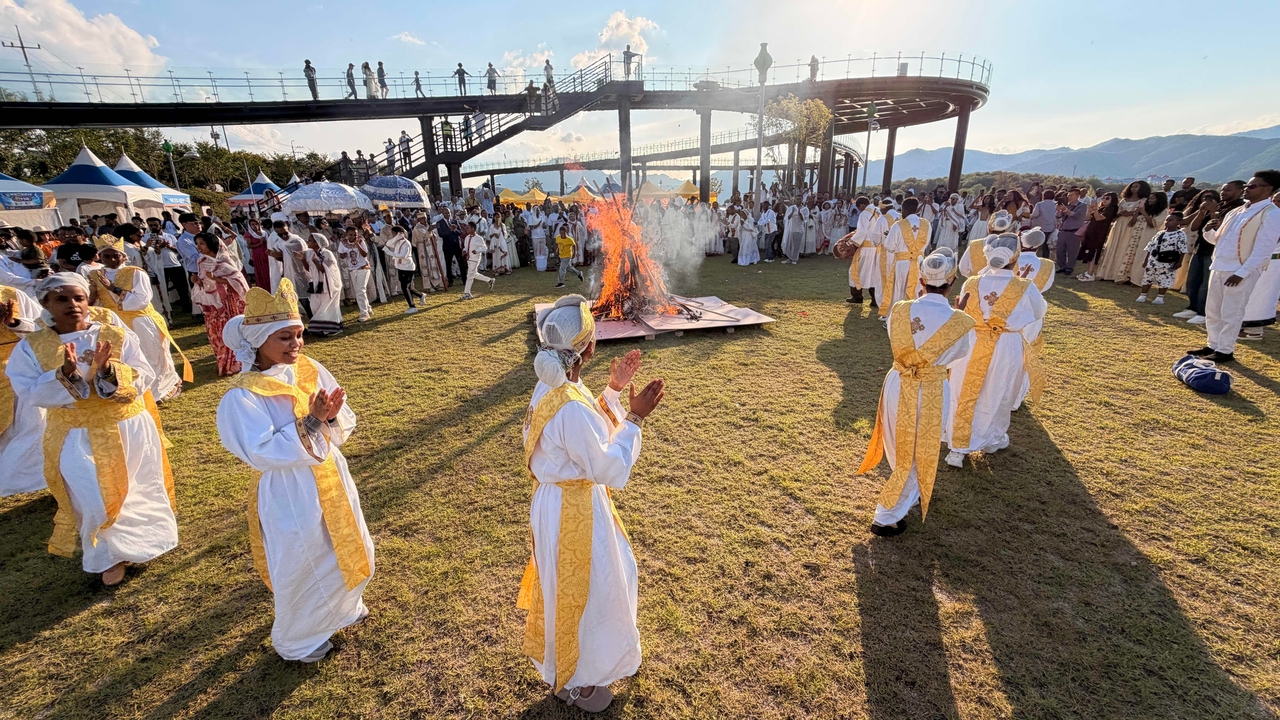
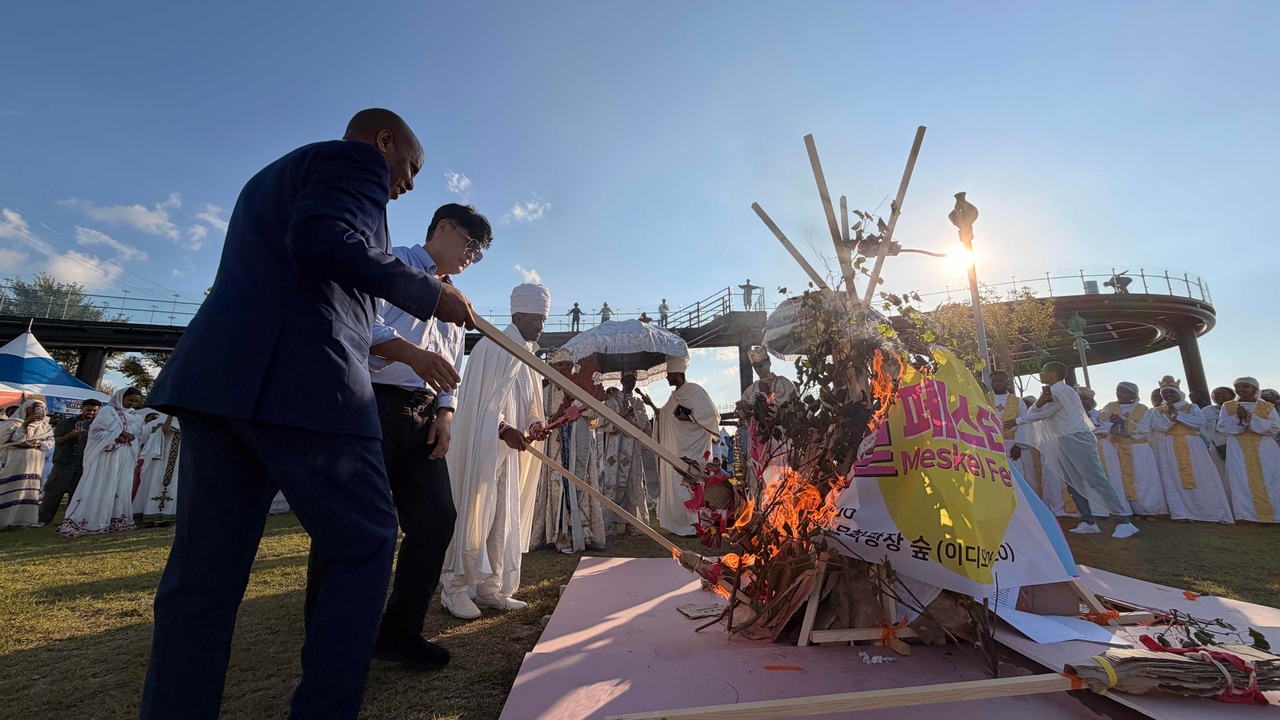
The day's program featured an Ethiopian welcome coffee ceremony, a peace and cultural solidarity declaration on Ethiopia Street, and the Demera ritual followed by cultural performances. The Demera — the centerpiece of the Meskel festival — involved lighting a bonfire to commemorate the discovery of the True Cross, recreating a cherished Ethiopian tradition. Residents joined in throughout, experiencing Ethiopian history and culture up close.
The Meskel festival is Ethiopia's foremost religious and traditional celebration, marking the discovery of the True Cross. In Chuncheon, the Ethiopian community holds the festival every year so residents can preserve their heritage and share it with the broader public.
In the lead-up to the Meskel festival, an Ethiopia Street World Coffee Festival was held at the same venue Friday and Saturday, introducing visitors to Ethiopian coffee culture and tradition.
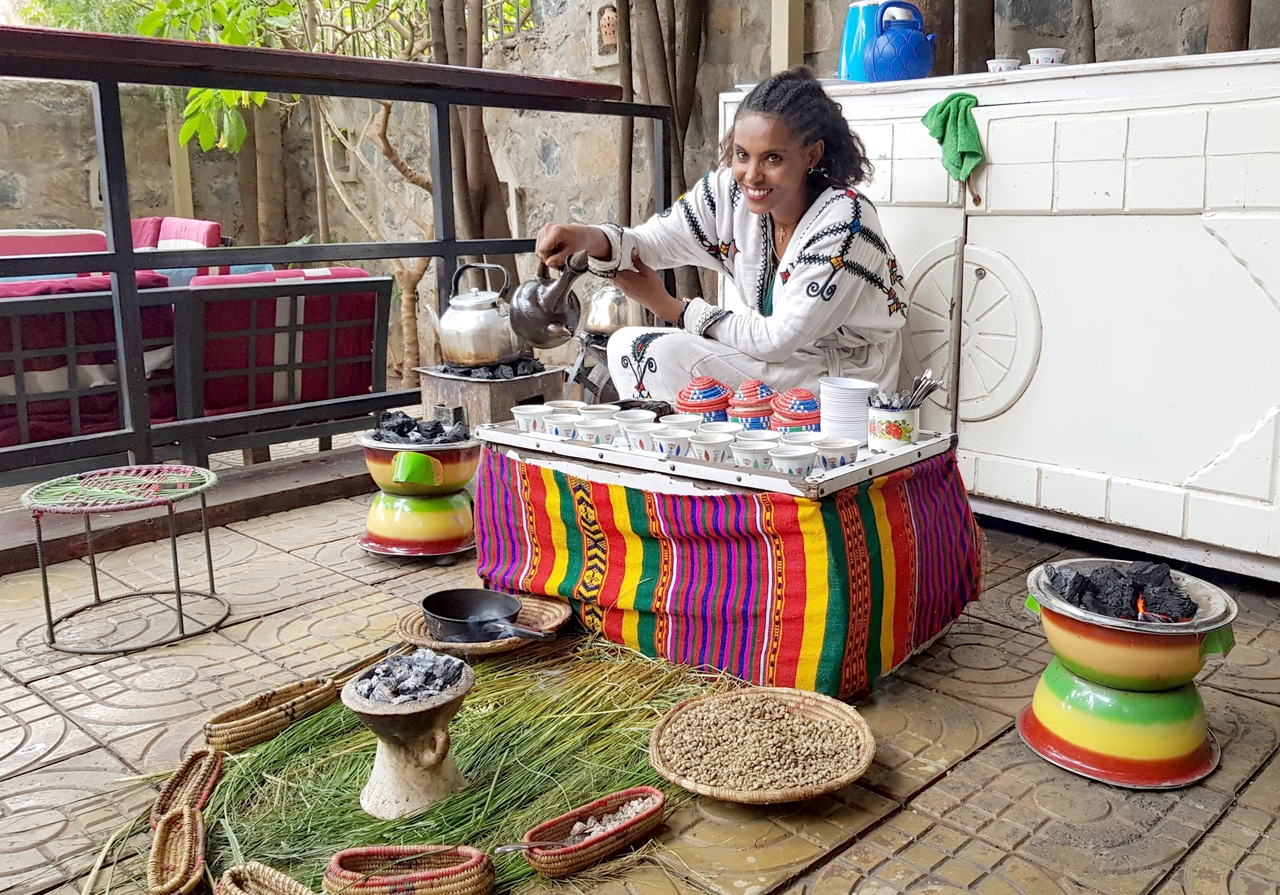
Chuncheon supported the event by providing tents, tables and other supplies, facilitating the cultural exchange between the Ethiopian community and local residents.
Chuncheon Mayor Yuk Dong-han said the Meskel festival is "a meaningful occasion to reflect on the bond between Chuncheon and Ethiopia, forged through the sacrifice of war, and to share each other's cultures," adding that the city would "continue to expand opportunities for international cultural exchange where foreign residents and citizens can come together."
abc@heraldcorp.com