A similar initiative launched in 2020 fell short
amid constraints on unit size, quality upgrades
The government has unveiled a new plan to supply high-quality public rental housing targeting not just low-income households but the middle class as well. With Seoul apartment prices continuing to rise and the jeonse and monthly rent market remaining unsettled, attention is focused on whether the initiative can overcome the shortcomings of public rental policies pursued under the Moon Jae-in administration and deliver meaningful housing stability.
According to related ministries, the Ministry of Land, Infrastructure and Transport announced through its recently released "Housing Stability Plan" the creation of a new category called "universal public rental housing," under which a total of 190,000 units will be supplied by 2030 to allow a broad range of households to live stably.
The universal public rental category was introduced to dispel the perception that existing public rental housing is cramped and low in quality because it primarily targets vulnerable groups. Units on public land will center on the more popular sizes of 55 to 84 square meters in exclusive use area for families with children, while urban areas will focus on 40 to 60 square meters. Single-person youth households will also be offered units of at least 30 square meters.
The government plans to raise quality to the level of private housing by adopting three- and four-bay layouts and premium finishing materials used in newly built apartments. Supply will concentrate on prime urban locations with good transit access, such as transit-oriented areas. Income eligibility thresholds will be set higher than the current public rental standard of 150 percent of median income, and the asset threshold will also be raised to the third-quintile average of 345 million won ($254,000) or above, with the aim of actively drawing in middle-class demand.
Rents will be set below surrounding market prices and adjusted flexibly based on factors including the tenant's age, marital status and whether they have children. The guaranteed tenancy period will be six years as a baseline, extendable to a maximum of 20 years.
The plan bears a strong resemblance to the "quality lifetime housing" initiative the Moon Jae-in government announced in November 2020. At the time, the government also unified construction-type public rental housing into an integrated public rental system, expanded the income threshold to 150 percent of median income and the exclusive use area cap to 85 square meters, and pledged to supply 63,000 mid-sized units by 2025.
That system, however, ran into practical constraints. It proved difficult to increase mid-sized units while maintaining the total number of households on limited sites, and the higher construction costs from quality upgrades placed a heavy burden on public finances. Above all, as the share of middle-class tenants within the unified system grew, critics pointed out that support for vulnerable groups — one of the original purposes of public rental housing — was being neglected.
The government's decision this time to establish "universal public rental housing" as a separate category is intended to prevent a repeat of those past missteps.
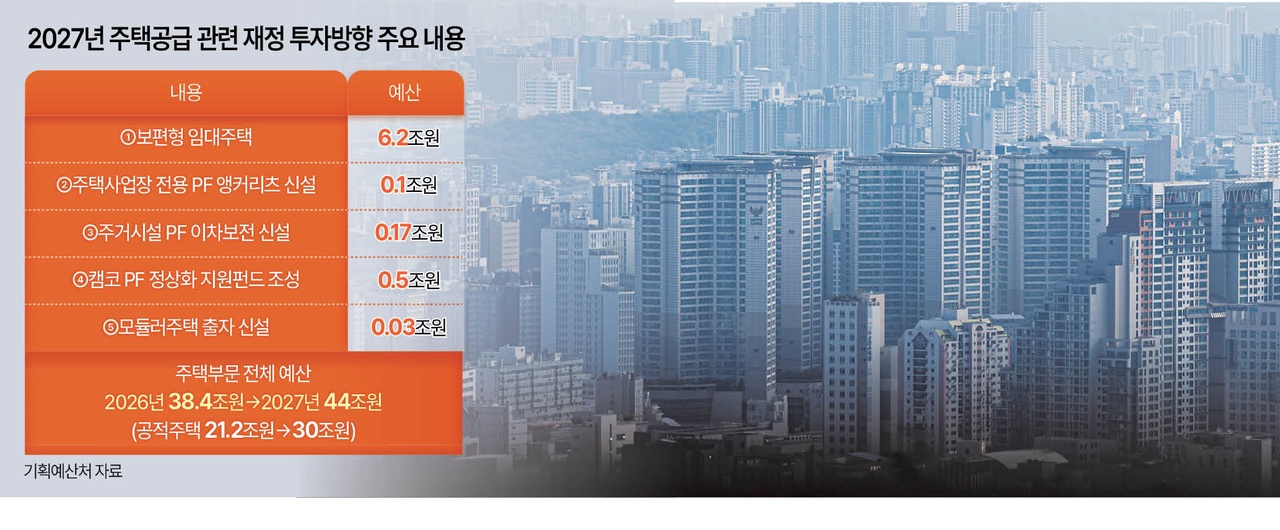
To ease the financial burden on Korea Land and Housing Corporation from expanding unit sizes and raising quality standards, the government plans to significantly increase equity investments and loans from the Housing and Urban Fund in consultation with fiscal authorities. In addition to building new units centered on third-generation new towns, the government will also pursue a "purchase model" — buying high-quality homes in prime locations — to accelerate the supply timeline.
"When the integrated public rental system was introduced in the past, middle-class demand was also kept in mind, but actual operations went differently," a Ministry of Land, Infrastructure and Transport official said. "There was a significant risk that vulnerable groups would be harmed if the system remained unified without a separate category. Many of those problems will be substantially addressed under universal public rental housing," the official added.
hss@heraldcorp.com