Delinquency persistence rate among self-employed rises to 80.9%
Vulnerable borrowers struggle to enter and exit arrears alike
Rate-hike cycle adds upward pressure on delinquencies in Q3
Domestic demand recovery, government relief measures seen as offsetting factors
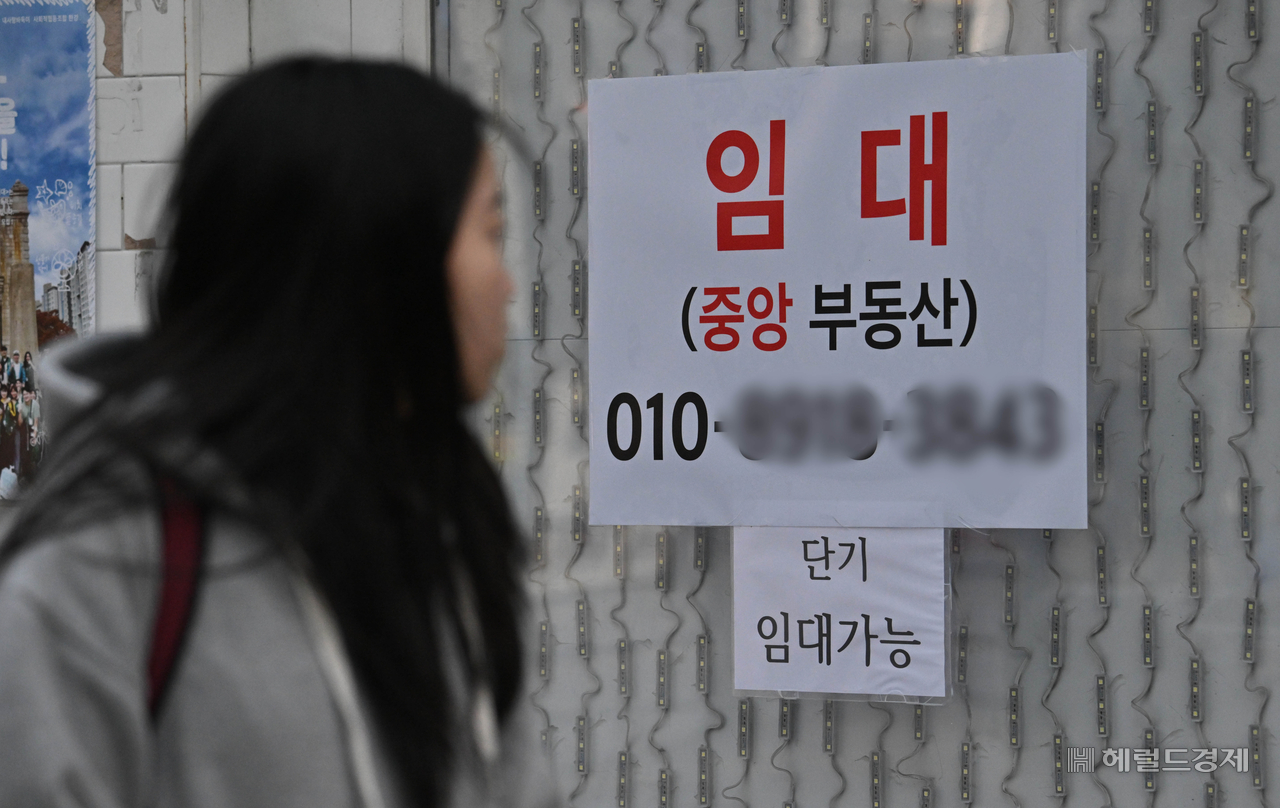
The delinquency rate on loans held by vulnerable self-employed borrowers has reached its highest level in 15 months as debt-repayment burdens mount during the current rate-hike cycle. More than eight in 10 self-employed borrowers who have already fallen into arrears are failing to return to normal repayment.
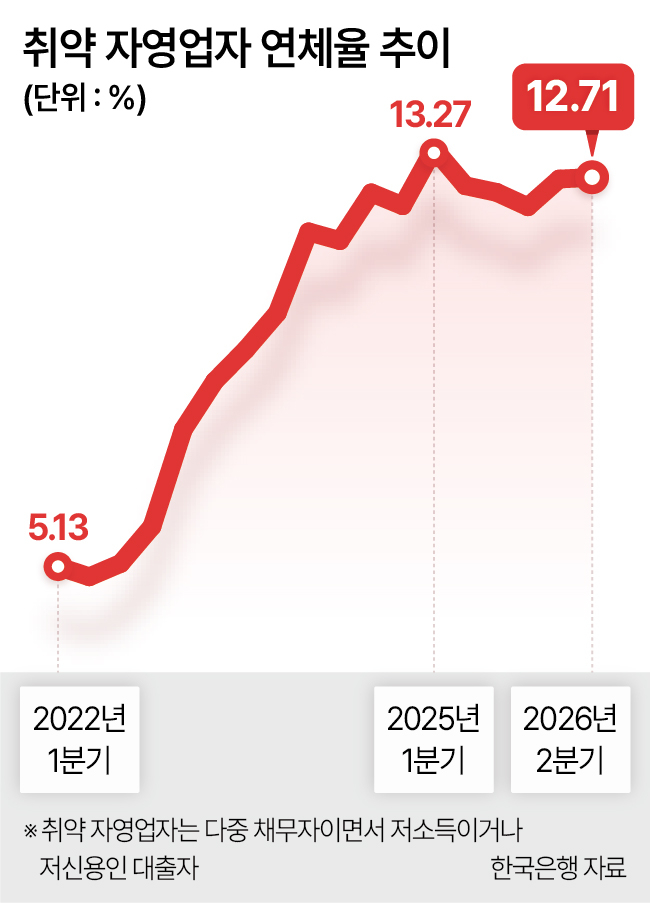
According to the Bank of Korea's Financial Stability Report released Tuesday, the delinquency rate on loans held by vulnerable self-employed borrowers stood at 12.71 percent at the end of the second quarter (April–June) of this year — the highest since 13.27 percent recorded at the end of the first quarter of last year. That figure was more than six times the overall self-employed delinquency rate of 1.99 percent over the same period. Vulnerable self-employed borrowers are defined as those who have taken out loans from multiple financial institutions and are either low-income or have low credit ratings.
Both the number of vulnerable self-employed borrowers and the size of their outstanding loans are growing. The number of such borrowers reached 411,000 at the end of the second quarter, up 7,000 from the end of last year. Their total loans rose 4.7 trillion won ($3.4 billion) — from 114.6 trillion won to 119.2 trillion won over the same period — accounting for 10.9 percent of all self-employed loans. Total outstanding loans to the self-employed rose 5.6 trillion won from the end of last year to 1,098.5 trillion won, though the pace of growth has been slowing since the second half of 2022.
It is also becoming harder for self-employed borrowers who fall into arrears to return to normal repayment. The delinquency persistence rate — the share of borrowers who remain in arrears from one quarter to the next — rose from 78.4 percent at the end of last year to 80.9 percent in the second quarter of this year. That means more than eight in 10 self-employed borrowers who were delinquent in the previous quarter remained so in the current one. This is the first time the rate has exceeded 80 percent in 15 months. Breaking it down by borrower type, the persistence rate for vulnerable borrowers rose from 81.2 percent at the end of last year to 82.3 percent in the second quarter, while the rate for non-vulnerable borrowers climbed from 74.0 percent to 78.0 percent.
Trends in new delinquencies also diverged depending on borrowers' repayment capacity. The overall delinquency entry rate for self-employed borrowers stood at 0.90 percent, broadly declining since last year. The rate for non-vulnerable borrowers fell from 0.72 percent at the end of last year to 0.60 percent. By contrast, the rate for vulnerable borrowers rose from 3.17 percent to 3.60 percent over the same period.
A Bank of Korea official said both the delinquency entry rate and the persistence rate for vulnerable self-employed borrowers were higher than those for non-vulnerable borrowers. "This means that vulnerable borrowers are more likely to fall into arrears when repayment conditions deteriorate, and it takes them longer to return to normal repayment once they do," the official said.
The Bank of Korea assessed that upward pressure on the self-employed delinquency rate will increase somewhat in the third quarter as rising loan interest rates take effect during the rate-hike cycle. The central bank said the pressure could persist for now, as the prolonged duration of existing delinquencies is compounded by a rise in new delinquencies among vulnerable borrowers.
However, the delinquency rate is expected to gradually ease as loan growth among the self-employed slows, economic growth spreads to domestic demand, and the government's support measures for vulnerable borrowers take effect. Last month the government announced a comprehensive package that included measures to activate debt restructuring, expand support for small and medium-sized enterprises and small business owners, and strengthen access to financial services for low-income households.
"As financial institutions have recently stepped up sales and write-offs of non-performing loans and the government's debt restructuring has gained momentum, the overall self-employed delinquency rate has turned to a decline from the previous quarter," a Bank of Korea official said. "If the effects of the newly announced support measures for vulnerable groups are added on top of that, downward pressure on the delinquency rate will grow further going forward," the official added.
The Bank of Korea also recommended that early warning signs of deteriorating business conditions among the self-employed be detected promptly and linked to financial and managerial support, so that worsening conditions do not translate into new delinquencies. For borrowers already struggling to repay, the central bank said effective recovery support is necessary — including debt restructuring and assistance with business closure, job placement and re-entry into entrepreneurship.
The Bank of Korea said policy support must not undermine borrowers' willingness to repay or lead to moral hazard by simply deferring insolvency. It added that support recipients should be selected based on their business conditions and prospects for recovery, that support periods should be set on a reasonable basis, and that the resolution of non-performing loans should proceed in parallel.
forest@heraldcorp.com
kimstar@heraldcorp.com