Public deliberation committee to gather public opinion and recommend findings to Ministry of Climate, Environment and Energy
Ministry to finalize power supply plan based on deliberation results and expert review
![The Seokri area of Yeongdeok-gun, North Gyeongsang Province, which had been designated as the site for the Cheonji nuclear power plant. [Provided by Maeil Business Newspaper]](https://wimg.heraldcorp.com/news/cms/2026/09/22/news-p.v1.20260618.d131fc5a6317410fa13eeabff83bfb1d_P1.jpeg)
The government will hold roughly three months of deliberative discussions with a citizen participation panel starting next month to debate the role of nuclear power in the future energy mix, ahead of drafting the 12th Basic Plan for Electricity Supply and Demand (2026–2040). As power demand surges driven by three major mega-projects — AI data centers, semiconductors and electric vehicles — the question of whether to include new nuclear power plants in the 12th plan has been placed on the table for public deliberation.
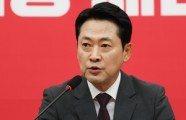
The Ministry of Climate, Environment and Energy said Minister Kim Sung-hwan reported the "nuclear power deliberation promotion plan" to the Cabinet on Tuesday.
The ministry said the deliberation was intended "to broadly gather public opinion on what role nuclear power should play in drafting the basic plan for electricity supply and demand, at a time when power demand is rapidly rising due to the expansion of semiconductors, electric vehicles and other sectors, and when stable power supply and carbon neutrality must be achieved simultaneously."
It added that the process would "move beyond simply asking whether people support or oppose the construction of new nuclear power plants, and instead comprehensively discuss nuclear power's role as one of several alternatives for meeting future electricity demand."
To that end, the government will establish a "Nuclear Power Deliberation Committee for the Basic Plan for Electricity Supply and Demand." The committee will consist of up to 11 members, including one chairperson, who will be a neutral figure capable of leading the deliberation process impartially. Members will be drawn from fields including humanities and social sciences, science and technology, survey statistics, conflict management and energy, and will be selected as neutral parties with no stake in the nuclear power industry.
Nuclear energy experts will be organized into a separate expert subcommittee to provide technical information needed throughout the deliberation process, including on nuclear power and electricity supply and demand.
During the deliberation, a citizen participation panel will be formed from a representative cross-section of the public and given ample opportunity for learning and discussion through a deliberative debate format. Alongside the deliberative debates, open forums involving experts and online public comment channels will run in parallel, so that opinions from a wide range of citizens and stakeholders — beyond the citizen panel itself — can also be gathered.
The deliberation committee will collect public opinion and submit recommendations to the ministry, which will then integrate the results with expert reviews on electricity supply and demand and grid conditions to finalize the basic plan. The outcome of the roughly three-month deliberation process is expected to be a key variable shaping the role of nuclear power in the 12th plan and the future energy mix.
The Ministry of Climate, Environment and Energy has held a series of forums in preparation for the 12th Basic Plan for Electricity Supply and Demand, including discussions on the electricity sector (Aug. 20), power demand (Aug. 20), renewable energy supply outlook (Aug. 26) and early retirement of coal power plants by 2040 (Friday). The ministry plans to finalize the basic plan after incorporating the results of this nuclear power deliberation as well.
"The 12th Basic Plan for Electricity Supply and Demand is a meaningful plan — the first to be drawn up since the launch of the people's sovereignty government," Minister Kim said. "Through this deliberation, we will listen carefully to the diverse views of the public on the role of nuclear power and faithfully reflect the results in future energy policy."
Meanwhile, the Lee Jae Myung administration announced in June that Yeongdeok-gun in North Gyeongsang Province had been selected as the candidate site for two large nuclear reactors. Gijang-gun in Busan was chosen as the candidate site for the country's first small modular reactor. Both selections follow the plan outlined in the 11th Basic Plan for Electricity Supply and Demand, announced in February last year under the Yoon Suk Yeol administration.
The demand planning subcommittee of the 12th plan's overall steering committee, incorporating the mega-projects announced in late June, projected peak electricity demand in 2040 at between 158.4 GW (baseline scenario) and 165.0 GW (upward scenario) — an increase of 26.6 to 26.8 GW from the forecast issued in April, equivalent to the combined capacity of roughly 19 large nuclear reactors.
oskymoon@heraldcorp.com