Forty young participants designed seven ways to reconnect, drawing from their own experiences of loneliness
From scented sachets to anonymous voices to slow-drip coffee — new experiments in building relationships through culture and art
Someone poured their loneliness into a scented sachet. Someone else offered comfort through their voice to a stranger they had never seen. Slowly brewing a cup of coffee alone became, for another, a way of caring for oneself.
These were all answers that young people found within their own loneliness — their own ways of reconnecting.
Loneliness is not easy to name amid the pressures young people face: job searches, housing instability, and fraying social ties. It can feel too vague to ask for help with, too personal to share — something to simply endure alone.
So Seodaemun-gu asked them directly: "What do you need when you're lonely?"
Seodaemun-gu announced Tuesday that it had run a youth loneliness prevention project called "Lonely Market" in partnership with Bluebird C, a social venture working in culture and the arts.
The name carries a message: sell your loneliness, buy connection. Rather than having administrators or experts decide in advance what programs young people need, the project invited participants to start from their own experiences and find their own paths back to relationship and connection.
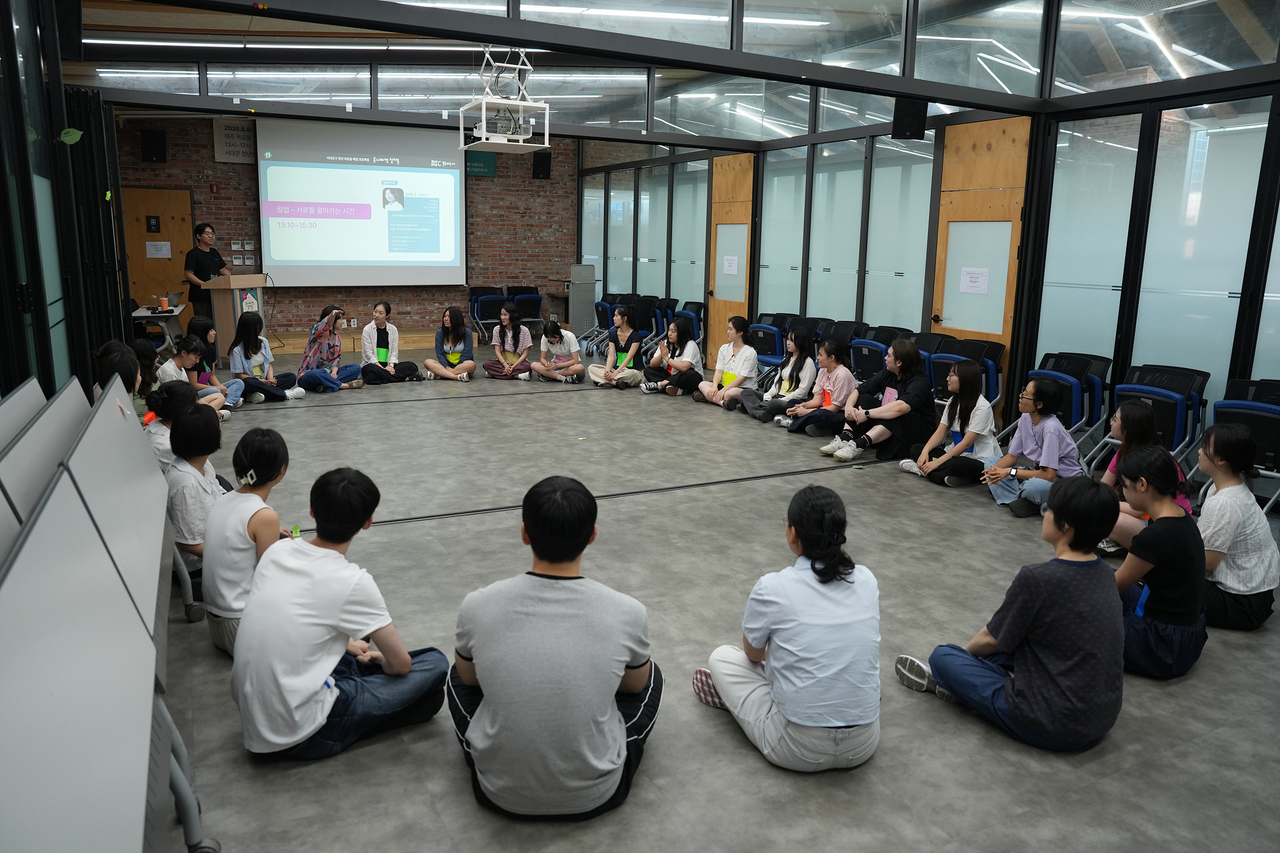
Forty young people came together. Over four weeks, they shared their experiences of loneliness, listened to one another's stories, and worked in seven teams to build their own answers.
The answers turned out to be closer to everyday life than anyone expected. The team behind "Lonely Scent" did not treat loneliness as something to be eliminated. Instead, they accepted it as part of themselves, expressed the feeling through fragrance, and created a "loneliness sachet" to hold it.
The team "City of the Solitary" took the view that what people need is not a grand relationship but simply the experience of being noticed by someone. They created a sound installation where visitors could offer anonymous words of comfort to a stranger — and receive a stranger's comfort in return.
The Namulnabul team thought about the kind of distance young people living alone actually need in their relationships. Rather than ties that demand constant contact, they focused on "loose connections" — low-pressure bonds that simply persist — and proposed "Maeum Hanyakbang," a project blending psychological self-assessment with art.
Team Alone's answer was a single cup of coffee. Rather than labeling time spent alone as loneliness by default, the team offered a self-care program centered on the slow, deliberate ritual of hand-drip coffee — turning solitude into a moment of tending to oneself.
Across all the different answers ran a common thread: not erasing loneliness, but creating small openings through which people might find their way back to one another.
The program also produced measurable change. Using a diagnostic tool certified by the Seoul Metropolitan Government, researchers found that participants' confidence in forming relationships rose 18.8 percent after the program. Some 95.2 percent of participants agreed that "loneliness is a problem society must address together."
"I realized that the loneliness I thought only I was going through is in fact an emotion we all share," one participant said.
The stories of those 40 people did not stay among 40 people. At the Seodaemun-gu Youth Culture Festival "Heart of Youth," held Friday on Yonsei-ro in Sinchon, a booth with a striking name drew immediate attention.
"We'll buy your loneliness."
Citizens browsed, experienced, and voted on the seven ideas the young participants had created. About 2,000 people visited the booth. What had begun as one person's private feeling — passed through the experiences of 40 — became a conversation shared by some 2,000 people in the heart of Sinchon.
The district is not stopping there. It plans to link the strongest ideas to follow-up projects in October, giving them another chance to be tested in real settings.
"What young people experiencing loneliness need is not to be told to tough it out alone, but an opportunity to reconnect with others," Seodaemun-gu District Mayor Park Un-gi said. "Finding answers within young people's own experiences and connecting those answers back to the community — that is the role of a city where young people want to stay."
seouldream01@heraldcorp.com