![Daegu city officials and representatives of farming organizations meet Monday at the Sanggak office building's first conference room to discuss concerns over the central government's ongoing comprehensive farmland investigation. [Photo by Kim Byung-jin]](https://wimg.heraldcorp.com/news/cms/2026/09/21/news-p.v1.20260921.4e7ab15936e24796a6917e8a322f9b76_P1.jpg)
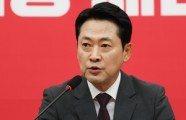
Daegu city officials met Monday with representatives of local farming organizations at the Sanggak office building to hear concerns about the central government's ongoing comprehensive farmland investigation.
Daegu Mayor Choo Kyung-ho attended the meeting alongside Park Ki-hwan, the city's director of economic affairs, and the heads of several agricultural groups — Hwang Kyung-dong of the Daegu Agricultural Organizations Council, Jeon Seong-bae of the Daegu chapter of the Korea Successor Agricultural Managers Association, Lee Young-hee of the Daegu-Gunwi-gun chapter of the Korea Women Farmers Association, Lee Young-seop of the Daegu chapter of the Korea Rural Leaders Association, and Kim Go-heon of the Daegu 4-H Federation. Seo Kyung-hyeon, deputy head of Dalseong-gun, and Lee Jae-seong, deputy head of Gunwi-gun, also took part.
The government launched the probe in April and plans to run it through year's end. It covers all farmland acquired since the Agricultural Land Act took effect in 1996, with the aim of curbing illegal speculation under the principle that farmland should be owned by those who till it.
Farmers have recently pushed back, however, arguing the investigation fails to reflect the realities of rural communities outside the major cities.
Participants at Monday's meeting said they understood the intent behind the probe but argued that the government's current approach was "completely out of touch with the reality of rural areas, where it is hard both to farm and to sell land," voicing a range of grievances.
Hwang, the Daegu Agricultural Organizations Council chair, said most farmland owners are elderly and physically unable to farm their land directly, making it common practice in rural areas to lease plots to others in exchange for rent. "This investigation is now threatening even those conventional lease arrangements that have nothing to do with speculation," he said, calling for effective protections so that well-intentioned landowners and tenant farmers are not directly harmed.
Jeon, the successor farmers' association chair, described the hardship facing those who inherited farmland from older relatives but have no one to work it and have been leasing it to neighbors — only to find themselves subject to forced-disposal orders and, if they fail to comply, liable for punitive enforcement fines equal to 25 percent of the officially assessed land value.
Lee Young-hee, the women farmers' association chair, said the government had pointed elderly farmers toward the farmland bank as an alternative to direct cultivation, but noted that in practice the system is difficult to use for land with poor farming conditions, and called for more concrete relief measures.
Lee Young-seop, the rural leaders' association chair, described a market freeze, saying that with virtually no buyers for farmland in rural areas, those worried about penalties are trying to offload their land at distressed prices, causing owners to see the value of their assets collapse almost overnight.
Jeong Chang-seop, chair of the Daegu Agricultural Cooperative Management Council, warned that if farmland prices keep falling and transactions dry up, local agricultural cooperatives that have extended loans against farmland as collateral could suddenly find themselves exposed to bad-debt risk.
Kim Go-heon, the 4-H Federation chair, raised concerns about young farmers who recently took out government-backed loans to buy farmland, saying the drop in land prices triggered by the investigation could leave them saddled with debt as the collateral value of their holdings falls. He urged the government to take into account the realities of rural regions, which differ sharply from those of Greater Seoul.
Concern was also evident among the local governments conducting the investigation. Lee Jae-seong, deputy head of Gunwi-gun, said the probe conflicts with established farming practices such as tenant farming, elderly landowners delegating cultivation to neighbors, and informal proxy arrangements, and warned it could shrink the area of land actually under cultivation, weaken the agricultural base, and cause economic hardship for local farmers as land prices fall.
Seo Kyung-hyeon, deputy head of Dalseong-gun, asked the city to relay several specific requests to the central government: that farmland converted to written lease contracts or entrusted to the farmland bank before a formal hearing be exempted from disposal orders; that farmland owned for less than three years be temporarily allowed to be placed under farmland bank lease arrangements; and that the enforcement fine be recalibrated to reflect agricultural income rather than applied as a flat 25 percent rate, easing the burden on farmers.
Daegu city said it would forward the concerns raised at the meeting to the central government and formally recommend policy changes, including relaxing the criteria for farmland bank entrustment, revising the standards for determining which land is subject to disposal orders, and adjusting the enforcement fine system.
"Daegu city will actively work to convey the voices of local farmers to the government and push for policy improvements that reflect the realities of rural communities and the people who depend on them," Choo said.
kbj7653@heraldcorp.com