National Academy of Engineering of Korea holds second hydrogen economy forum
Onsite power generation spotlights AI data center-hydrogen synergy
High production costs, uncertain demand seen as barriers to market growth
Dividing roles with overseas imports, bridging price gaps among key challenges
Investment uncertainty grows without policy and regulatory support
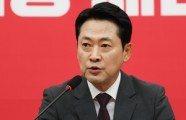
![Lee Jae-kwang, chairman of the National Assembly's Budget and Accounts Committee and a Democratic Party of Korea lawmaker, delivers a keynote address at the second hydrogen economy forum held at Kensington Hotel in Yeouido, Seoul, on Monday. [National Academy of Engineering of Korea]](https://wimg.heraldcorp.com/news/cms/2026/09/21/news-p.v1.20260921.73bc7edea20447fc9c5378b1dfc06829_P1.jpg)
South Korea should expand hydrogen's role beyond fuel-cell vehicles and power generation to encompass electricity for AI data centers, industrial feedstocks and renewable energy storage — treating it as a pillar of national energy and industrial strategy, experts said Monday. As hydrogen-related technology and private investment grow rapidly, they called for consistent policy and market frameworks to support long-term corporate investment.
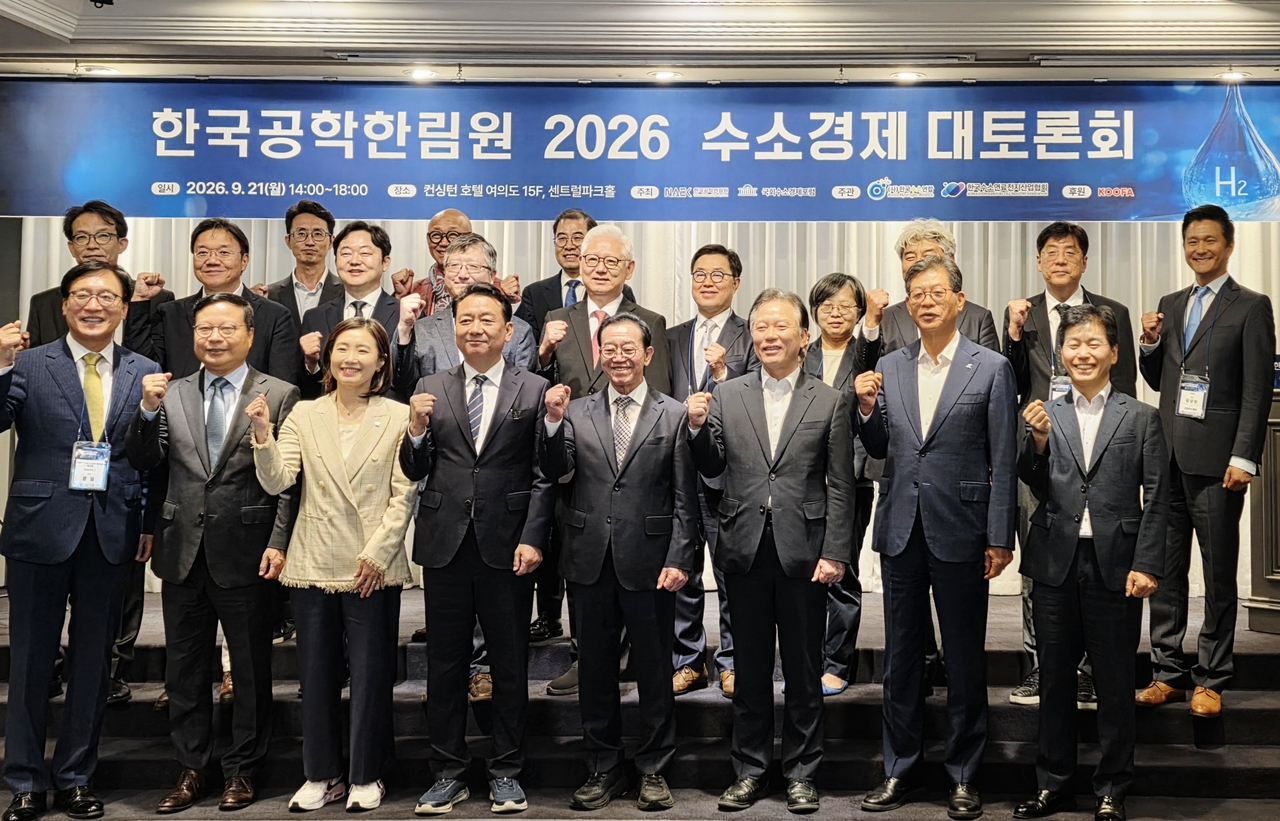
The National Academy of Engineering of Korea held the second hydrogen economy forum at Kensington Hotel in Yeouido, Seoul, on Monday to discuss pressing issues and policy challenges in the hydrogen economy. Co-organized by the Korea Hydrogen Alliance and the Korea Hydrogen and New Energy Association, the event drew participants from the National Assembly, government, industry, academia, research institutions and local governments.
Hydrogen's role expands from AI power to renewable energy storage
Participants said hydrogen must evolve from a fuel tied to specific uses into a core component of the national energy system. Hydrogen can serve as an energy storage medium to offset the volatility of solar and wind power, while also functioning as an industrial feedstock for steel, chemicals and semiconductors. Its importance as a production industry — spanning water electrolysis, carbon capture and storage, and liquefaction plants — is also growing.
Lee Jae-kwang, chairman of the National Assembly's Budget and Accounts Committee, delivered a keynote address titled "How Should We Prepare a National Strategy in the Age of Energy Transition?" "In a situation where an energy crisis can trigger a national crisis, it is not an overstatement to call the AI era an energy war," he said. "It is important to move away from energy policy that drifts with every change of administration and instead pursue consistency that does not waver with each new government."
![A hydrogen vehicle. [123RF]](https://wimg.heraldcorp.com/news/cms/2026/09/21/news-p.v1.20260408.24fc1f076a7b448f88c7b370b1317988_P1.jpg)
Lee Kwan-young, head of the Clean Hydrogen Storage and Utilization Strategy Research Center at the Korea Institute of Science and Technology, presented on the theme "Hydrogen: The Completion of the Energy System." Panel discussions were then held across six areas: general overview, production, mega-projects and AI data centers, storage and distribution, mobility and utilization, and local governments.
Particular attention was paid to the potential combination of AI data centers and hydrogen. As the rapid spread of AI drives a surge in data center power demand, onsite power generation using fuel cells and hydrogen turbines was proposed as an alternative. Onsite generation refers to producing and supplying electricity directly near a factory or data center, without relying on long-distance transmission networks.
In the storage and distribution session, the recurring problem of renewable energy output curtailment in Jeju and the Honam region was on the agenda. Participants discussed producing and storing hydrogen with surplus electricity and drawing on it when needed — compensating for the intermittency of renewable energy and using hydrogen as a long-duration energy storage solution.
Production costs, demand, infrastructure: hurdles to market growth pile up
In the production and power generation session, high production costs for clean hydrogen and uncertain demand were identified as the main obstacles to market expansion. Key challenges raised included how to divide roles between building domestic production capacity and importing hydrogen from overseas, and how to bridge the price gap in the early market.
Participants said the general hydrogen power supply market and the clean hydrogen power supply market also need greater predictability in terms of market scale and regulatory frameworks, so companies can commit to long-term investment. They also called for conditions that allow a range of power generation technologies — including hydrogen turbines, fuel cells and LNG-hydrogen co-firing — to enter the market.
In the mobility session, participants said the stagnation in passenger hydrogen vehicle adoption and the low profitability of charging stations must be addressed together. Rather than focusing on expanding the number of passenger vehicles, they argued demand should be built around buses and trucks, which would in turn improve the economic viability of charging infrastructure. In the local government session, calls were made for business models that combine regional industries with actual demand, so that hydrogen cities can develop into self-sustaining projects.
Across all sessions, policy consistency and predictability emerged as central themes. Participants said a coordinated policy framework is needed to address issues including adjustments to hydrogen vehicle subsidies, charging station deficits and the development of clean hydrogen supply chains. With companies already having committed large-scale investment, there are concerns that if policy and regulatory support does not come in time, uncertainty around existing investment will grow and follow-on investment will stall.
An official from the National Academy of Engineering of Korea said the organization hopes the outcomes of the forum will serve as a meaningful reference for the forthcoming second basic plan for hydrogen economy implementation and related regulatory reform efforts.
keg@heraldcorp.com