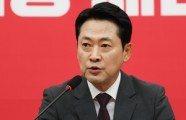
National Assembly briefing set for Tuesday morning; Kim Jung-kwan to depart Wednesday with President Lee Jae Myung on US-Mexico trip
![South Korea's Minister of Trade, Industry and Energy Kim Jung-kwan (left) and US Commerce Secretary Howard Lutnick. [Yonhap]](https://wimg.heraldcorp.com/news/cms/2026/09/21/news-p.v1.20260917.6626ee638ce04200b6ba07b8c37509c8_P1.jpg)
South Korea is discussing signing and announcing a memorandum of understanding with the United States on its first major US investment project on Tuesday, immediately after briefing the National Assembly — but only if last-minute negotiations succeed. Persistent disagreements over guarantees of "commercial viability" and the terms of capital recovery and profit-sharing mean a final deal is far from certain. Minister of Trade, Industry and Energy Kim Jung-kwan is scheduled to depart Wednesday to accompany President Lee Jae Myung on a trip to the United States and Mexico.
Political circles and related ministries said Monday that the Ministry of Economy and Finance and the Ministry of Trade, Industry and Energy are pushing to brief the National Assembly on the US investment negotiations on Tuesday. However, it remains unclear whether the relevant Assembly committees — the Planning and Finance Committee and the Trade, Industry, Energy, SMEs and Startups Committee — have finalized the briefing schedule. An earlier briefing originally set for last Thursday was postponed after the Korea-US negotiations failed to wrap up in time.
If the Tuesday morning Assembly briefing proceeds as planned, an MOU signing and announcement could follow after the two sides finalize remaining details. The government, however, maintains that the specific project, the timing of any announcement, and the scale and schedule of fund transfers have yet to be determined.
"Because Minister Kim has an overseas trip on Wednesday to join President Lee Jae Myung's US-Mexico itinerary, there is a strong possibility that a signing with the US will take place late Tuesday afternoon, after the morning Assembly briefing," a political source said. "Taking the time difference with the US into account, it would most likely happen after 10 p.m." The source added that the committee chairs had yet to give a definitive answer, and officials were still waiting.
The remarks were interpreted as a sign that the two sides had resolved their differences over guarantees of "commercial viability" ahead of the Assembly briefing.
Until recently, South Korea's insistence on "commercial viability" as a condition for its US investment projects had been a sticking point in the negotiations. The requirement also serves as a safeguard for officials involved in the talks, shielding them from potential probes or audits in the event of a change in government.
Under this "commercial viability first" principle, the two sides have reportedly agreed to exclude several projects the US had sought from the current investment agreement — including an LNG export terminal construction project in Louisiana, a carbon capture and storage project in the US Midwest, and a spent nuclear fuel recycling project.
Rising long-term US government bond yields have emerged as a last-minute complicating factor. When long-term US Treasury yields — which serve as the benchmark for the principal and interest repayment rate — rise, the required rate of return on a project increases, making it harder to meet the "commercial viability" standard the government has set as a guiding principle for its US investments.
According to financial industry sources, the yield on 20-year US Treasury bonds stood at 4.73 percent annually when the two countries signed a "strategic investment MOU" last November. It has since risen to 5.40 percent.
Under the MOU, the repayment rate on Korean investment funds is set at the 20-year US Treasury yield plus a spread. The spread is determined through Korea-US consultations and reflects South Korea's funding costs and the risk premium of each individual investment project.
Assuming a spread of around 0.3 percentage points, the principal and interest repayment rate would rise from 5.03 percent at the time of the MOU signing to 5.70 percent currently.
South Korea agreed to split cash flows generated by the projects equally with the US until the principal and interest are fully recovered — meaning South Korea must generate $2 from a project for every $1 it recoups.
Assuming the principal and interest are recovered in equal annual installments over 20 years, the required annual rate of return for the entire project would rise from 16.1 percent at the time of the MOU signing to approximately 17.0 percent now, an increase of about 0.9 percentage points.
Government officials say the outlook for a final deal remains murky, with a number of issues still sharply contested between the two sides.
The US has recently asked South Korea to transfer nearly half of its annual investment commitment by year-end, sources said. The two countries had been discussing a framework under which South Korea would invest $200 billion over 10 years at $20 billion annually, but the US side's separate demand for a cash transfer of a certain amount within this year has stalled the final agreement.
The two sides are also reported to be at odds over a proposed "umbrella" special purpose company structure — designed to allow underperforming projects to draw on profits from better-performing ones — as well as the appointment of Korean project managers.
oskymoon@heraldcorp.com