
"They raised prices too aggressively — and now they're paying for it."
LVMH — Louis Vuitton Moët Hennessy — the world's top luxury group and the first European company to surpass a market capitalization of $500 billion, is in freefall. Louis Vuitton handbags typically sell for several million won, with premium products reaching the 10 million won range.
The group's decision to raise product prices by 50 to 70 percent compared with 2019 levels has backfired.
According to Investing.com, LVMH shares on the Paris Bourse closed at 412.30 euros ($473) on Thursday, down 35.76 percent from 641.80 euros at the start of this year. The group has ceded its position as Europe's most valuable company for the first time since 2017 and has dropped out of the continent's top 10 by market capitalization. Compared with its 2023 peak, the share price has collapsed more than 54 percent — cut in half.
According to Forbes, LVMH CEO Bernard Arnault has recently lost his title as Europe's richest person to Amancio Ortega, the founder of fashion retailer Zara.
Analysts say a slowdown in luxury spending driven by economic weakness — and above all, the price barriers LVMH itself erected — have hobbled the group's growth. According to McKinsey, more than 80 percent of the luxury industry's growth since 2019 has come from price increases. But as those increases accumulated, prices rose to levels that middle-class customers — those buying luxury goods for the first time or only occasionally — could no longer afford.
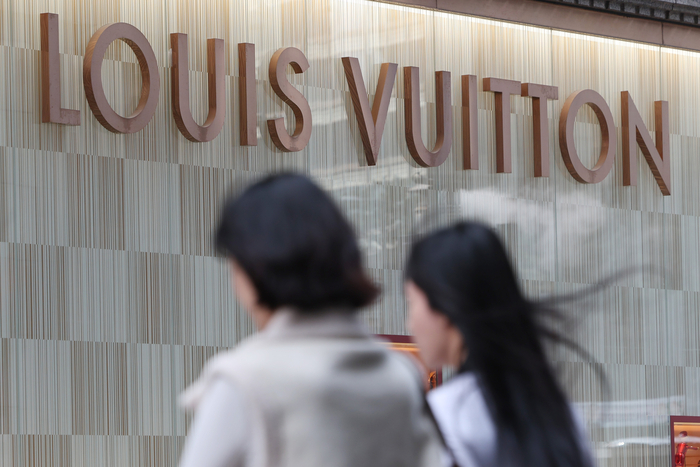
The decline has steepened as spending contracted even among the luxury sector's biggest spenders — consumers in China and the Middle East.
McKinsey has concluded that price increases in the luxury market have reached their limit and that elevated prices are suppressing demand among aspirational consumers. According to consulting firm Bain & Company, 60 million luxury customers worldwide stopped buying luxury goods over the past three years.
Analysts say a broader shift in consumer behavior — including a global "lipstick effect," in which shoppers opt for cosmetics, perfumes and other small indulgences over expensive handbags — has changed the spending landscape, yet Louis Vuitton has continued raising prices and losing customers as a result.
"Louis Vuitton has many customers in the top 1 percent of wealth, but its core base has always depended on mainstream middle-class spending," an industry official said. "As middle-class purchasing power has dried up, that segment has dropped out of the luxury consumer pool, and the impact is showing up directly in sluggish sales."
park@heraldcorp.com