Annual new redevelopment zone designations average 35 over past 5 years
496 redevelopment projects underway across Seoul, including 214 under fast-track planning
131,000 public housing units and 35,000 youth housing units supplied
Seoul has been designating new redevelopment and reconstruction zones at more than twice the pace of the previous decade, the city government said Monday, announcing plans to break ground on 310,000 housing units through redevelopment projects by 2031.
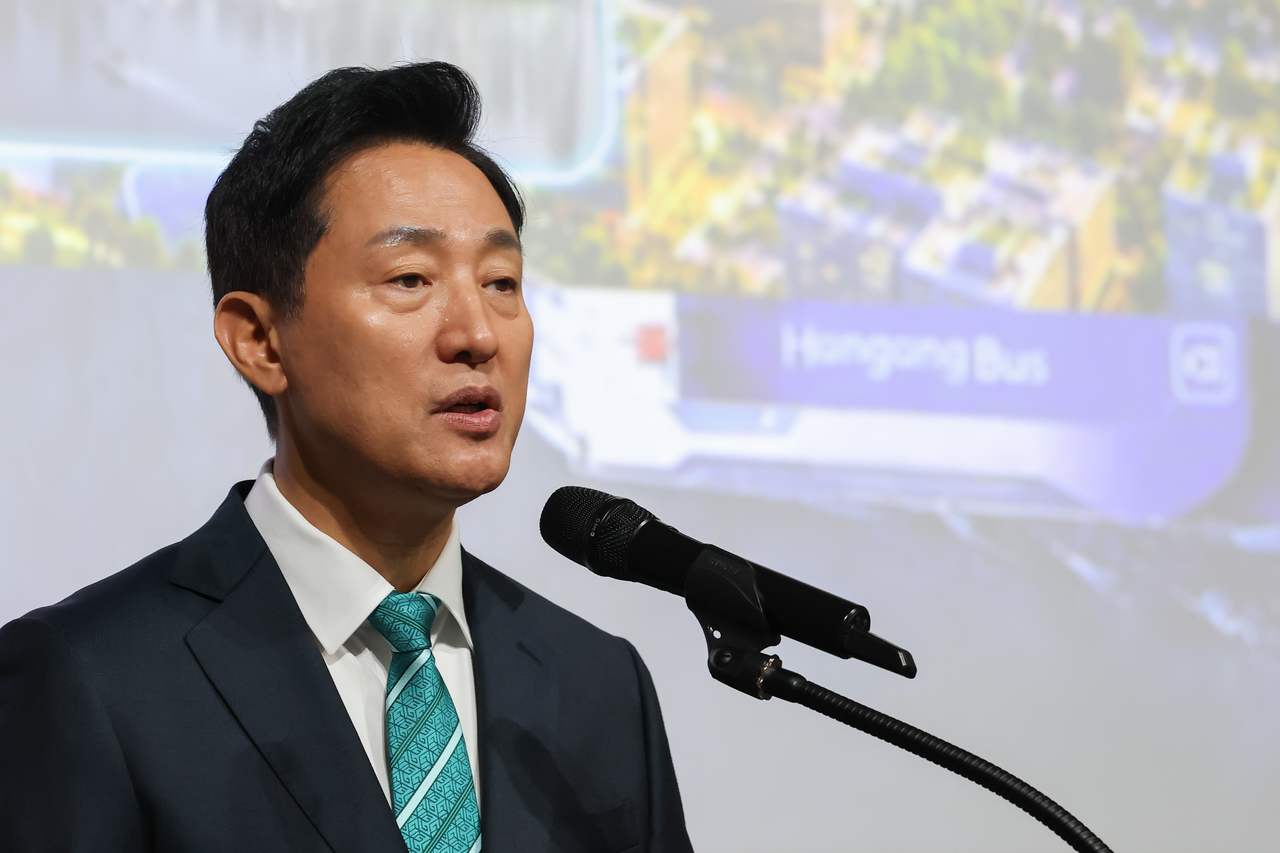
Seoul Mayor Oh Se-hoon hosted the "2026 Seoul Housing Policy Achievement Forum" at Seoul City Hall on Monday, presenting the results of housing initiatives since 2021 and outlining future supply plans. Oh personally fielded 11 questions across three policy areas — redevelopment projects, public housing and the housing ladder for lower-income residents.
The city cited the normalization of redevelopment and reconstruction projects as a key achievement over the past five years. New redevelopment zone designations have averaged 35 per year since 2021, up 106 percent from an annual average of 17 in the preceding decade. A total of 496 redevelopment projects are now under way across Seoul.
Since the introduction of the fast-track integrated planning system in 2021, 214 zones covering 307,000 units have been designated — 114 percent of the original target. The city said the designation process, which previously took more than five years, has been cut to about two years. Meanwhile, 168 sites with 43,000 units under the low-rise neighborhood consolidation housing program have entered the association formation stage.
Oh said the city would work to shorten the time between zone designation and subsequent approvals — including project implementation authorization and management and disposal plan approval — through to ground-breaking, so that designated zones translate into actual housing supply.
The city also plans to continue easing redevelopment regulations. It is already lowering the consent threshold for redevelopment association formation from 75 percent to 70 percent and relaxing standards for park and green-space contributions. Going forward, Seoul plans to petition the central government for a three-year temporary relaxation on restrictions on transferring association member status, a reduction in the mandatory rental housing ratio for redevelopment projects from 50–75 percent to 30–50 percent, and a 1.2-times increase in the legal maximum floor-area ratio for private redevelopment projects.
Oh expressed opposition to delegating authority over redevelopment projects of 500 units or fewer to autonomous district governments. He said Seoul's own processing time accounts for only about 2.7 percent of the total project timeline, and that the city's review period has already been cut from six months to a year in the past to one to three months now. He added that 17 of Seoul's autonomous districts lack staff experienced in redevelopment review, and that the city would therefore maintain a unified review system.
On the central government's plans to develop Yongsan Park and greenbelt areas, the city said it would maintain its existing policy of preservation. However, it announced plans to pursue mixed-use vertical development at the Tancheon Water Reclamation Center, which it intends to transform into a youth-focused industrial complex for the southeastern part of the city — combining youth housing, parkland and research and development facilities — and supply 13,000 housing units on the site.
The city said it has supplied a total of 131,000 public housing units over the five years since 2021, through public contributions from redevelopment projects, direct supply by Seoul Housing and Communities Corp. and purchased rental housing. Seoul's current public rental housing stock stands at 410,000 units, about 68 percent of which was supplied by the corporation. The city plans to add another 130,000 public housing units by 2031.
Public redevelopment and reconstruction projects are currently under way at 37 sites for 43,000 units, while public-participation neighborhood consolidation projects are proceeding at 23 sites for 15,000 units. The city plans to expand public involvement in private redevelopment projects by raising the reimbursement rate for purchased public rental housing and broadening incentives for public contributions.
The long-term jeonse housing program for newlyweds has supplied 7,108 units from July 2024 through August this year. The city plans to add 17,500 more units by 2030, bringing the cumulative total to 24,600. A survey of residents found that among 216 households that responded, 79 had welcomed a total of 82 children since moving in.
About 35,000 youth safety housing units have been supplied to date, with the city targeting a cumulative total of 46,000 by 2030. Citing rising interest rates and construction costs that have dampened new projects, the city said it would also move to improve financial support for developers and streamline procedures.
The long-term jeonse housing program, now in its 20th year, has supplied a total of 38,000 units. The city said the average deposit is about 41 percent of the average jeonse price for Seoul apartments, and that the cumulative savings on housing costs for residents amount to about 10 trillion won ($7.24 billion). Of the 15,529 households that vacated before their lease expired, 82.4 percent left voluntarily, and 72 percent of those moved into owner-occupied housing.
Youth-targeted housing supply totaled about 35,000 units from 2021 to 2025. Going forward, the city plans to continue supply through a range of programs: 10,000 units of small single-room housing, 6,000 units of shared housing, 2,000 units of stepping-stone youth housing, 5,000 units of co-living houses, 1,000 units in youth-focused complexes, 17,500 units of youth safety housing, 20,000 units of the newlywed long-term jeonse program and 600 units of an immediate move-in program.
Oh said the results of housing policy must ultimately be proven in the lives of residents. "We will not stop the clock of supply that has begun turning again," he said, "and will steadily continue supply so that everyone — from young people and newlyweds to low- and middle-income households without homes — can hold onto the hope of owning a home in Seoul."
quq@heraldcorp.com