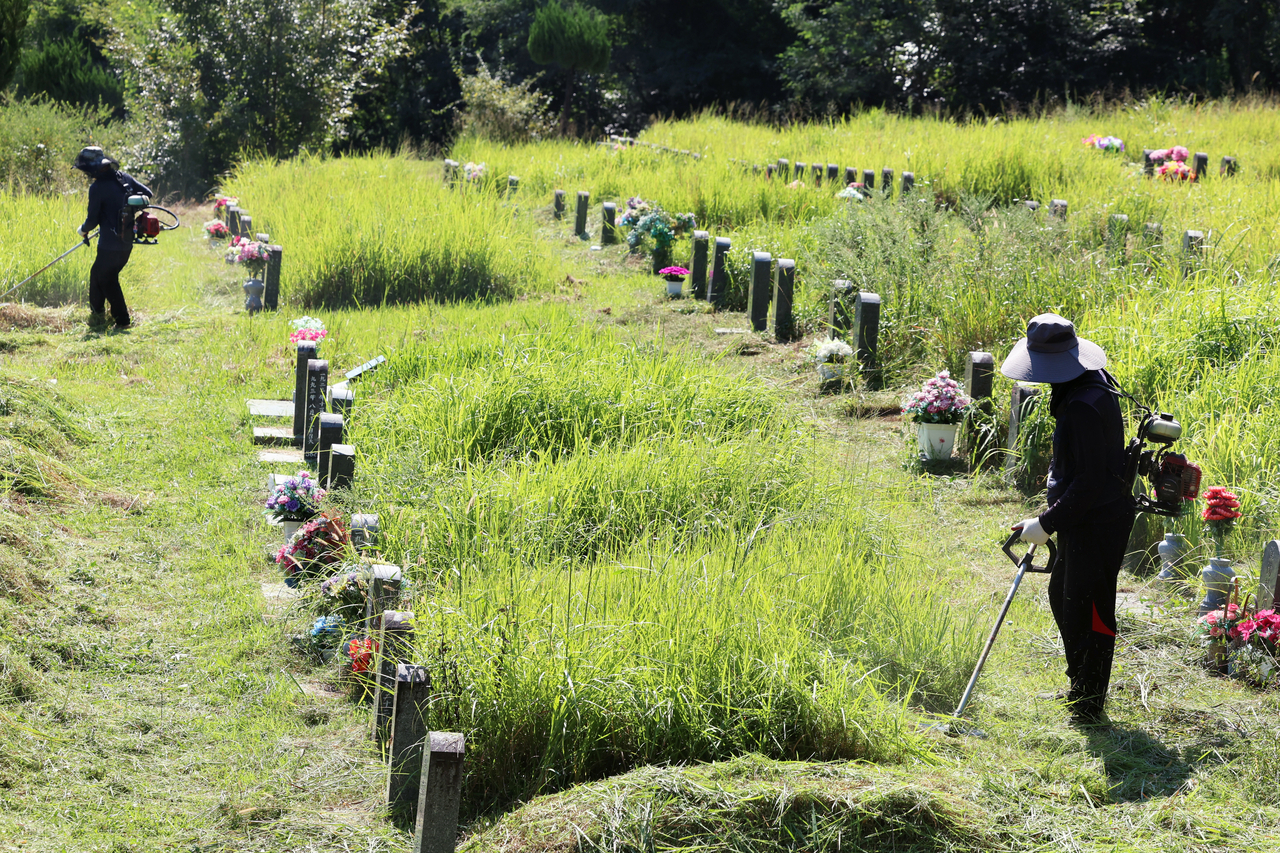
Mangwol Cemetery Park in South Jeolla-Gwangju — the first burial site for victims of the May 18 Democratic Uprising — will be redeveloped into a dedicated historical and memorial space.
The cemetery was where victims of the May 1980 uprising were first interred. It is also the resting place of democracy movement figures including martyr Lee Han-yeol, making it one of the most symbolically significant sites of South Korea's democratization struggle.
South Jeolla-Gwangju published a revised development plan for the park on Thursday, calling for the construction of a May 18 history museum and a new portrait memorial hall.
Under the plan, the existing ossuary at the park in Sugok-dong and Unjeong-dong, Buk-gu, will be demolished, and a new integrated building combining the history museum and portrait memorial hall will be built in its place.
A separately operated portrait memorial hall and a funeral service rest facility currently on the grounds will also be closed and relocated to the new structure.
Memorial spaces, including a wall of remembrance and the May Stone Tower, will be expanded.
A 3-meter-wide pedestrian path will be laid between the history museum and the wall of remembrance, along with a road connecting to the museum.
The city also plans to create two new plazas and expand parking facilities equipped with electric vehicle chargers.
The project will proceed through content development for the history museum and design phases, with completion targeted for 2029.
sij@heraldcorp.com