Mounting allegations weigh on ruling camp
Approval rating slide cited as factor in withdrawal
Even ruling party voices question vetting system
Han Dong-hoon calls withdrawal 'a victory for the people'
![Justice minister nominee Kim Seung-won, who stepped down Saturday saying he had decided "after deep deliberation to relinquish the nomination," is seen during his confirmation hearing Tuesday. [Yonhap]](https://wimg.heraldcorp.com/news/cms/2026/09/19/news-p.v1.20260919.4a5e86850e10445193f3ae1e3ff4c524_P1.jpg)
Justice minister nominee Kim Seung-won withdrew his candidacy Saturday, dealing a second consecutive blow to President Lee Jae Myung's plan to bring sitting lawmakers into his second-round cabinet reshuffle. The withdrawal came just six days after gender equality and family minister nominee Yong Hye-in stepped down on Sunday.
The fact that both were sitting Assembly members has drawn particular attention in political circles. President Lee had sought to draw on incumbent lawmakers in running the government, but the confirmation hearing process instead surfaced a string of controversies, forcing both nominees out in quick succession. Analysts say that with the administration's approval rating having recently fallen to its lowest point since inauguration, the president could not afford to let the personnel controversy drag on any further.
A Gallup Korea survey of 1,002 registered voters aged 18 and older, conducted Tuesday through Thursday and released Friday, put President Lee's job approval at 37 percent — a new post-inauguration low for the fourth consecutive week.
President Lee acknowledged the slide at a press conference Friday, saying it was "due to my own shortcomings." He added: "I agonized over it a great deal. At first there were many things I didn't understand, and I wondered whether it was because of specific issues at specific moments — but ultimately I came to think it was all of it together, and that it was due to my own shortcomings."
Yong's departure had seemed to put the personnel controversy to rest, but fresh allegations against Kim quickly piled up, renewing pressure on the ruling camp. Democratic Party of Korea leader Kim Min-seok praised the nominee as someone who "looks better the more you look at him," and the party leadership rallied to his defense — yet the controversy refused to die down even after the confirmation hearing.
Kim faced sustained opposition attacks over allegations that he called the then-head of the Ministry of Food and Drug Safety at the request of a broker identified as a man surnamed Yang, who was allegedly involved in the approval process for a COVID-19 treatment clinical trial. He also faced scrutiny over his ties to Yang, controversies surrounding a social cooperative, and a past drunk-driving record.
The controversy widened after independent lawmaker Han Dong-hoon repeatedly raised what he called a lobbying allegation against Kim involving the Ministry of Food and Drug Safety, citing prosecutors' investigative materials.
The release of recorded phone calls and text messages between Kim and Yang, along with a series of allegations surrounding a company Yang headed, kept the controversy alive. As the confirmation hearing produced more exchanges rather than resolving the allegations, a sense grew within the ruling camp that pressing ahead with Kim's nomination had become too great a political liability.
The turning point in Kim's fate came at President Lee's press conference Friday. The president declined to give a direct answer on whether he would proceed with the appointment, saying only that he would decide carefully, taking into account issues raised during the public vetting process and public expectations. Even after the Democratic Party adopted the confirmation hearing report — a procedural step that clears the way for appointment — the president's hesitation brought Kim's future back into question.
Just one day after the press conference, Kim stepped down on his own. "Watching President Lee's press conference on Friday, I made up my mind," he said, explaining his decision. "The people's livelihoods and the government's success come first. I concluded that I should not add any further burden to a government that must tend to people's lives and complete its reform agenda."
He did not, however, concede the allegations against him. "Even as I step down now, I will not give up the truth," Kim said. "I will expose the full picture of the targeted investigation by Yoon Suk Yeol and Han Dong-hoon's political prosecutors, and of Han Dong-hoon's illegal leaking and splicing of investigative secrets."
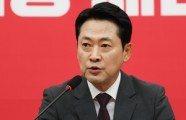
Han, who had been the most aggressive in pressing the allegations against Kim, posted on Facebook shortly after the withdrawal: "A victory for the people." He wrote that "the Lee Jae Myung Democratic Party defended with all its might what it called an 'oppa poison lobby' that 'looks better the more you look at it' — but the people won," adding, "I will keep going forward together with the people in mind."
With both Yong and Kim now gone, scrutiny of Cheong Wa Dae's personnel vetting system is expected to intensify. The fact that both nominees were sitting lawmakers who had already undergone scrutiny in the National Assembly has prompted questions about whether the pre-nomination vetting was thorough enough. One Democratic Party lawmaker said the presidential office's personnel vetting system was "clearly not working."
The Gallup Korea survey was conducted via telephone interviews using randomly selected virtual mobile numbers. The margin of error is plus or minus 3.1 percentage points at the 95 percent confidence level, with a response rate of 9.8 percent. For further details, visit the National Election Survey Deliberation Commission website.
thanks@heraldcorp.com