Birol praises Korea's battery, grid supply chain; says renewables should lead with nuclear in support role
![President Lee Jae Myung meets with International Energy Agency Executive Director Fatih Birol at Cheong Wa Dae on Thursday. [Yonhap]](https://wimg.heraldcorp.com/news/cms/2026/09/17/rcv.YNA.20260917.PYH2026091717040001300_P1.jpg)
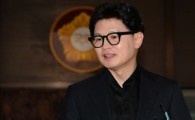
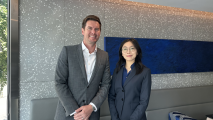
President Lee Jae Myung met with International Energy Agency Executive Director Fatih Birol at Cheong Wa Dae on Thursday to discuss responses to instability in the Middle East and the global climate crisis. Birol praised South Korea's electrification policies and industrial capabilities as a model for the world.
Cheong Wa Dae Chief Spokesperson Kang Yu-jung said in a written briefing that Lee and Birol held in-depth discussions on global energy industry and policy trends, ways to strengthen energy security through electrification, and new directions for energy security cooperation in the Asia-Pacific region.
Lee opened by expressing support for the IEA's efforts to overcome the global energy crisis, then said South Korea was also facing difficulties in its energy transition — centered on renewable energy — due to the war in the Middle East, and asked about the international community's response strategies.
Birol said countries around the world have adopted electrification as a core strategy in response to the Middle East war, seeking to reduce fossil fuel imports and maximize domestic power production. He added that "electrification can simultaneously achieve three goals: securing energy sovereignty, strengthening economic security, and addressing the climate crisis."
Birol identified South Korea's energy policy as a global model and cited three specific strengths. He praised the country for minimizing the domestic impact of the Middle East war through bold measures in transportation and logistics beyond financial and fiscal steps, for placing electrification at the center of its policy agenda while building a supply chain of battery, heavy electrical equipment and power grid companies, and for actively supporting electrification efforts in developing countries across Asia.
Birol then said he plans to present a target at COP31, the 31st UN Climate Change Conference to be held in Turkey this year, of raising electricity's share of energy consumption from the current 23 percent to 35 percent by 2035. He said that if many countries join the effort, it could also drive changes in financial markets.
The two also exchanged views on nuclear power. When Lee noted that countries appear to be returning to fossil fuels and deepening their reliance on nuclear energy in the wake of the Middle East war and asked for Birol's assessment, Birol said France, Sweden, the United Kingdom and the Netherlands are expanding new nuclear capacity while maintaining their existing plants. He added that "while renewable energy will firmly establish itself as the primary power source, nuclear power, if operated in a supplementary role, can also help reduce dependence on fossil fuels and contribute to cutting greenhouse gas emissions."
Birol also said that alongside falling electric vehicle prices, South Korea's automotive and battery manufacturing base has the potential to lead the electrification of the transportation sector worldwide.
Lee stressed the need for joint cooperation to strengthen energy supply chain resilience in the Asia-Pacific region, and said South Korea would work closely with the IEA to actively support energy capacity building across the region.
sunpine@heraldcorp.com