Thrills, cheer and wellness in Hainan ⑦
Once upon a time, long ago, a daughter of the Jade Emperor grew weary of the tedium of heaven and descended to the human world — choosing Hainan, warm and inviting at the edge of the sea — where she fell in love with a hunter.
Tales of a celestial woman who could no longer bear the monotony of life above and slipped down to earth are plentiful across Asia. The great goddess said to have shaped Jeju Island is one such figure. Across the Pacific, in North America — where Northeast Asian peoples form the core of many indigenous communities, including the Cherokee, who still use vocabulary strikingly similar to Korean — three sister peaks are said to stand guard over the Rockies, sent down by the gods. The story of a heavenly maiden coming to Hainan and falling for a mortal closely mirrors the Korean folktale of the woodcutter and the fairy.
Her departure, too, was unauthorized. The Jade Emperor was furious and, though she was his beloved daughter, he cursed her and turned her into a deer. The celestial woman, now a deer, chose to vanish.
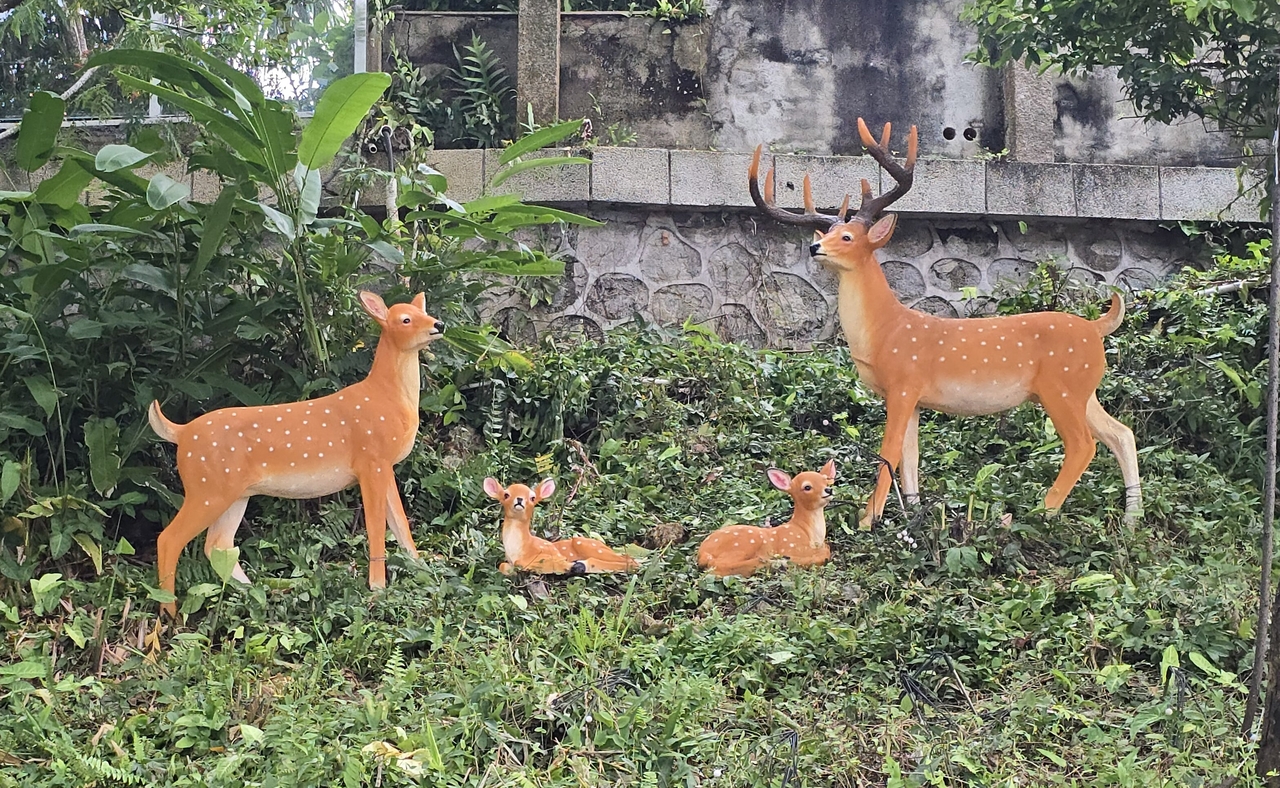
With no word of his beloved, the hunter lived on alone until he spotted a deer deep in the mountains at Wuzhishan, in the heart of Hainan. He gave chase southward, following the animal to a high cliff above Sanya Bay, where he drew his bow at the cornered prey.
At that critical moment, the Jade Emperor — a doting father at heart — hastily lifted the curse. As the deer turned to look back, the hunter saw the face of the woman he had loved and released the bowstring. She had returned. Only then did he realize that what he had taken for an unexplained disappearance had in fact been her ordeal, suffered on his account.
No parent can truly prevail against a child's heart. The Jade Emperor gave his blessing to their love and marriage, and the two lived happily, cultivating the abundance of Hainan — Sanya above all, the place where their love was reborn.
The defining image of this legend is the moment the deer turns its head to face the hunter. Written in hanja, those characters are read in Chinese as "Luhuitou" — the deer that looks back.
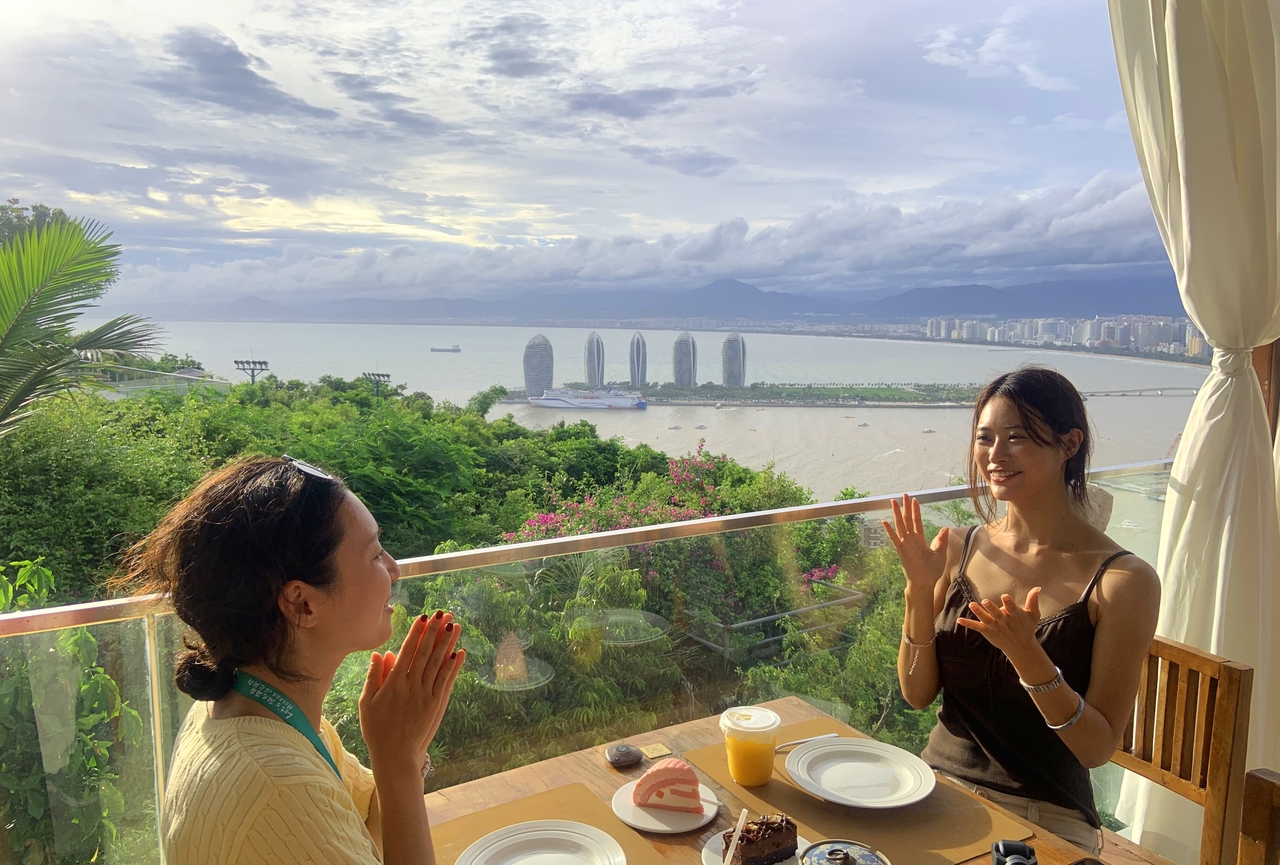
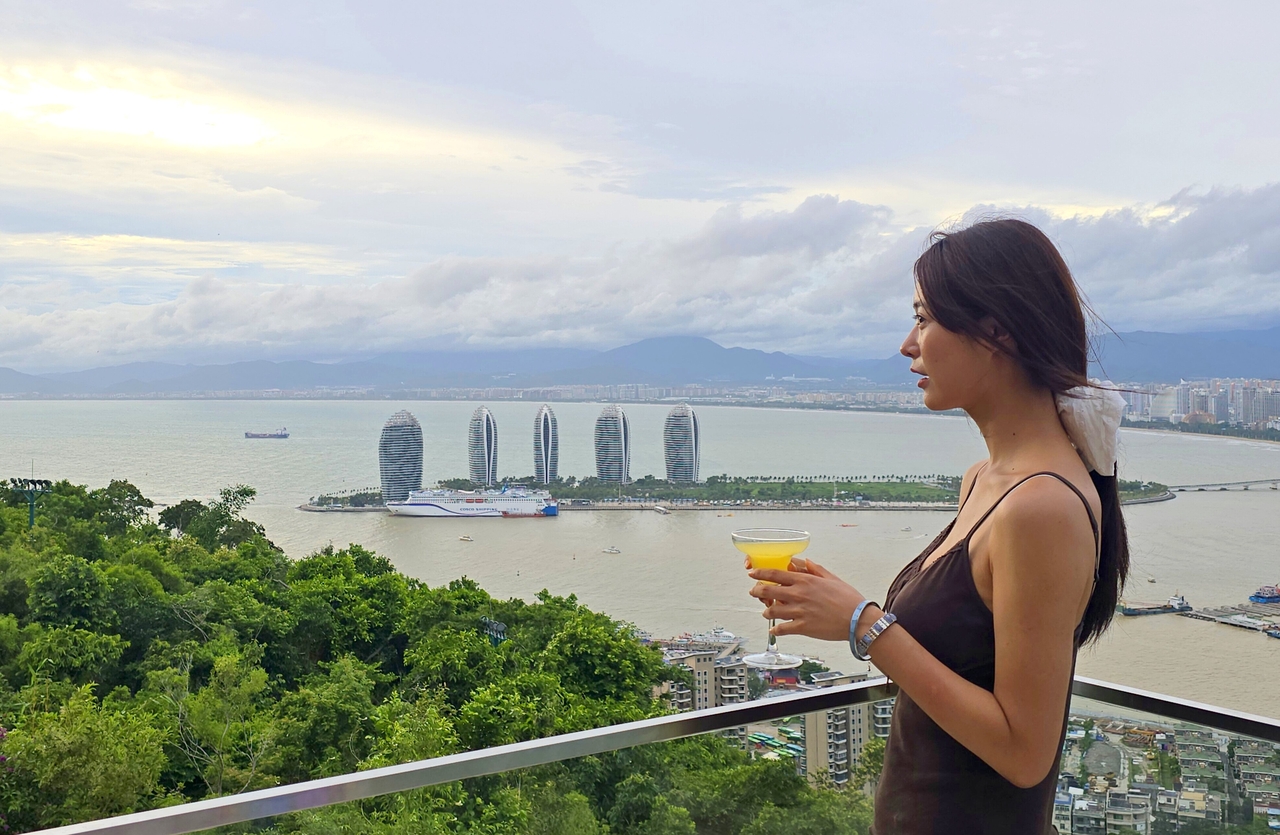
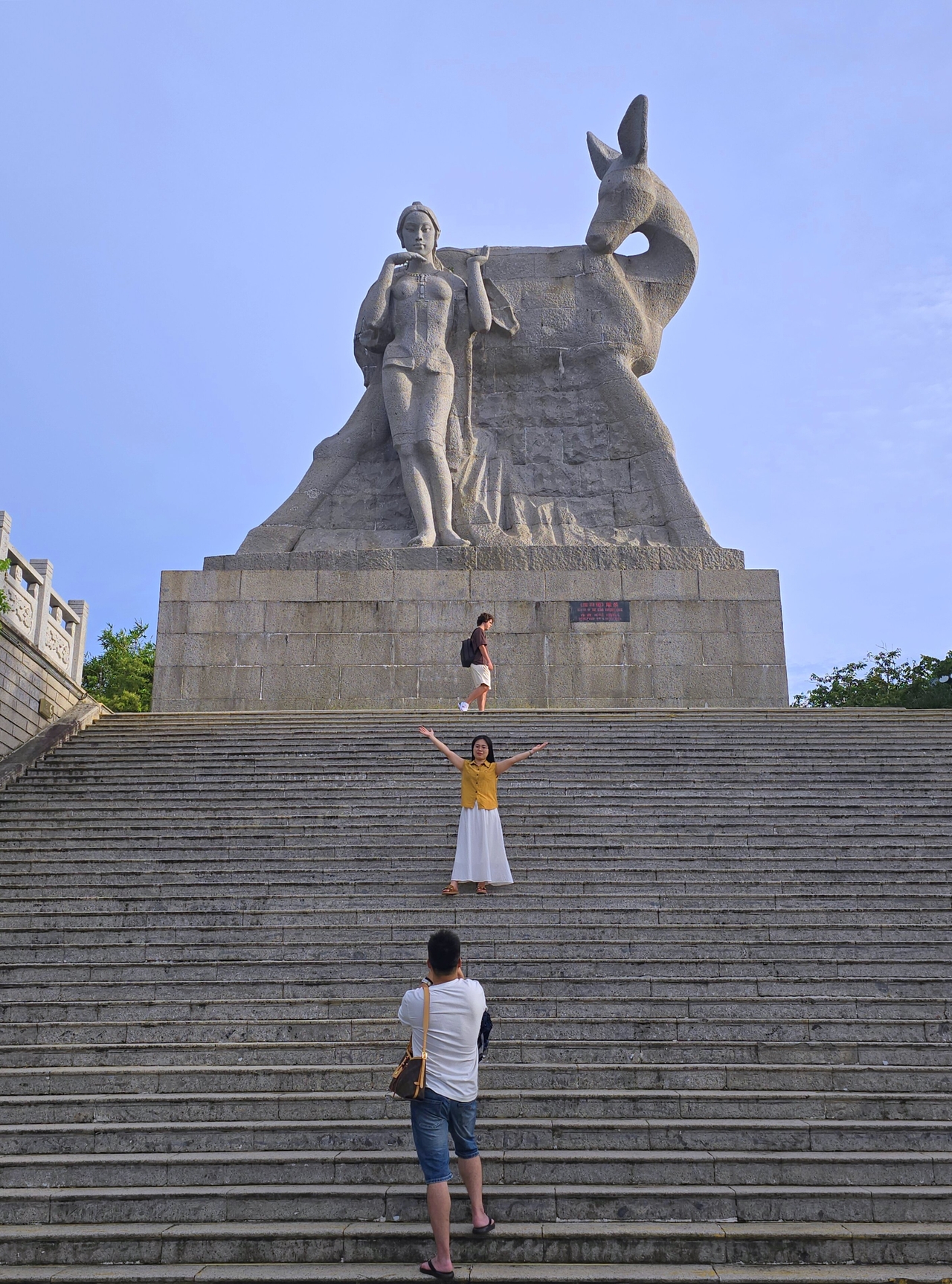
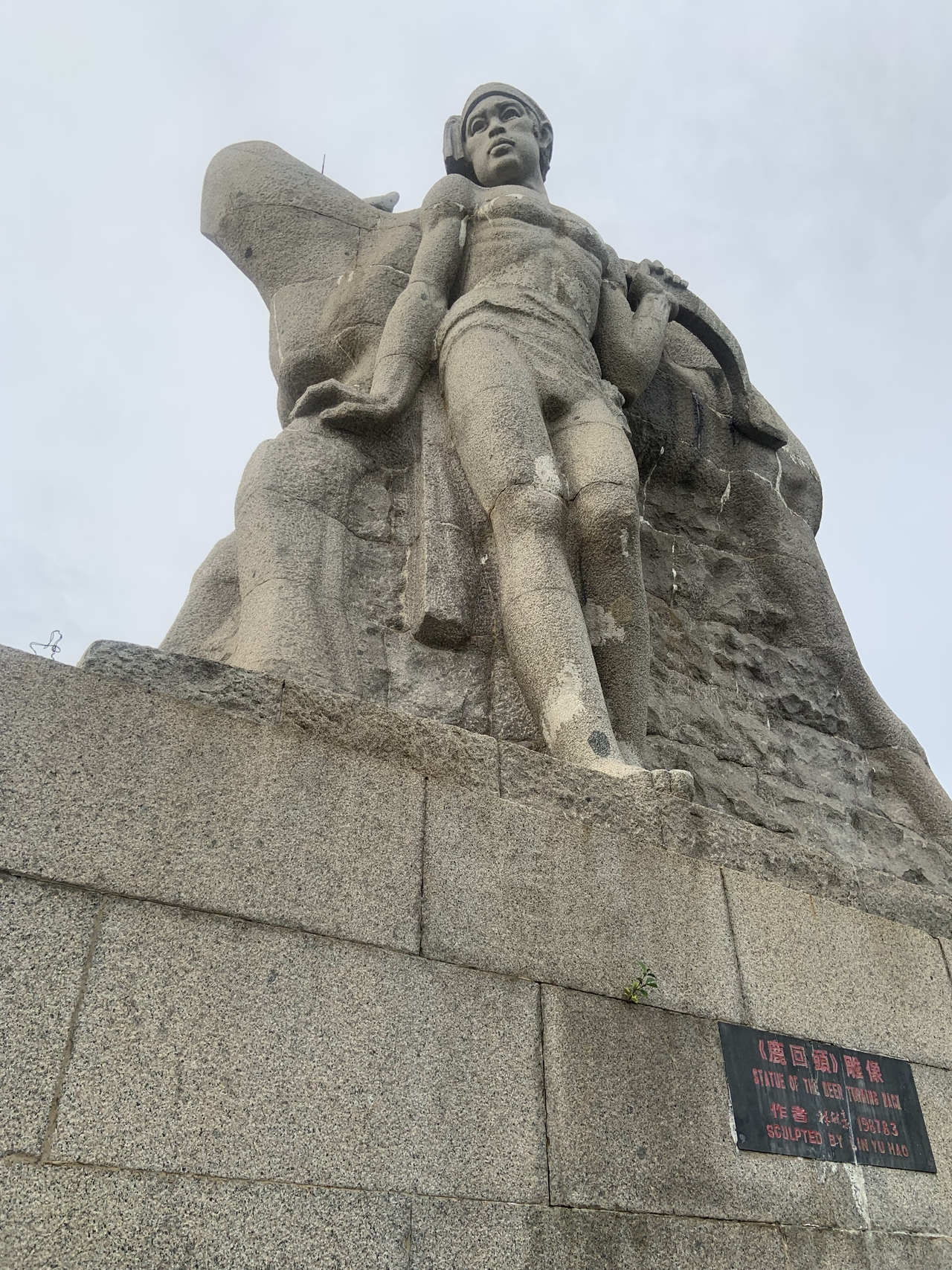
The symbol of Sanya is the Luhuitou stone sculpture, which gazes down over Sanya Bay as the city prepares a prosperous future through free trade. The statue — depicting the moment the deer turns and resumes human form — stands at the summit of Luhuitou Ridge, 181 meters above sea level on the coast, with a panoramic view across three sides of the sea: Fenghuang Island and the East and West Daimao islands.
Five years in the making, the deer sculpture was completed in 1987. It stands 15 meters tall, 10 meters long and 5 meters wide. The statue earned Sanya its nickname: "City of Deer."
Most visitors — about 90 percent — see only the front and sides of the deer sculpture. Walk around to the back, however, and a hunter stands there, leaning against the deer with a bewildered expression. Of the 12 people in our group, only one found the hunter figure; the discovery drew cheers when the photo was shared.
Encountering a monkey on Luhuitou Hill is a delight, but be aware that they may snatch food or belongings. The best approach is to stay mildly alert while avoiding direct eye contact — look away or observe from a distance.
The site was developed in 1989 by Sanya Luhuitou Tourism Development Co. It was designated a key national scenic area in 1994 and named a national 4A-level tourist attraction in 2017.
Looking down from the ridge, countless cargo vessels move busily in and out of Sanya Port, while leaf-shaped architectural landmarks rise on Fenghuang Island and in the city center alike.
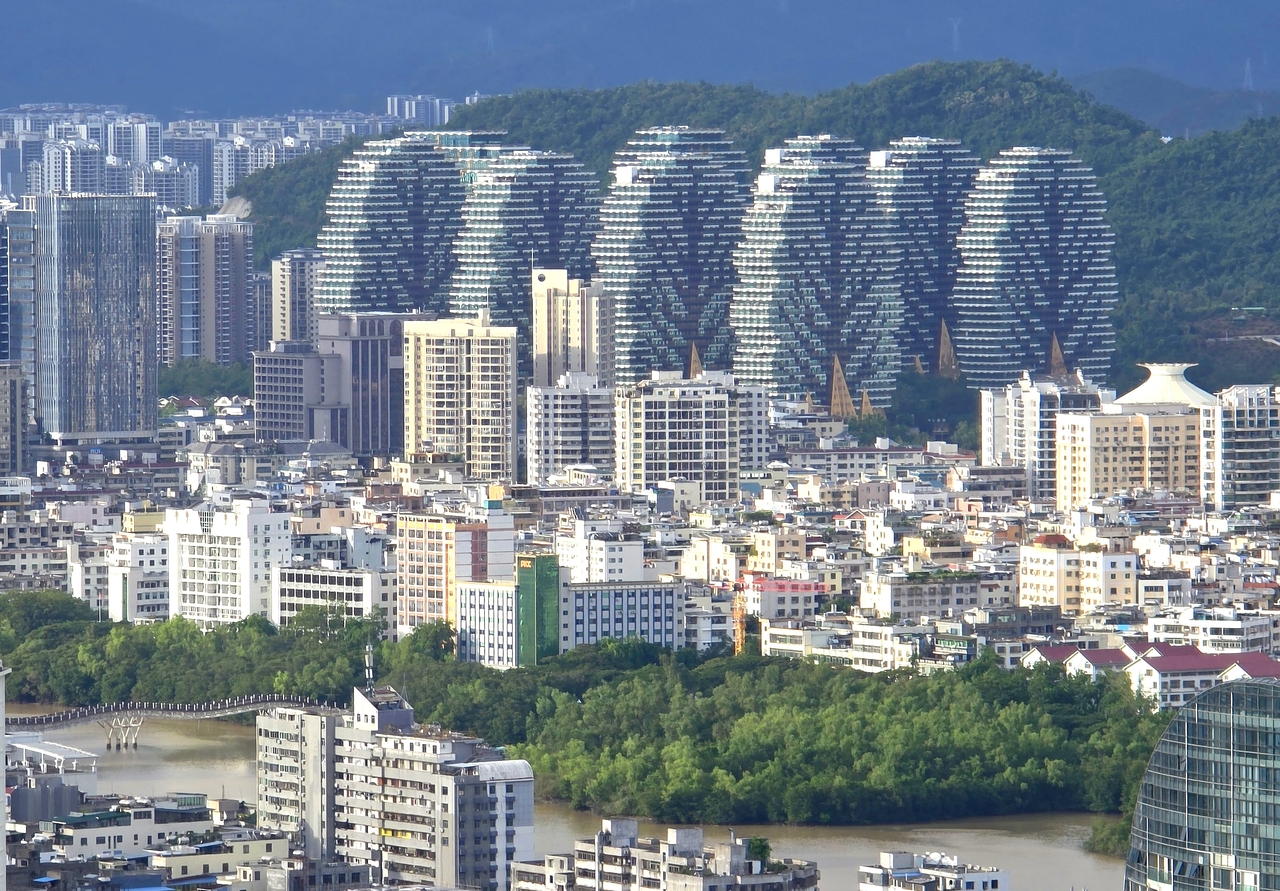
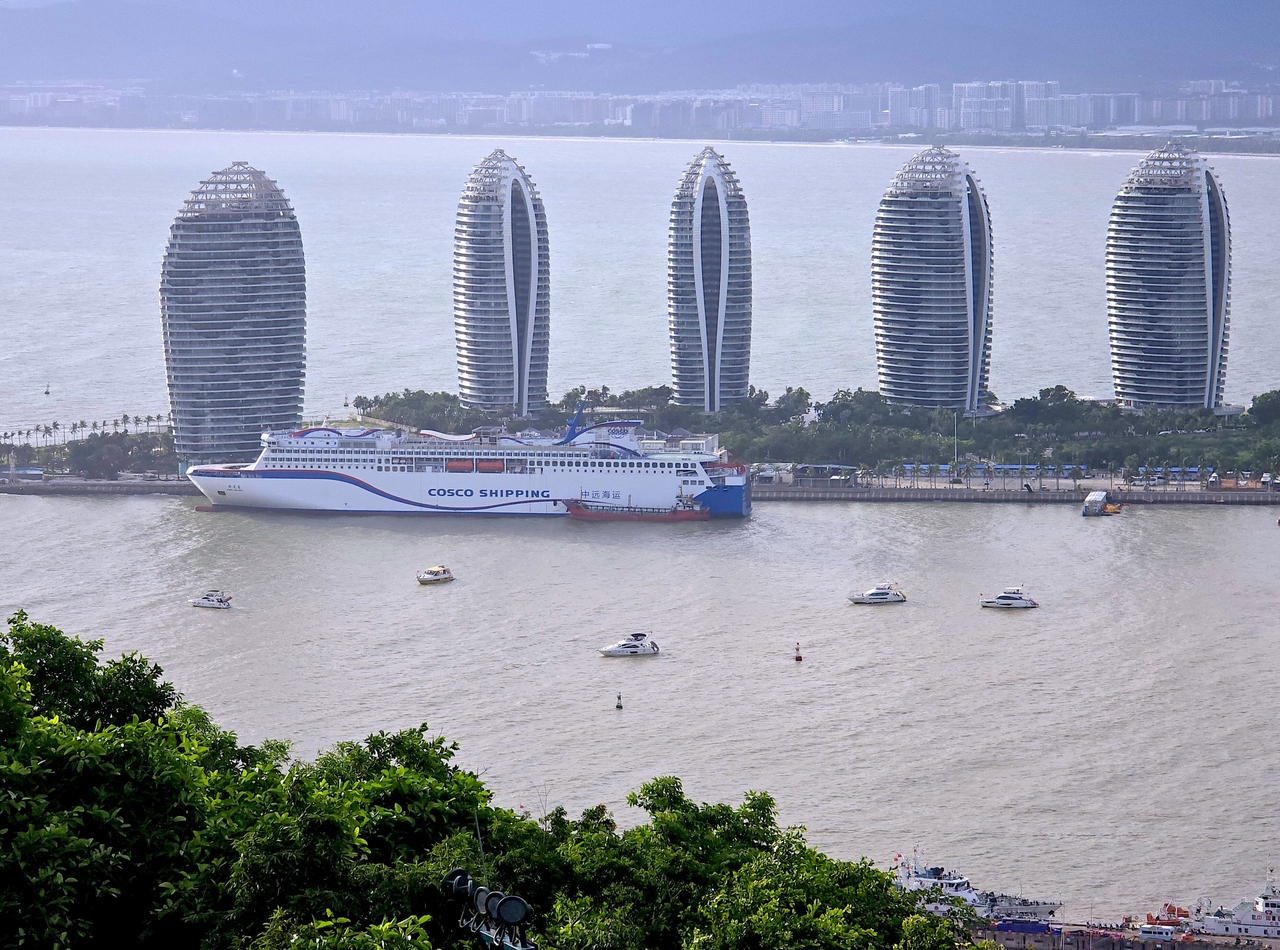
That a coastal city chose a giant leaf-shaped building as its landmark seems to speak to the harmony of sea and mountain — and perhaps to trace the journey of love in the legend of the hunter and the fairy.
Sanya occupies 1,919.6 square kilometers at the southernmost tip of Hainan Island — about three times the area of Seoul — with 209 kilometers of coastline. The city, including its urban core and surrounding areas, has a population of just over 1 million and is Hainan Island's second-largest city.
It sits at 18 degrees north latitude, comparable to Hawaii and roughly the same parallel as the former demarcation line between North and South Vietnam. Along the coasts of Yalong Bay and Sanya Bay, east of Luhuitou, international trade offices and luxury resorts have taken root.
Rising from the sea, a towering 108-meter Guanyin statue and Nanshan Temple have become another landmark of the area.
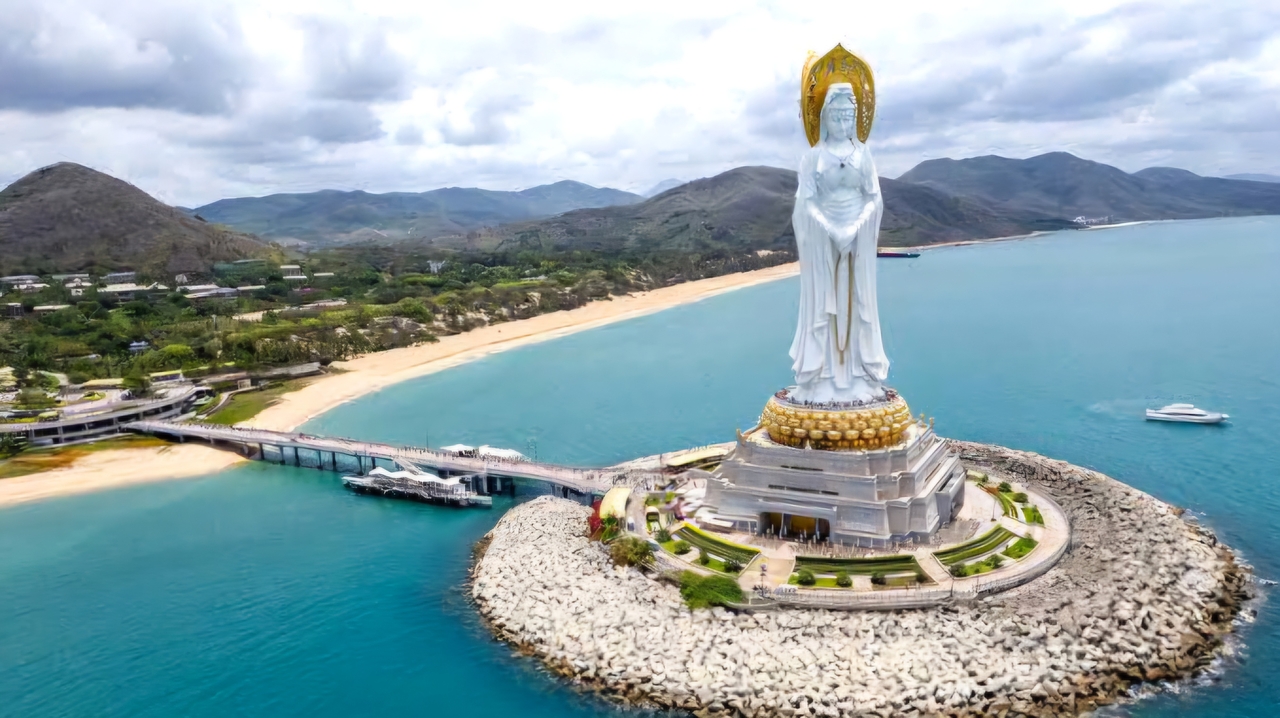
Tianya Haijiao — where the poetry of ancient writers, travelers and exiles has been carved into the rocks for centuries — has been designated a national scenic area and given a fresh makeover.
Once a place of exile, Sanya has undergone a remarkable transformation into a city of free trade, culture and nature tourism. The indigenous Li people, along with Miao, Han and Hui communities who settled here over the centuries, coexist and work together toward the city's continued development.
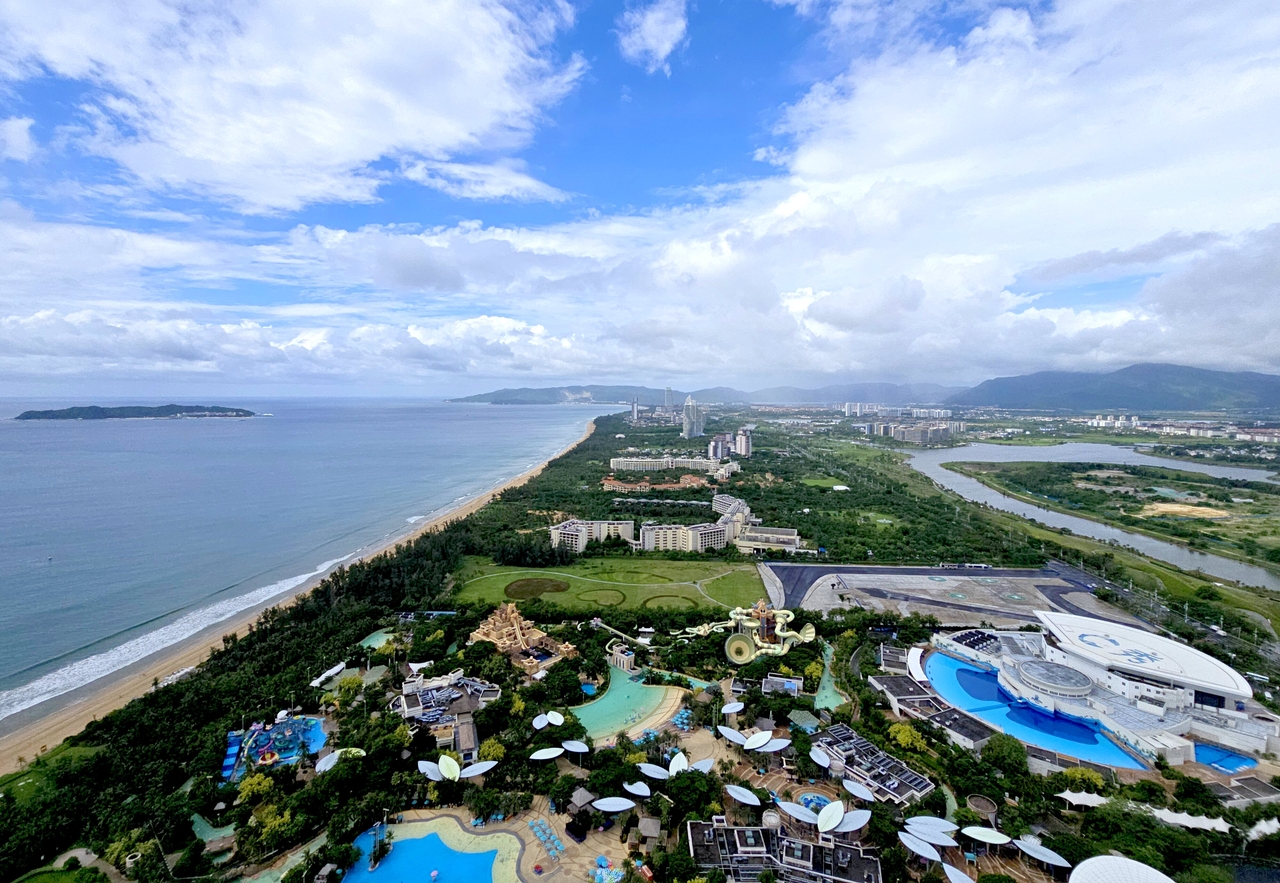
One of Sanya's defining landmarks is Atlantis Resort, one of only three in the world. It is a mixed-use resort where guests can enjoy eight experiences at once: relaxation, entertainment, exhibition, conventions, dining, live performances, shopping and aquatic attractions.
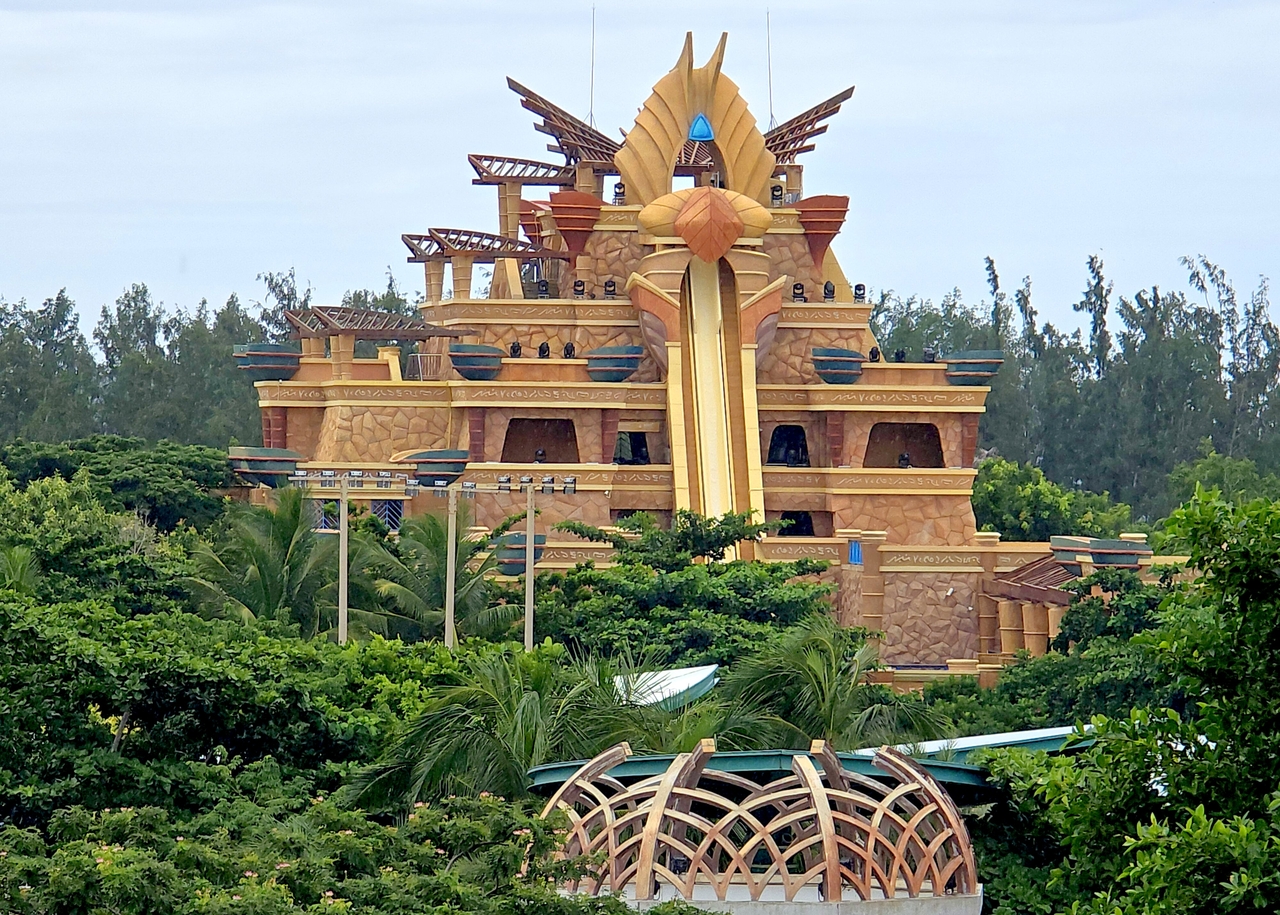
Spread across a 540,000-square-meter site on Haitang Bay, the resort features 1,314 ocean-view rooms; the Atlantis Aquaventure water park covering 200,000 square meters, along with Dolphin Island; the "Atlantis — The Lost Chambers" aquarium holding a total of 17,500 tons of seawater; a performance venue with seating for 1,700; a marine mammal veterinary hospital; and a sea lion theme park. The complex has received numerous international hotel and resort awards, architectural prizes and green building certifications.
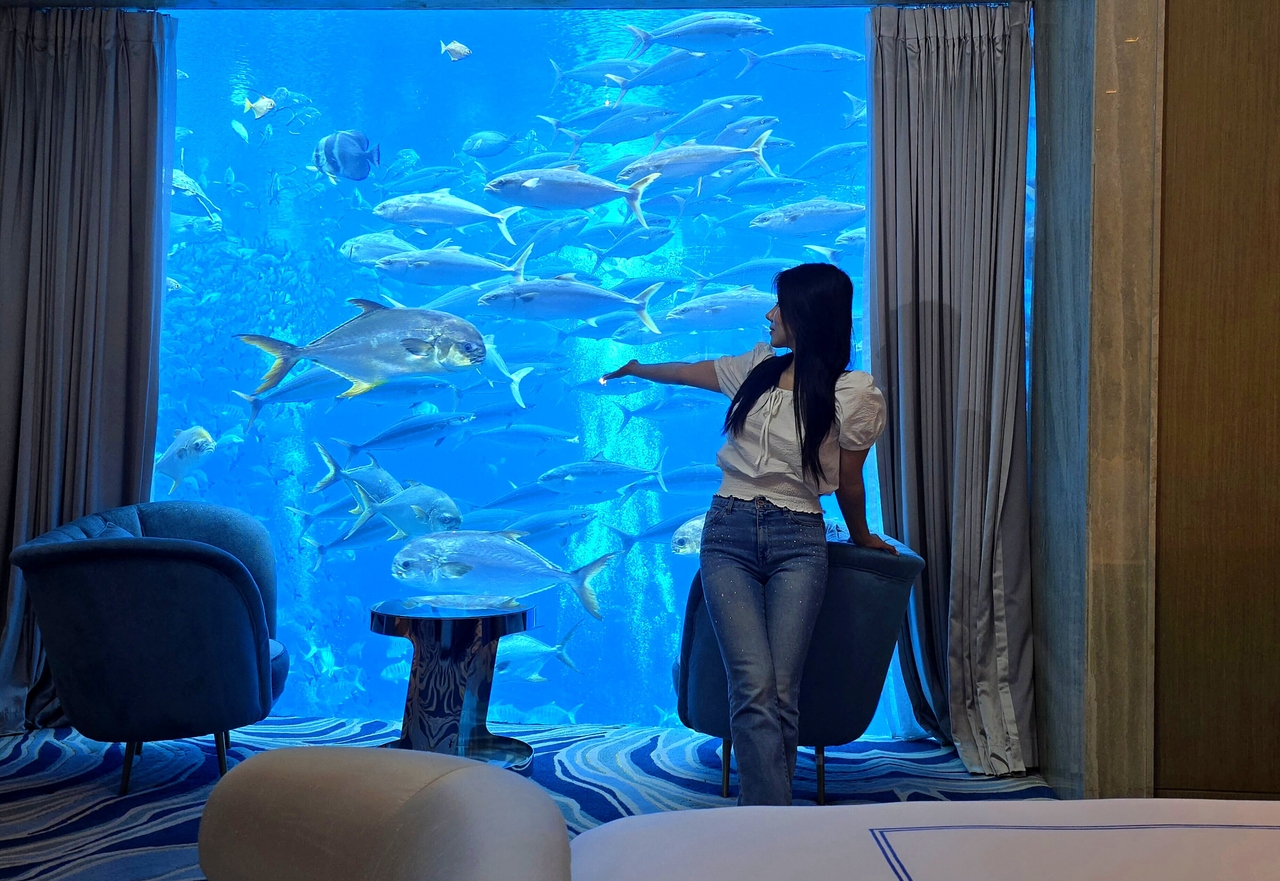
A vast aquarium greets guests the moment they step into the hotel's main lobby.
Some 86,000 marine creatures — sharks, rays and more — glide through the expansive aquarium as if living in the open sea. The main tank, called the Ambassador Lagoon, is designed to evoke Atlantis, the legendary ancient civilization said to have sunk beneath the waves.
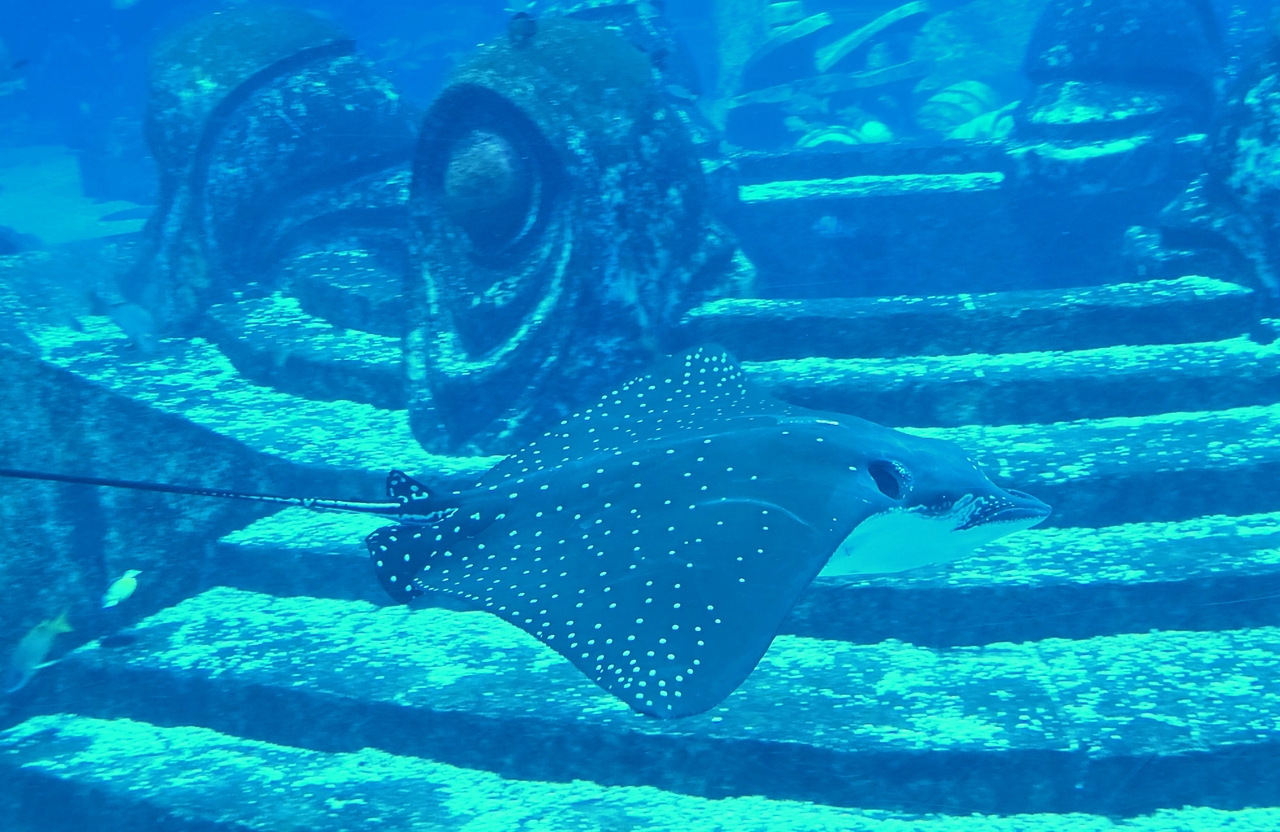
A standout experience was the underwater suites named Neptune and Poseidon. The Neptune Underwater Suite is a two-story room ranging from about 145.5 to 173.3 square meters, while the Poseidon Underwater Suite spans 340 square meters.
Turn your head from the bed toward the aquarium window and a ray seems to smile back at you; lie in the bathtub gazing at the tank and a shark appears to charge straight at you.
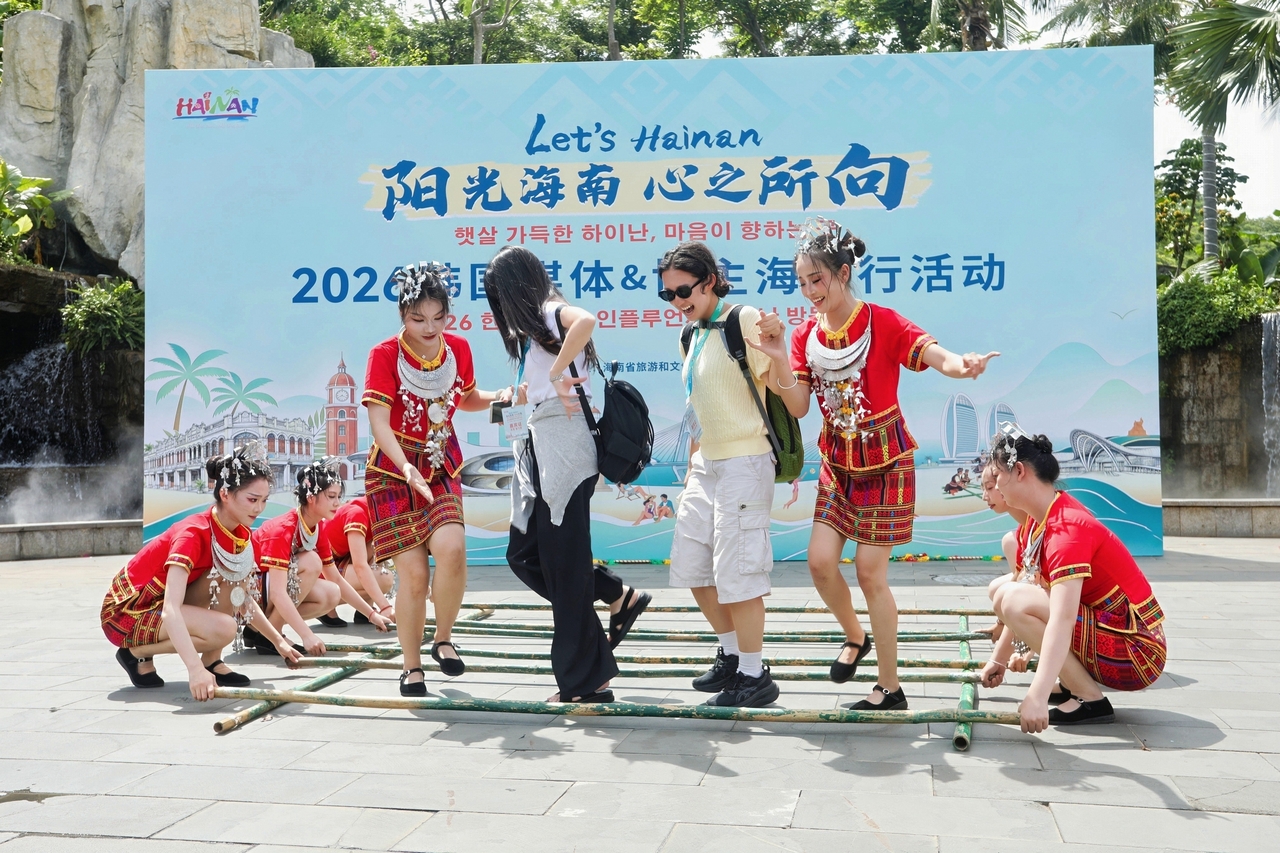
Sanya honors and carries forward its indigenous culture — including the Li people's bamboo dance — while international cruise ships call regularly at Fenghuang Island and more than 1,300 registered yachts dot the waters, giving the city the full character of a luxury marine leisure destination as well as a cultural tourism hub.
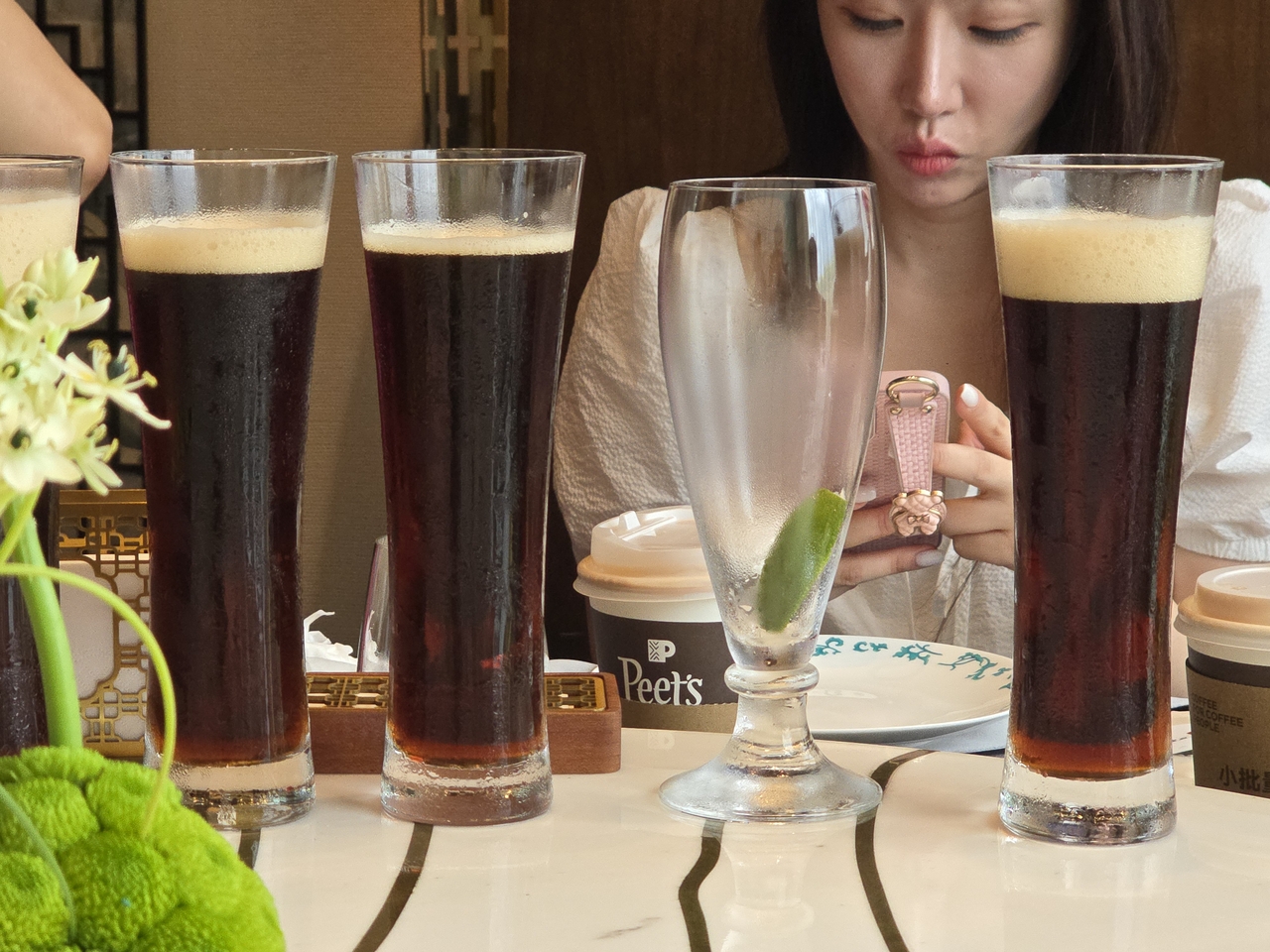
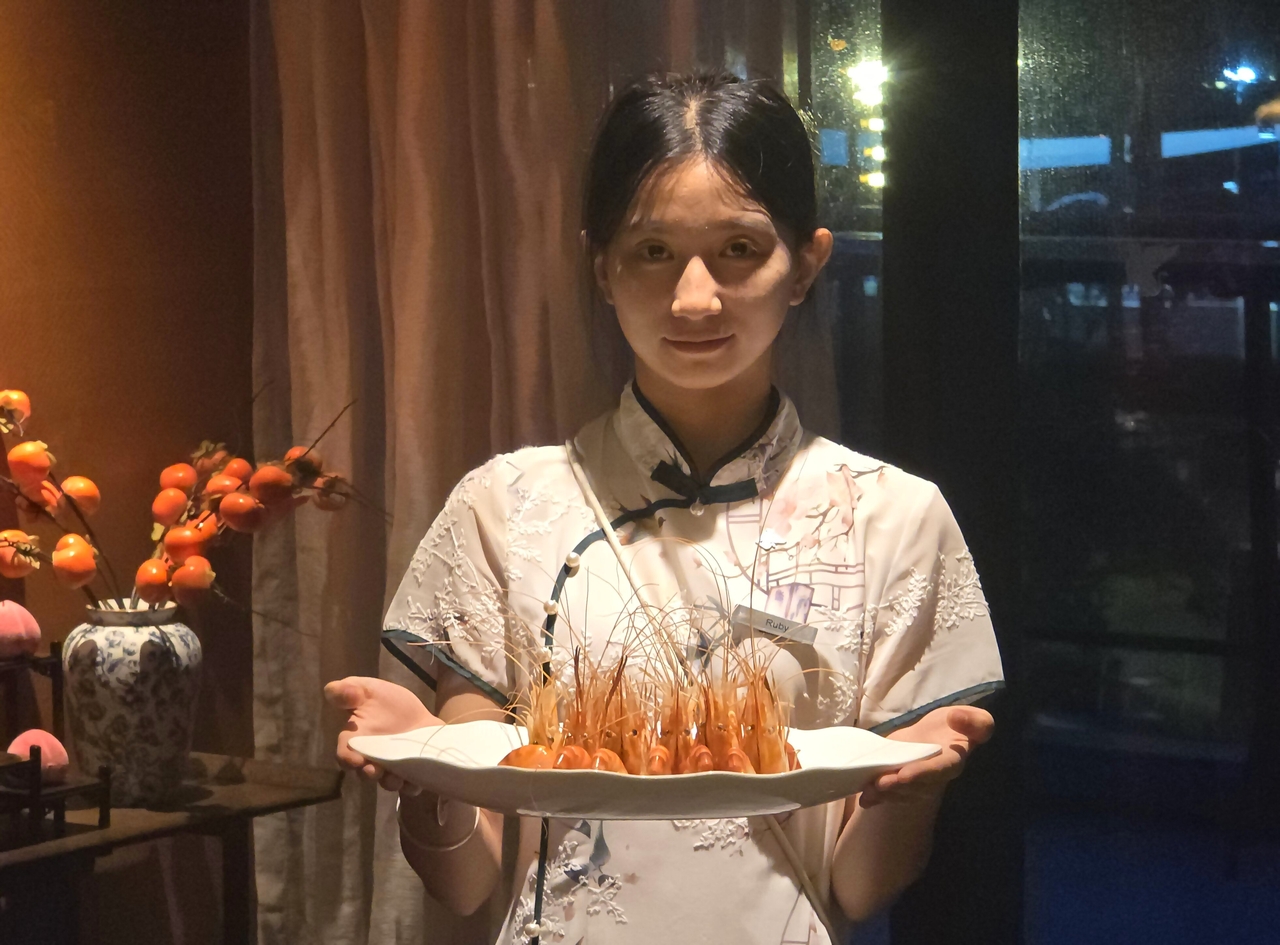
The warmth of the people is genuine, the food differs markedly from mainland Chinese cuisine, and the city's long history of maritime exchange is reflected in a cuisine that draws on the best of diverse Asian culinary traditions — among the finest in East Asia. The dark beer, defying all expectations, is remarkably good.
Golf travelers are also increasingly making the rounds between Sanya, Haikou and destinations across Hainan Island, seeking out a variety of courses.
Visitors from other countries are flocking to Hainan in growing numbers, yet Korean tourists — who once came in large numbers — have not yet returned in full force. Korean visitor numbers have not recovered to pre-pandemic levels.
Perhaps it is simply a matter of having briefly forgotten. Anyone who returns will quickly rediscover that Hainan stands out as the finest subtropical destination at its latitude.
Hainan has long held a fondness for Koreans, and Koreans have long been drawn to the island's distinctive culture. The people of Hainan know well that friendship with Korea is a key to the island's continued growth.
The warmth that Hainan residents show Korean tourists feels particularly genuine these days. Sanya, which aspires to develop into a high-tech economy and free-trade zone much like South Korea, says it is especially glad to welcome Korean visitors.
Reporting assistance provided by Han Dan, CEO of Ramita Korea, a Hainan health travel agency; the Hainan Tourism Administration; and Sanya Luhuitou Tourism Development Co.
abc@heraldcorp.com