Oh Se-hoon chairs emergency meeting ahead of bus strike
'Union announces strike after just 8 months — we will ensure citizens' daily lives are not disrupted'
City mobilizes all administrative resources to minimize public inconvenience
Free shuttle buses to be operated directly by city; charter buses to be deployed on major arterial roads
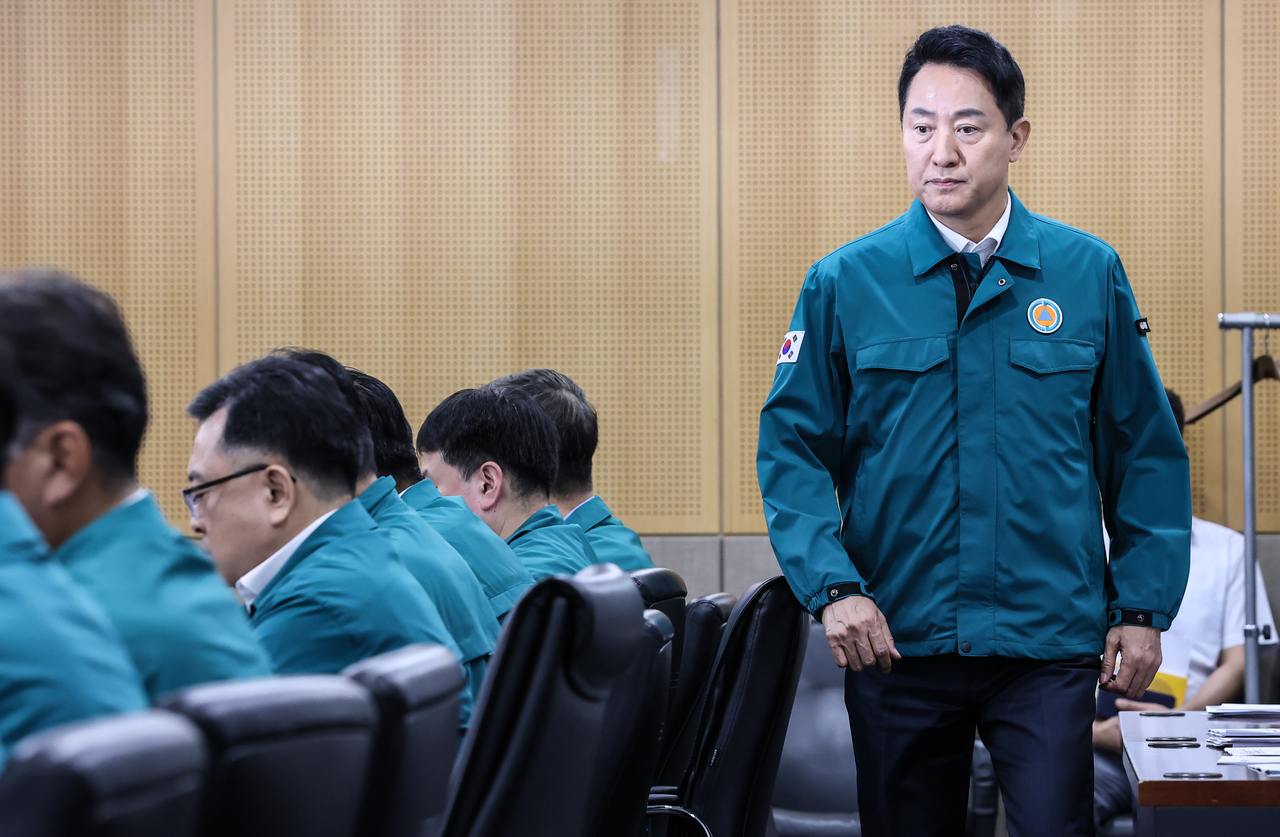
With the Seoul City Bus Workers' Union set to launch a full strike Wednesday, the Seoul Metropolitan Government convened an emergency situation review meeting Tuesday to check on contingency transport measures aimed at minimizing disruption to residents.
Seoul Mayor Oh Se-hoon chaired the emergency meeting Tuesday morning to assess the city's readiness ahead of the threatened strike.
In his opening remarks, Oh said a two-day city bus strike in January had caused significant inconvenience to many residents, and warned that another walkout just eight months later would severely disrupt daily travel. "If the city buses that 3.8 million people use every day come to a halt, ordinary commutes will be thrown into serious disarray — and the burden will fall especially hard on people with mobility difficulties, who rely on buses more than anyone," he said.
He added that the city would do everything possible to keep residents' daily lives on track even if negotiations broke down Tuesday and buses went on strike Wednesday morning.
The union has announced it will launch a full strike from the first bus Wednesday unless its demands are met. It is seeking a wage increase of about 24 percent — comprising roughly 16 percent from a rise in ordinary wages and 7.85 percent in base pay.
The Seoul Metropolitan Government said it is mobilizing every available administrative resource to minimize harm to residents if labor-management talks collapse. Contingency measures include: significantly expanding free shuttle bus services, doubling subway frequency increases and extending the last train by twice the usual amount, implementing flexible working arrangements across the city government and its affiliated public institutions, requesting that elementary, middle and high schools adjust arrival times, encouraging private companies to allow remote and flexible work, and providing alternative transport guidance for foreign visitors.
Particularly notable this time, the city will operate free shuttle buses directly at the city level — rather than limiting them to individual district jurisdictions as before — deploying charter buses on major arterial roads to substantially boost commuter capacity. The city also plans to address a recurring weakness in past emergency transport plans by strengthening public communications: route maps and service information will be posted in advance on the Seoul Metropolitan Government website to keep residents better informed.
Subway services will run more frequently during rush hours, and last-train extensions will be doubled from one hour to two hours on each line, maximizing transport capacity when passenger demand is highest. To prepare for disruptions to school commutes and private-sector workers' travel, the city has already sent official letters to the Seoul Metropolitan Office of Education, the Seoul Chamber of Commerce and Industry, and the Korea Federation of SMEs requesting their cooperation.
The Seoul Metropolitan Government and its affiliated public institutions are also actively implementing flexible work arrangements to prepare for any contingency, and the city is readying guidance for foreign visitors to Seoul.
The city called on the union to refrain from making excessive wage demands and to approach negotiations responsibly, saying that while the right to industrial action is important, so too is citizens' right to move freely in their daily lives.
"Seoul will make every effort to help labor and management reach a reasonable agreement until the very last moment," Oh said. "We will also thoroughly prepare emergency transport measures — including deploying shuttle buses and increasing subway services — in case the worst comes to pass."
ikson@heraldcorp.com