Assembly committee opens hearing at 10 a.m. with 1,858 document requests
Consulting fees paid to vacant-address firm, non-resident homeownership, interest-free family loan under scrutiny
Zero SME bills on record fuels expertise debate; Kosdaq, food delivery policy also on agenda
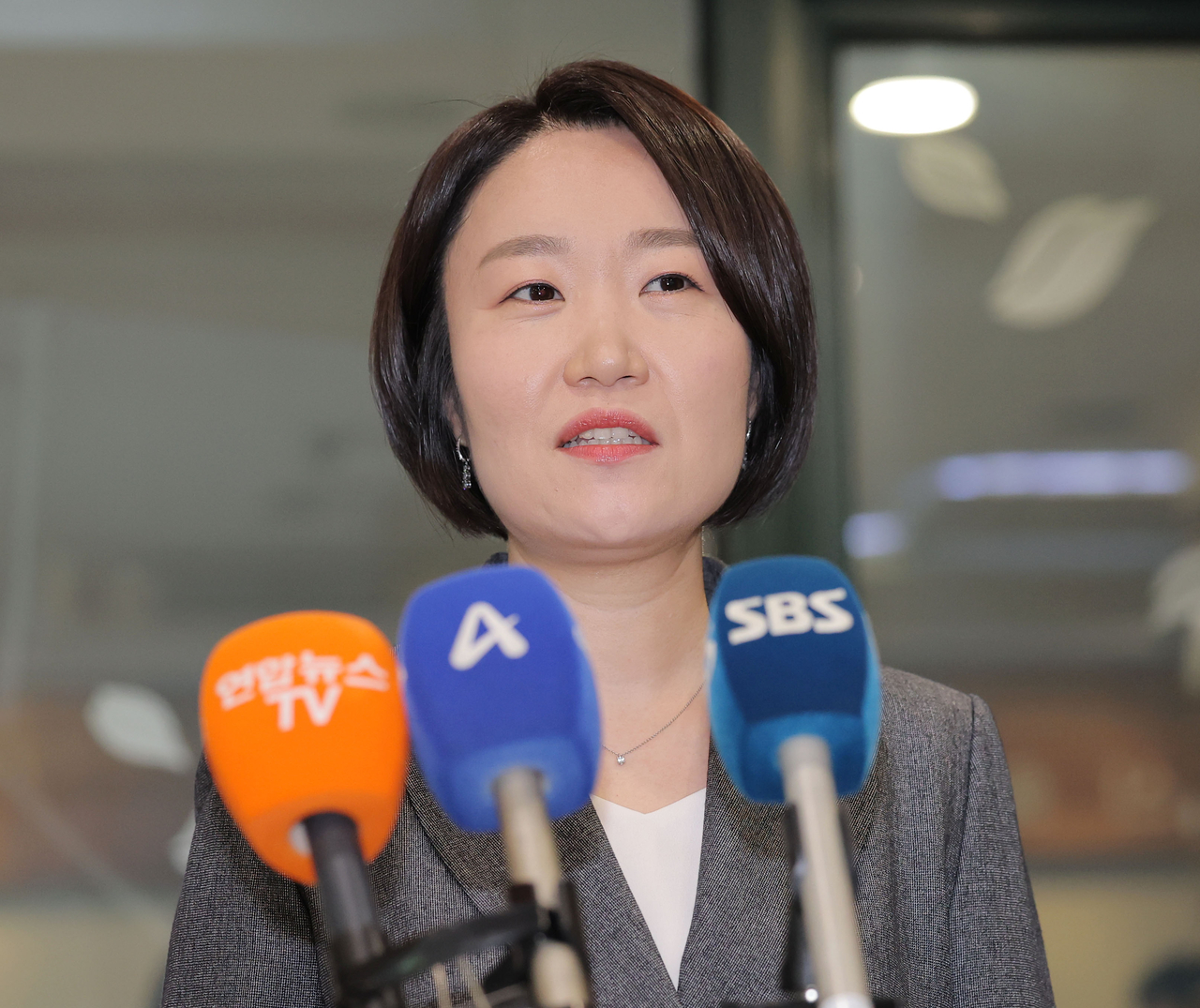
Lee So-young, nominee for minister of SMEs and startups, faces a National Assembly confirmation hearing Tuesday, with questions over her ethics and policy credentials set to dominate the session. At the center of the ethics scrutiny are roughly 70 million won ($52,000) in legislative consulting fees paid to a firm whose registered address turned out to be vacant, along with real estate holdings and intra-family financial transactions. Lawmakers are also expected to press her on her expertise in small business policy and the feasibility of her self-styled vision to serve as a "minister of deregulation."
The National Assembly's Trade, Industry, Energy, SMEs and Startups Committee opens the hearing at 10 a.m. Tuesday. The committee approved 1,858 document requests ahead of the session. However, no separate witnesses or reference persons were called.
The sharpest controversy heading into the hearing involves the roughly 70 million won in consulting fees. While serving as a lawmaker from 2023, Lee paid a consulting firm between 3.3 million and 11 million won per month — totaling about 70 million won — for legislative advisory services. Questions arose after it emerged that the firm's registered corporate address had been vacant for years, casting doubt on whether the work was actually performed and whether the payments were appropriate. Former Seoul city council member Lee Jong-bae filed a complaint with the Seoul Metropolitan Police Agency on Sunday, accusing her of violating the Political Funds Act.
Lee's camp rebuffed the allegations, calling the arrangement "a lawful and normal service contract." Her office said the firm provided analysis of the constituency's policy environment and public relations advice from September 2023 to March 2024 and from July 2024 to April 2025, with the scope of work spelled out in the contract. Her side also said the contract was awarded based on the consultant's qualifications and capabilities, not the firm's registered address.
Her real estate holdings are another flashpoint. Lee bought an apartment in Hongje-dong, Seodaemun-gu, Seoul, for 490 million won in 2016 and lived there for about four years before relocating to Uiwang in Gyeonggi Province to run in the 2020 general election. She currently rents out the Hongje-dong unit while renting her own home in Uiwang on a jeonse basis. After a unit of the same size in the building sold for 995 million won last October, the opposition raised concerns about her owning a property she no longer lives in and an unrealized gain of around 500 million won. Her camp denied any gap investment, saying she had lived in the apartment for four years and has never sold it to realize a profit.
An interest-free loan between family members is also under review. Lee's husband lent her mother 223.1 million won interest-free in 2022 to cover a jeonse deposit. When critics pointed out that no gift tax had been filed, Lee said the transfer was made to fulfill a duty to support her parents, but added that she would proceed with a gift tax filing to put the matter to rest.
Her policy expertise is also a major point of contention. Of the 85 bills Lee sponsored in the 21st and 22nd National Assemblies, 35 fell under the climate and environment category. The opposition noted that she has no record of sponsoring legislation directly under the SME ministry's jurisdiction. Lee pushed back, saying she had pursued SME-related legislation even outside the ministry's direct purview and had handled increases and cuts to the SME ministry's budget as the lead negotiator for her party on the National Assembly's Budget and Accounts Special Committee.
The consistency between her record as a lawmaker and her stated priorities as a nominee is another point of interest. After her nomination, Lee said she would approach the role with the mindset of a "minister of deregulation" and work to ease unreasonable regulations. Yet as a lawmaker she sponsored numerous bills that imposed additional obligations or restrictions on businesses — including measures to limit financial support for overseas coal-fired power plants, tighten regulations on environmental advertising, and reform the emissions trading scheme.
Her past stance on the so-called Yellow Envelope Act may also come under scrutiny. Lee actively backed the legislation as a lawmaker and last year dismissed business community warnings that it would cost jobs as "exaggerated." The Korea Federation of SMEs and the Korea Federation of Mid-sized Enterprises have long opposed the law, arguing it would increase the burden on companies in labor-management relations.
More recently, however, she has shown a more flexible posture toward industry demands. She said there was "merit" in the venture industry's push to ease the 52-hour workweek cap, and called for a slower pace on the financial regulator's plans to tighten Kosdaq delisting standards and introduce a promotion-and-relegation system. She also said exceptions may be needed to any mandatory treasury share cancellation requirement, noting that some venture companies hold their own shares for extended periods to compensate executives and employees.
The viability of her "ministry of deregulation" concept will also face scrutiny. In written responses submitted ahead of the hearing, Lee noted that SME-related policy is fragmented across 671 programs in 21 government ministries, and proposed elevating the chairmanship of the SME Policy Deliberation Council — currently held by the SME minister — to the deputy prime minister for economic affairs. She said she would strengthen mandatory prior consultation with the SME ministry whenever other ministries introduce new regulations or programs affecting small businesses, and improve the effectiveness of SME regulatory impact assessments.
Lawmakers are also expected to ask how she plans to address pressing issues for small business owners, including deregulation of hypermarket early-morning delivery, online food delivery platform commission fees, and the burden of the minimum wage. Lee has said a roadmap is needed to examine the overall cost structure facing small business owners, including delivery app fees, but she had not staked out a clear position before the hearing on contentious issues such as early-morning hypermarket delivery or a cap on food delivery platform commissions.
Restructuring of agencies under the SME ministry is another live issue. With a merger of the public home-shopping channel and the Korea SME and Startups Agency under way, Lee said in written responses that she did not know the "background and circumstances" of the reorganization in detail, but would review it with an eye toward improving efficiency and minimizing side effects. The hearing is expected to further examine the risk of gaps in sales-channel support for small businesses and what follow-up measures are planned after the merger.
hong@heraldcorp.com