US 10-year yield hits 4.96% intraday, highest since October 2023
Brent crude tops $107, stoking fears of renewed inflation
Volatility gap between tech stocks and broader market narrows, signaling AI dominance fading
'Oil prices, Fed rate path and geopolitical risks now driving markets'
![The New York Stock Exchange on Wednesday (local time). [AFP]](https://wimg.heraldcorp.com/news/cms/2026/09/11/news-p.v1.20260911.a9bd2feeace64b06baab10b3c79aa315_P1.jpg)
The influence of AI, which has driven US stock markets for much of the year, is fading. The volatility gap between large-cap technology stocks and the broader market has been narrowing rapidly, while rising Treasury yields and persistent inflation have emerged as the key variables shaping the market's direction.
According to CNBC, the volatility gap between large-cap tech stocks and the overall market — closely watched in the options market this year — has been closing quickly in recent weeks. The gap is measured primarily through the difference between the S&P 500 constituent volatility index (VIXEQ) and the broader volatility index (VIX), widely known as the "fear gauge."
As recently as this past summer, the market capitalizations of major AI-driven tech stocks were swinging by hundreds of billions of dollars a day while the rest of the market remained relatively subdued, pushing individual tech-stock volatility well above that of the broader market.
But the dynamic has since reversed, market observers say. The VIX has risen to its highest level relative to the VIXEQ since April, a sign that investors are now pricing in broader market risk rather than focusing on individual tech names, CNBC reported.
All three major Wall Street indexes fell for a fourth consecutive session Thursday, weighed down by surging oil prices and a sharp rise in Treasury yields. The Dow Jones Industrial Average dropped 316.56 points, or 0.60 percent, to close at 52,064.10. The S&P 500 fell 44.66 points, or 0.58 percent, to 7,591.70, while the tech-heavy NASDAQ Composite declined 171.62 points, or 0.65 percent, to 26,081.72.
The selling was concentrated in rate-sensitive technology stocks. Nvidia fell 2.26 percent and Micron Technology dropped 4.90 percent. Intel slid nearly 6 percent.
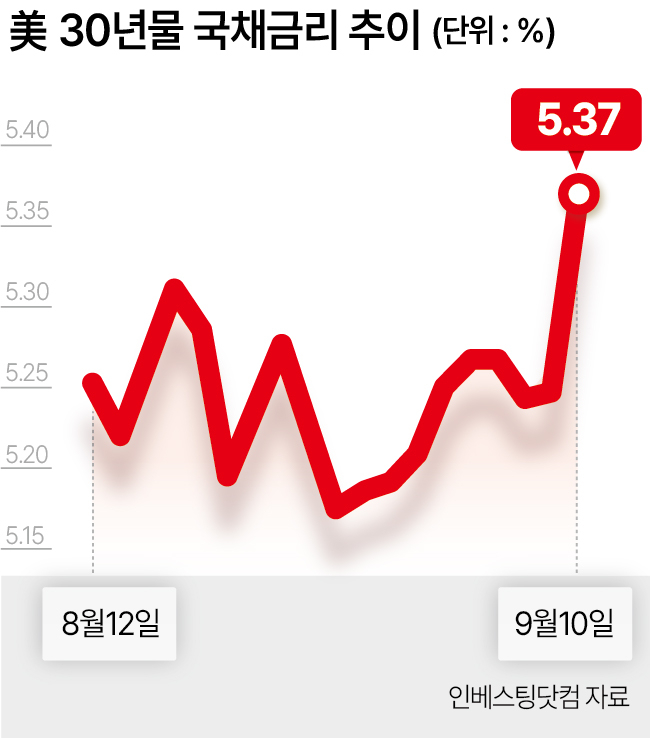
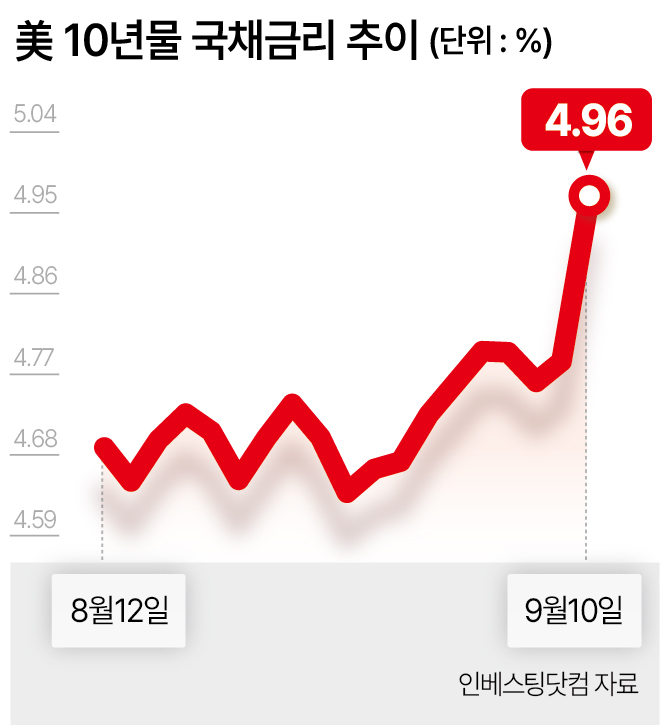
A sharp selloff in US Treasuries has pushed the 10-year yield close to 5 percent — approaching its highest level in roughly three years — and is shifting the market's center of gravity. Macroeconomic variables such as interest rates, inflation and the Federal Reserve's monetary policy direction are now exerting greater influence on equities than company-specific news from AI-related firms.
The 10-year Treasury yield climbed above 4.96 percent intraday Thursday, its highest level since October 2023.
Oil prices surged more than 4 percent on the day, adding to inflation concerns. With expectations growing that Middle East tensions will persist, Brent crude futures have been trading around $105 a barrel.
November Brent crude, the global benchmark, settled at $107.63 a barrel, up $6.42, or 6.34 percent, from the previous session — a fifth consecutive daily gain. Both major crude grades closed at their highest levels in roughly four months, since May 19.
Scott Nations, president of NationsIndexes, said that over the summer, implied volatility in individual stocks had been rising faster than implied volatility in the S&P 500 as a whole. "Traders were heavily discounting macroeconomic issues and focusing instead on the individual stories of AI-related stocks in particular," he said.
"But now that trend is reversing," Nations added. "Resurging inflation triggered by rising oil prices, the Fed's response at its Sept. 16 meeting, and political and geopolitical concerns are dominating market judgment."
Beyond the bond market, oil prices and the Fed's rate path, the winding down of earnings season for major semiconductor companies is another factor reducing volatility in AI-related trades. Earnings reports are typically major catalysts for sharp price swings and elevated volatility.
Micron's implied volatility surged to 112 ahead of its late June earnings release but has since fallen to 58 last week, even as the stock has declined. SpaceX similarly saw its volatility drop from a peak of 122 to 56 following its August earnings report, despite the stock rallying 30 percent in that period.
yckim6452@heraldcorp.com