Weaving together medical, health, long-term care, welfare and residential resources
So people can live healthy, dignified lives where they already call home
More than 4,000 people died alone across South Korea in 2024 — a 7.2 percent increase from the previous year, according to a Ministry of Health and Welfare survey on solitary deaths.
Gyeonggi Province recorded the highest toll of any region, with 894 solitary deaths. The problem is no longer confined to individuals and their families. It is a question that confronts all of us: when someone needs care, how does the community reach out?
Most older adults want to spend their final years at home, receiving care in familiar surroundings. According to the National Health Insurance Service, nearly eight in 10 people — 79.7 percent — prefer to receive end-of-life care at their own residence. Even when medical help is urgently needed, the deep wish is to remain in the home and community one knows. Integrated care was created to answer that wish.
The system does not simply deliver medical, health management, long-term care, welfare and residential services in isolation — it connects them into a single, unified framework. It identifies residents who need help early, matches services to each person's health condition and living environment, and enables people to continue living where they are, as healthily and stably as possible. That is the essence of integrated care.
The operational framework links public health centers, medical institutions, long-term care facilities, welfare agencies and the National Health Insurance Service in close coordination. It is designed so that when local government provides the backbone and the community participates, a care network that residents can genuinely feel takes shape.
Integrated care is especially urgent in mixed urban-rural municipalities such as Yangpyeong-gun, Gapyeong and Yeoncheon. All three lie within the greater metropolitan area, yet as of June 2026 more than 34 percent of their populations are aged 65 or older — Gapyeong at 34.8 percent, Yeoncheon at 34.4 percent and Yangpyeong at 34.1 percent. More than one in three residents is an older adult, placing all three firmly in super-aged territory.
At the same time, medical and welfare resources are scattered across townships and villages, and access to services varies depending on where people live and their circumstances. Integrated care is the solution these communities need most, precisely because it weaves medical, long-term care and welfare services into a tight, connected whole.
Yangpyeong-gun held township-by-township training sessions for its community safety networks to coincide with the enforcement of the Integrated Care Support Act on March 27. A dedicated organizational unit was established to drive the initiative forward, and staffing was reinforced in July. The goal is not simply to add one more layer of assistance — it is to establish integrated care as the core care system that protects residents' lives.
Experience so far has made one thing clear: integrated care cannot be completed by any single institution acting alone. Closing the gaps in care requires a system in which the whole community looks after one another and extends a hand at the moment it is needed.
South Korea has already entered a super-aged society, and an even more deeply aged future is unavoidable. But we must not allow anxiety about care — or death in solitude — to be accepted as an inevitable fact of life.
Every citizen, no matter how old or how ill, deserves to live a healthy and dignified life in the place they have always called home. People-centered integrated care, I believe, can be the solid foundation that opens a better future for us all.
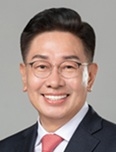
By Jeon Jin-seon, Yangpyeong-gun county chief
freiheit@heraldcorp.com