Domestic beef sales fall 6.6% as shoppers cite high prices
Imported pork sales jump 45.6%, with samgyeopsal up 48.9%
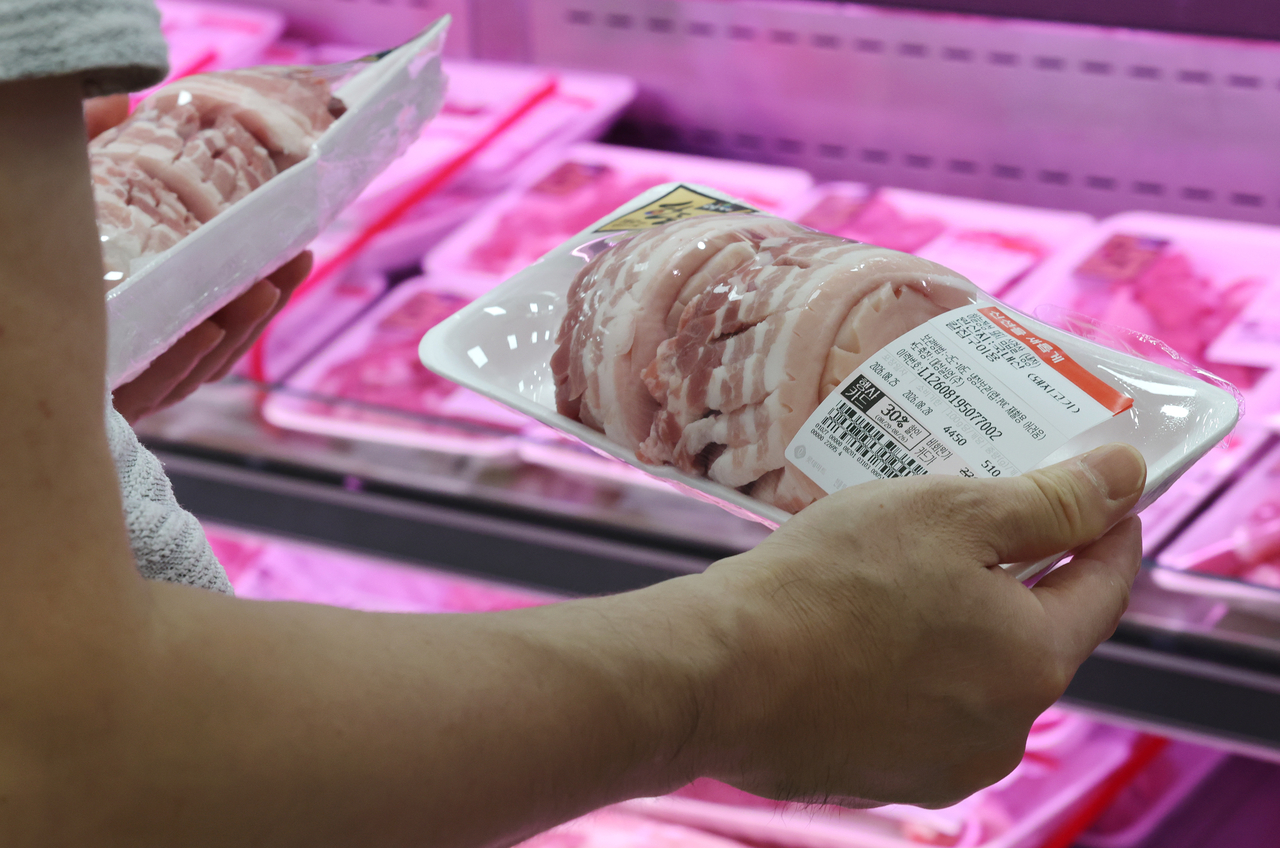
"These days, I only look at hanwoo -- I don't buy it," a shopper said while heading toward the imported samgyeopsal section at a hypermarket after work. "Of course I want to buy hanwoo, but grocery costs have gone up, so more often I choose samgyeopsal instead," the shopper said. "It's the same when eating out."
As prices for hanwoo, Korean beef, continue to soar, more shoppers are turning to relatively cheaper pork. With high inflation weighing on household budgets, value for money appears to be a growing priority in meat shopping as well.
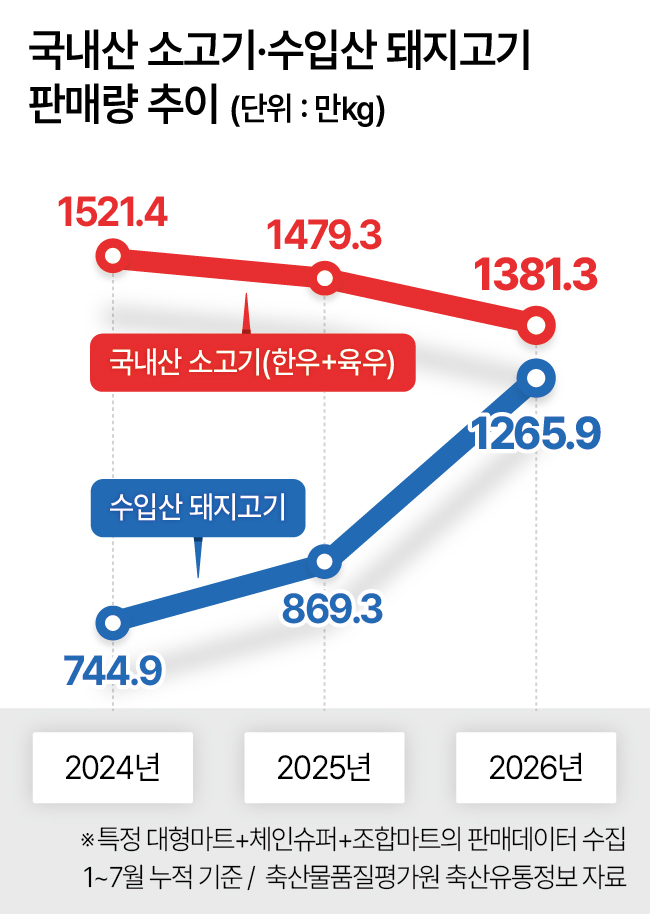
According to sales data from Dabom, the livestock distribution information platform run by the Korea Institute for Animal Products Quality Evaluation, domestic beef (hanwoo and other cattle breeds) sales from January to July totaled 13.81 million kilograms. That was down 6.6 percent from the same period last year. Imported beef sales fell 5.4 percent to 9.23 million kilograms over the same period. The data, however, is compiled from sales records of select hypermarkets, chain supermarkets and cooperative marts, and does not represent nationwide consumption.
Domestic beef sales have been on a steady decline. Sales for the January-July period stood at 15.21 million kilograms in 2024, falling 2.8 percent to 14.79 million kilograms last year. This year's 6.6 percent drop brings the cumulative decline to 9.2 percent compared with two years ago.
Pork sales, by contrast, are rising. Domestic pork sales reached 44.48 million kilograms from January to July this year, up 2.4 percent. Imported pork sales jumped 45.6 percent to 12.66 million kilograms, with imported samgyeopsal surging 48.9 percent. Compared with two years ago, imported pork sales have soared 69.9 percent.
An increase in import volumes has also contributed to the rise. According to the Agricultural Outlook Center of the Korea Rural Economic Institute, pork imports from January to July totaled 331,000 tons, up 14.3 percent from a year earlier. Samgyeopsal imports surged 40.2 percent, while imports from the EU jumped 51.9 percent over the same period.
Household and restaurant markets show a similar divide. According to the institute, home purchases of hanwoo fell 0.8 percent in July from a year earlier, while the beef sales index per restaurant dropped 8.4 points. Over the same period, however, household purchases of domestic pork rose 13.5 percent and imported pork purchases jumped 53.2 percent, while pork sales per restaurant increased 3.9 percent.
Beef prices climbed sharply while pork prices rose only modestly. Domestic first-grade beef tenderloin cost 15,288 won ($11) per 100 grams as of Wednesday, up 19.1 percent from a year earlier, driven by shrinking hanwoo cattle numbers and slaughter volumes. US beef chuck eye roll (chilled) also rose 21.4 percent amid the high exchange rate. Pork belly, meanwhile, edged up just 1.2 percent to 2,972 won per 100 grams, while imported samgyeopsal rose 1.1 percent to 1,529 won.
A report by the institute titled "Supply and Demand Trends and Outlook for Beef Cattle, Pigs and Dairy Cows" sheds light on why consumers have shifted their preferences. Among those who cut back on hanwoo consumption last year, 77.7 percent cited high prices as the reason. Among those who turned to imported pork, 40.8 percent said they did so because it was cheaper. By cut, samgyeopsal remained the most preferred. The share of consumers seeking cheaper cuts such as pork shoulder and leg rose 2.0 percentage points from a year earlier to 6.4 percent.

korean@heraldcorp.com