2026 Korea Herald HIT Forum held
Global experts gather under theme of 'Korea premium'
Beyond semiconductors, defense and nuclear power seen as next growth drivers
Governance reform, shareholder returns, infrastructure innovation named as key tasks
Prime Minister Han Seong-sook: 'An irreplaceable Korea, beyond Korea premium'
Seoul Mayor Oh Se-hoon: 'A virtuous cycle where success leads to innovation and investment'
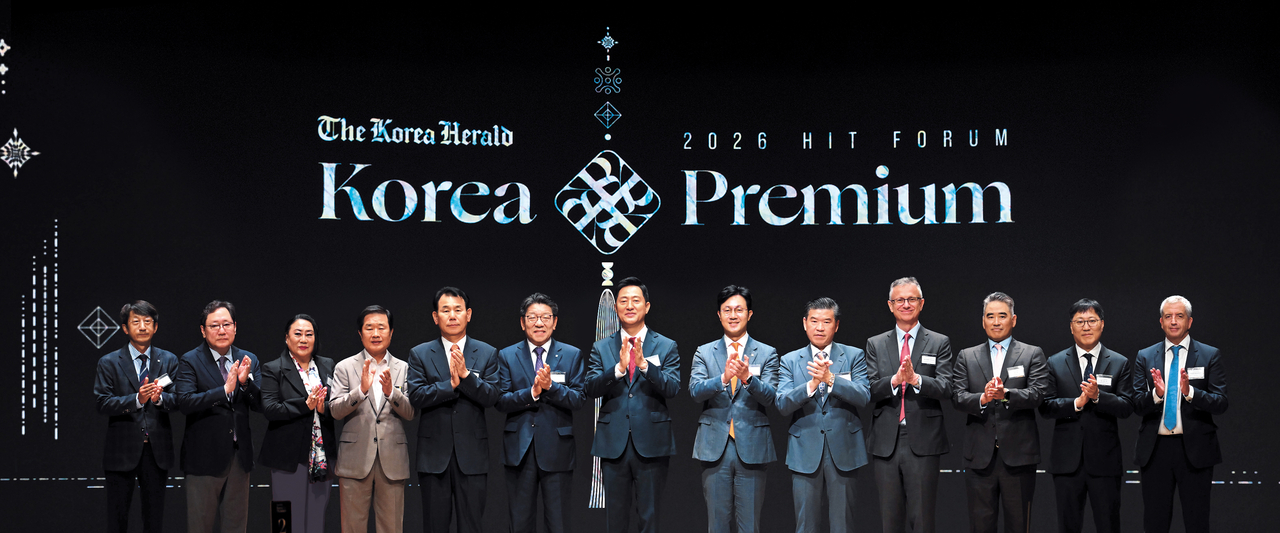
Capital market experts from Korea and abroad gathered to present a blueprint for overcoming the "Korea discount" and ushering in an era of "Korea premium."
They offered in-depth proposals and advice — from bolder shareholder returns and corporate governance reform to identifying new growth industries beyond semiconductors and modernizing infrastructure to meet global standards.
The 2026 HIT Forum, hosted by The Korea Herald at the Korea Chamber of Commerce and Industry's international conference hall in Jung-gu, Seoul, on Tuesday, drew senior government officials, financial industry executives and global investors.
Prime Minister Han Seong-sook, in a video congratulatory address, said, "We will spare no effort at the government level to help our capital market win the trust of the public and the world, take a step forward, and go beyond Korea premium to build an 'irreplaceable Korea.'"
Seoul Mayor Oh Se-hoon added his support, saying, "A virtuous cycle in which excellent companies are properly valued for their worth, and that success feeds back into further innovation and investment — that is exactly the Korea premium we need to build."
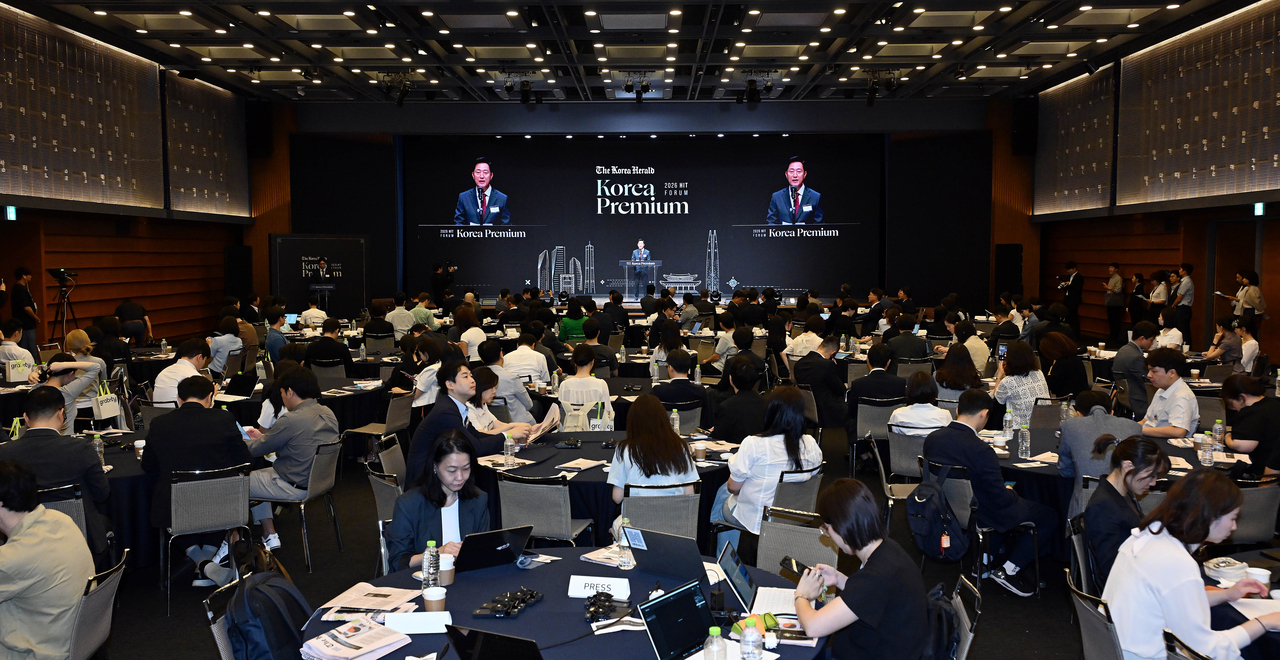
Jeong Eun-bo, chairman of the Korea Exchange, said South Korea's capital market stands at a critical turning point. The market is marking the 70th anniversary of the opening of its stock exchange. "We will prepare, without a hitch, a 24-hour trading system and a shortened T+1 settlement cycle to maximize accessibility for overseas investors," Jeong said. "We will also promote value-up disclosures to encourage voluntary improvement among low price-to-book ratio, or PBR, companies, and introduce artificial intelligence to counter increasingly sophisticated unfair trading and establish a fair trading order."
Choi Jin-young, CEO of Herald Media Group, said in his opening speech, "Sustained corporate value reassessment requires transparent governance, consistent shareholder returns, predictable rules and a fair market."
Shareholder returns lacking, governance needs reform
Lee In-hyung, vice president of the Korea Capital Market Institute, pointed to concrete data to describe the reality of the Korean stock market. "From 2012 to 2021, the average PBR of listed Korean companies stood at 1.2, only half the level of advanced markets," Lee said. "This is not some vague psychological factor — it is a measurable structural problem stemming from insufficient shareholder returns and an ownership structure centered on controlling shareholders."
He then offered a positive assessment of the recent wave of reform. "The value-up program, once limited to voluntary recommendations, is evolving into a multidimensional system spanning corporate law and the tax code — including mandatory disclosure, the introduction of directors' fiduciary duty to shareholders, incentives for share buybacks and cancellations, and separate taxation of dividends," he said.
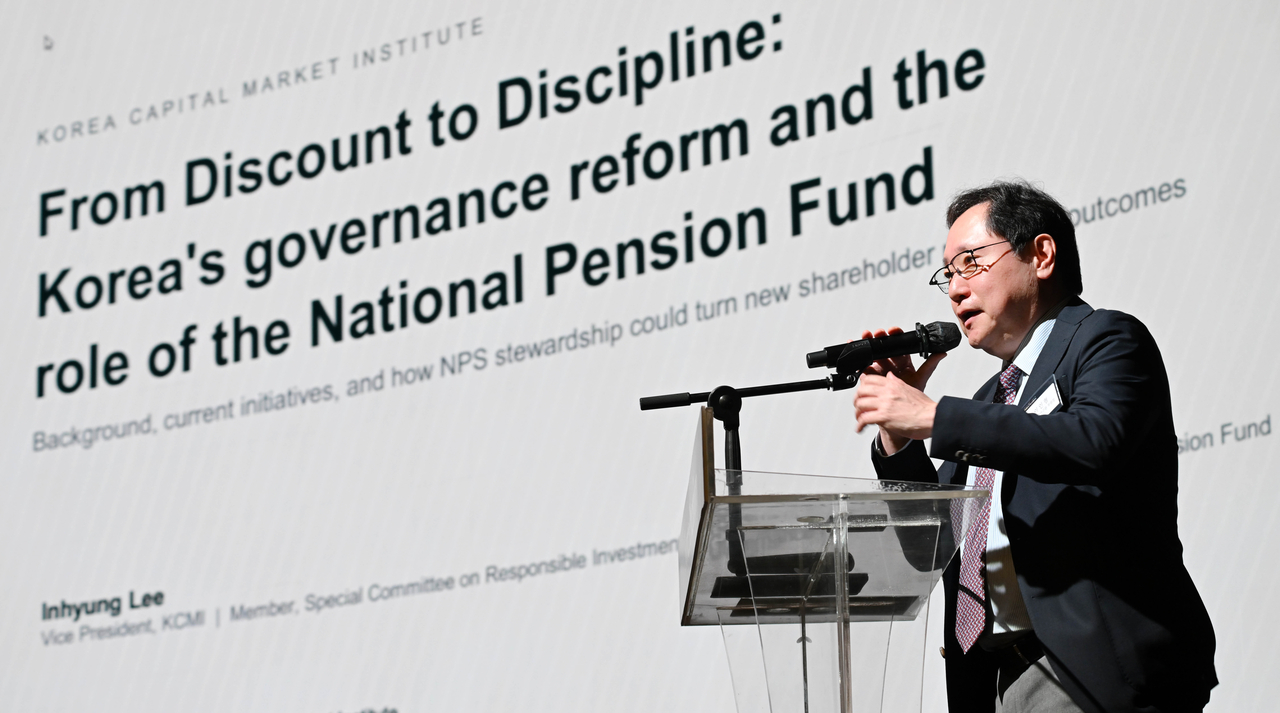
Lee particularly singled out the national pension as the most powerful force to help root these reforms in the market. "The national pension's holdings of domestic shares are projected to surge from 14.3 percent in 2023 to 19 percent in 2026," he said. "With recent pension reforms pushing back the fund's depletion point by more than a decade, the national pension will remain an anchor shareholder in Korea's capital market until at least 2050."
A sober perspective from the foreign investor's side followed. Alexander Treves, managing director at JP Morgan Asset Management, who has watched the Korean market for 30 years, said, "Since the 1997 Asian financial crisis, Korea's economy and K-soft power have grown remarkably, but shareholder returns and governance are still weak." Citing Japan's success with shareholder returns under "Abenomics," he advised, "To appear attractive to foreign investors, Korea needs modernized rules aligned with global standards."
James Kim, chairman of the American Chamber of Commerce in Korea (AMCHAM), also called for regulatory innovation. "In a recent survey, Korea ranked third in the Asia-Pacific region as a preferred location for regional headquarters, earning high marks for its infrastructure and technological capabilities, yet fewer than 100 multinational companies actually run their businesses with Korea as their regional hub," Kim said. "For Korea to establish itself as a true premium nation and an attractive financial hub, it must modernize outdated regulations and demonstrate solid, numbers-backed momentum that foreign investors can trust."
From 'semiconductor rally' to broader 'Korea rally' with defense, nuclear power
In the closing panel discussion, key financial experts from Korea and abroad took the stage for an in-depth discussion on whether Korea can become a key destination for global capital. Choi Young-jin, chief marketing officer and vice president at Hanwha Asset Management, moderated the session. Panelists included Treves; Frank Benzimra, head of Asia equity strategy at Societe Generale; Park Jung-woo, chief economist at Nomura Securities; and Suk Jun, head of Korea strategy at Morgan Stanley.
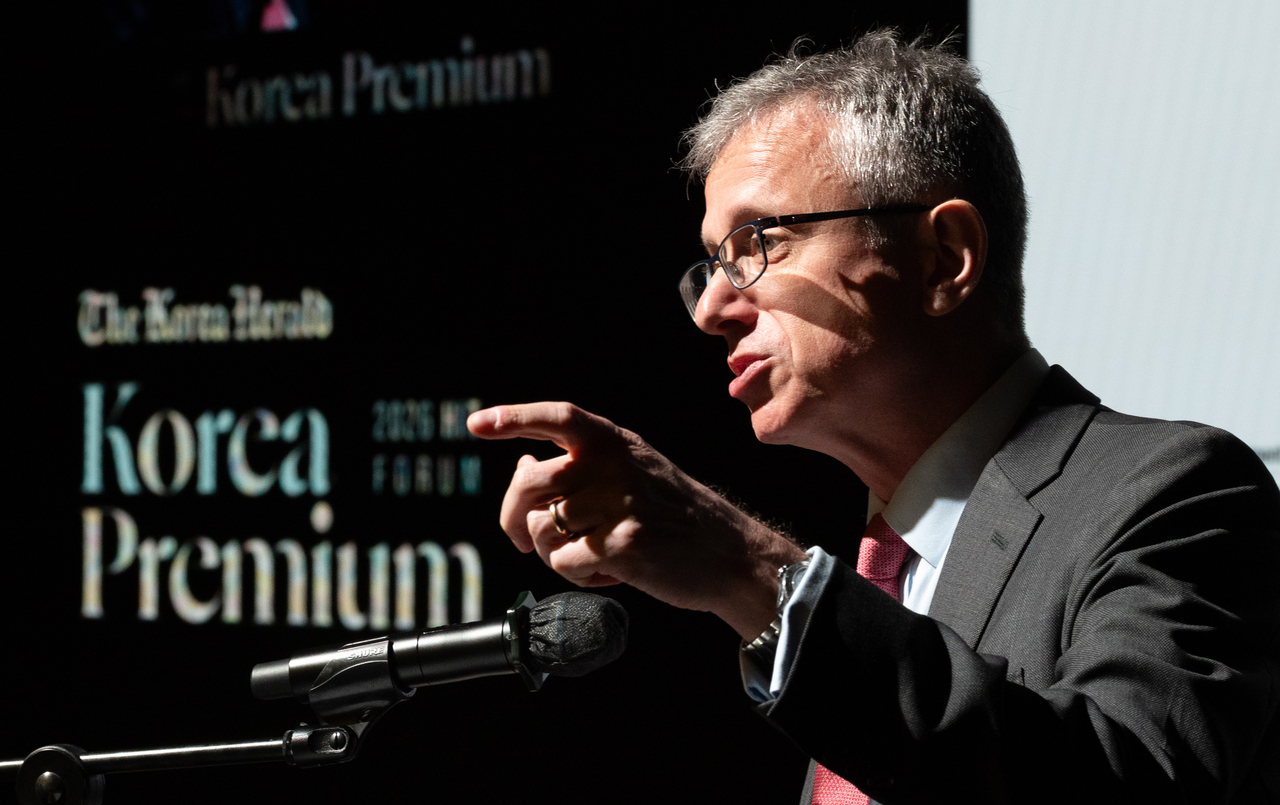
Panelists said Korea's recent stock market rally has been overly concentrated in the semiconductor sector. They agreed that the market as a whole needs to improve its fundamentals rather than rely on a handful of leading industries. They named defense, nuclear power, shipbuilding and K-culture as the "next leading sectors" to drive Korea's stock market forward.
"We need to break away from a situation where most index gains come from just a few sectors," Treves said. "Korea should actively nurture globally attractive industries it already possesses — defense, shipbuilding, K-culture, gaming — and expand this into a genuine 'Korea rally.'"
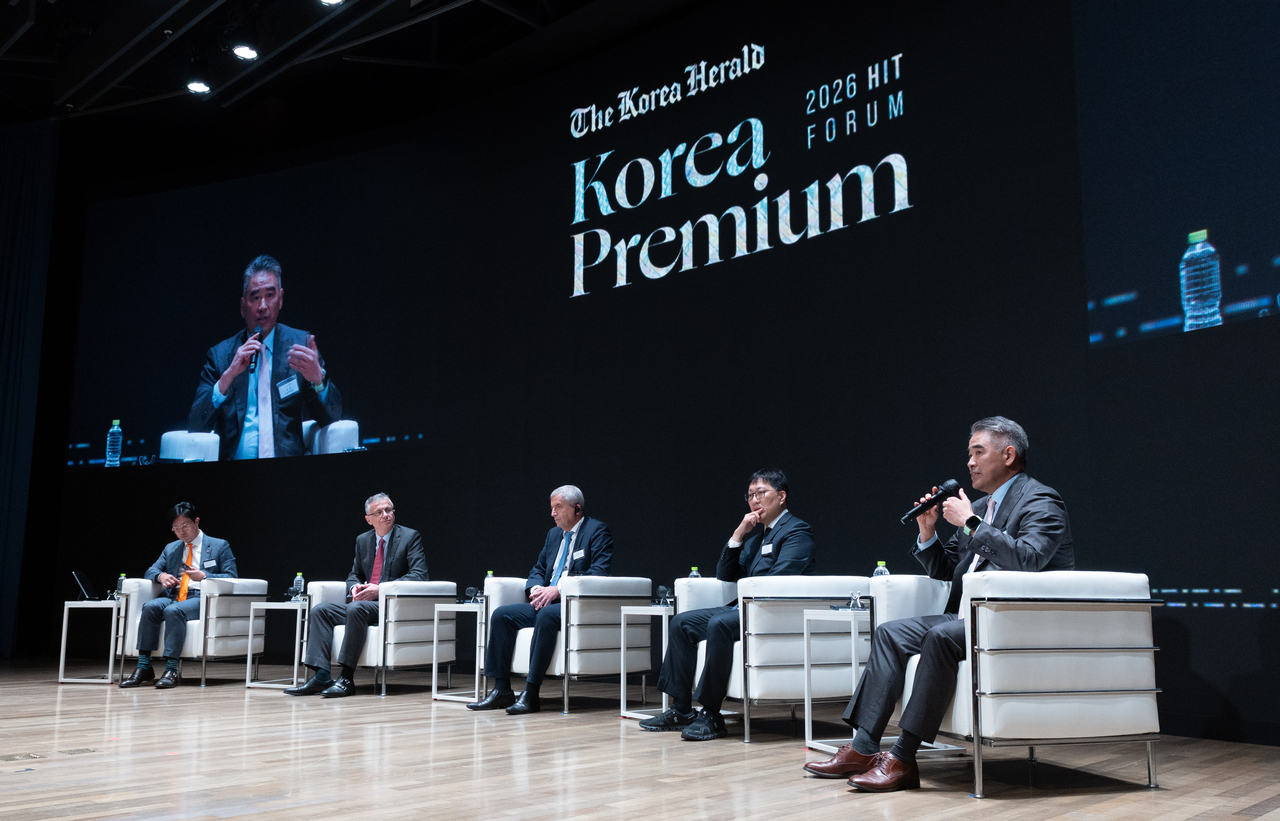
Benzimra pointed to shifting global macro trends, saying, "Korea's industrial structure is increasingly aligning with the global shift toward capital investment, reindustrialization and economic security. Particularly in batteries, shipbuilding, industrial engineering and nuclear power generation, Korea offers unique strengths that are difficult for other countries to replicate."
Suk also highlighted the structural advantages Korea has gained amid the global geopolitical realignment. "As the world shifts recently toward a multipolar system, geopolitical risk continues to rise," he said. "Structural demand is emerging in the defense sector, traditionally led by the United States and Europe, and Korea is filling that gap remarkably well."
Park predicted the semiconductor tailwind would continue. "As technological complexity increases, it is becoming harder for chipmakers to rapidly expand supply," he said. "The semiconductor supercycle and the broader business cycle will serve as a boon for the domestic stock market for now."
jiyun@heraldcorp.com