Free surgeries given to 4 children with burn scar contractures; 24 burn patients receive outpatient care
Burn treatment seminar and on-site training held for 115 local medical staff
Hallym University Hangang Sacred Heart Hospital, known for its burn treatment program, said it provided free treatment to child patients suffering from burn aftereffects in Mongolia and trained local medical staff.
The hospital and the Hallym Burn Foundation said they performed free surgeries on four child patients who were struggling with daily life due to burn scar contractures, during a medical mission to Mongolia from Aug. 24-28.
During this period, the two organizations carried out the "2026 Hallym Burn Foundation Mongolia Burn Care Partnership" with the Mongolian National Trauma Center in Ulaanbaatar. Seven participants took part in the cooperation, including Hospital Director Heo Jun, Professor Lee Sin-ae of the burn surgery department and Professor Seo Dong-guk of the plastic surgery department. Staff from the Hallym Burn Foundation and Hallym University research institutes also took part. They carried out surgeries and outpatient care for the child patients and conducted training for local medical staff.
The team performed surgery on the four children on Aug. 25 and Aug. 26. The children had scars on their fingers, arms, neck and face from burns suffered in childhood, causing joint movement problems and hand function impairments that hindered their daily lives.
Burn scar contracture is a complication in which scar tissue formed after a burn contracts, pulling on surrounding skin and tissue and restricting movement in joints or other body parts. When contractures develop in frequently used areas such as the hands or arms of growing children, they can lead to lasting functional limitations. Specialized treatment such as surgery and rehabilitation may be necessary depending on the severity.
The medical team applied different surgical methods depending on each child's scar shape and location. Three children underwent skin grafts after the contracted scar tissue was removed to release the tension. Two received full-thickness skin grafts using skin from the groin, while one received a split-thickness skin graft using skin from the thigh.
The child with the most extensive damage, an 8-year-old girl, lost part of her right scalp, face and ear in a household burn accident in 2018. She also had a band-shaped contracture scar on her neck that restricted movement. The medical team performed a Z-plasty, cutting the tightened scar in a Z shape and repositioning the surrounding skin before suturing, to reduce the tension on the skin. After the surgeries, the team checked on the children's progress and explained future wound care methods to their guardians.
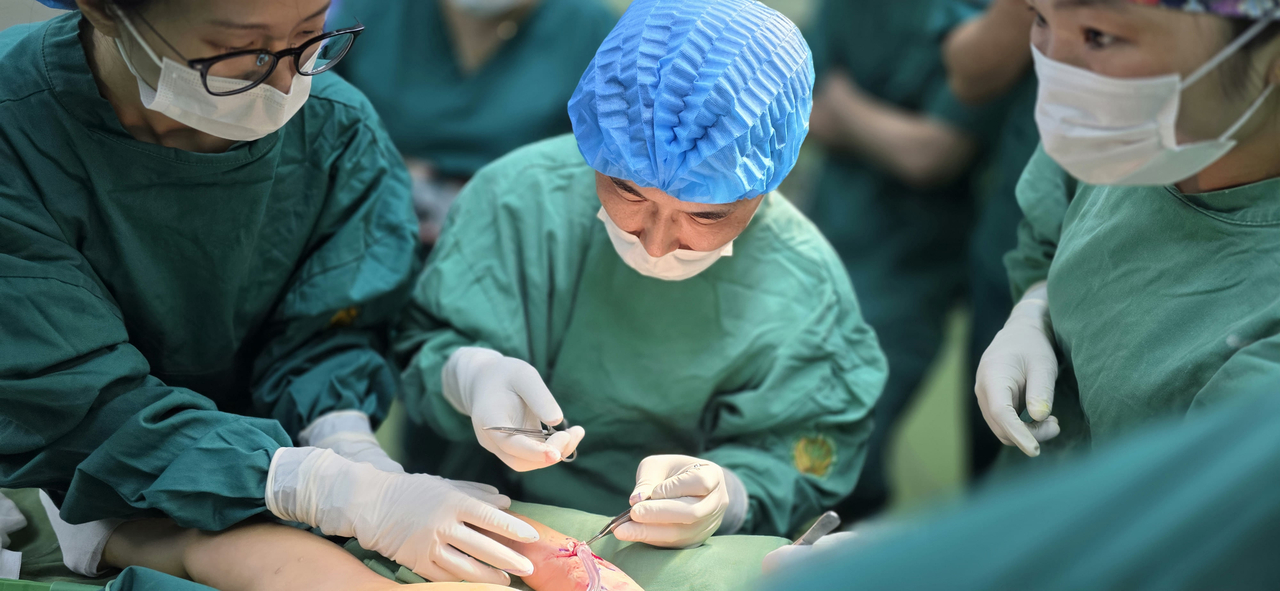
Along with the surgeries, the team provided outpatient care to 24 local burn patients. Medical staff from the two countries assessed each patient's burn aftereffects and scar condition and discussed treatment plans. The team also trained local medical staff in parallel. Hallym University Hangang Sacred Heart Hospital staff demonstrated wound dressing techniques for burn patients directly to Mongolian National Trauma Center staff in the intensive care unit. They shared wound management methods and explained treatment approaches in detail during actual patient care.
A burn treatment seminar held Aug. 25 drew 35 Mongolian medical staff in person and 80 more online. Hallym University Hangang Sacred Heart Hospital staff shared clinical experience and treatment techniques on topics including initial treatment of severe burns, sepsis management, and surgery and wound care. They also covered post-burn rehabilitation, scar treatment and nursing.
Dr. Galbadrakh, director of the Mongolian National Trauma Center, said, "Through this cooperation, children in need of treatment were able to receive surgery locally, and our medical staff were also able to gain diverse treatment experience by taking part in the actual surgeries and care process." He added, "I hope this experience will help improve Mongolia's capacity to treat burn patients."
Hospital Director Heo Jun added, "The children we operated on this time had long struggled with daily life due to scarring and contractures even after their initial burn treatment had ended." "Since ongoing management such as reconstructive surgery and rehabilitation remains important even after acute treatment for burns, we will continue building a cooperative system that allows the necessary treatment to continue locally," he said.

Since its founding in 2008, the Hallym Burn Foundation has carried out burn patient support activities in eight countries, including the Philippines, Vietnam and Mongolia. It has provided free care to 1,130 burn patients abroad and performed local surgeries on 101 patients. It also invited 62 patients who could not receive adequate treatment locally to South Korea for surgery and other treatment.
The foundation signed MOUs last year with Mongolian institutions including the Ministry of Health, the Mongolian National Trauma Center and the Nareunchachareu Foundation. In May, it invited Mongolian medical staff to the hospital for an exchange program. This latest mission expanded the scope of cooperation to include local surgeries, outpatient care and staff training. Hallym University Hangang Sacred Heart Hospital and the Hallym Burn Foundation plan to discuss follow-up cooperation with the Mongolian National Trauma Center. This includes seminars and staff exchange and training programs, based on the outcomes of this medical partnership.
kty@heraldcorp.com