Prosecutors question officials from East Asia Culture Center as witnesses
Kim Ok-sook donated total of 15.2 billion won to East Asia Culture Center, Roh Tae-woo Center
Investigators tracing flow of contributions to establish truth behind alleged slush fund
Passage of independent forfeiture law seen as bolstering the probe
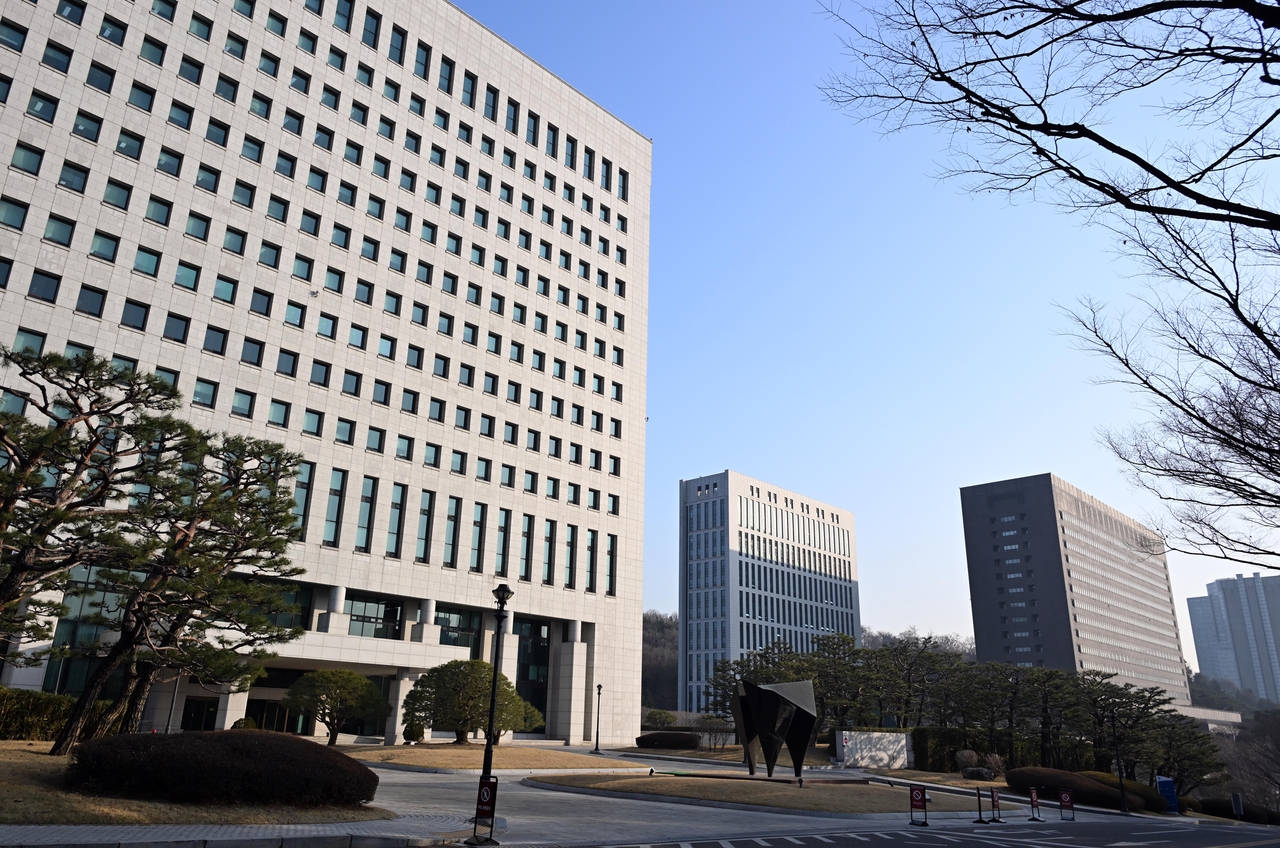
Prosecutors investigating allegations of a slush fund tied to the family of late former President Roh Tae-woo have been questioning officials connected to the East Asia Culture Center, once headed by Roh's son, Ambassador to China Roh Jae-heon, as they move to establish the facts of the case.
The Criminal Proceeds Recovery Division of the Seoul Central District Prosecutors' Office, headed by So Jeong-su, summoned an official from the East Asia Culture Center for questioning as a witness in late August. Prosecutors also questioned as a witness a former secretary whose name appeared on an account suspected of holding funds under a borrowed name.
Prosecutors are examining whether funds from the Roh family's alleged slush fund were used as contributions to the East Asia Culture Center and the Roh Tae-woo Center. The East Asia Culture Center was established in 2012 as a foundation initially called the Korea-China Culture Center, with Ambassador Roh serving as its chairman. The Roh Tae-woo Center is a separate foundation established in 2022, currently chaired by Jeong Hae-chang, an advisory attorney at S&L Partners who once served as Roh Tae-woo's chief of staff.
Prosecutors plan to trace the origin of the contributions to establish the substance of the alleged slush fund. Kim Ok-sook, Roh Tae-woo's widow, donated a total of 14.7 billion won ($10.9 million) to the East Asia Culture Center between 2016 and 2021, and 500 million won to the Roh Tae-woo Center, which was founded in 2022. In total, some 15.2 billion won flowed into the two foundations.
Jeong, the Roh Tae-woo Center's chairman, is also identified as "Chief of Staff Jeong" in what has come to be known as the "Kim Ok-sook memo." Prosecutors have not yet begun questioning Jeong or others named in Kim's memo. They are expected to summon Jeong and others once they have finished tracing the flow of funds, and are also weighing whether to question Kim and other defendants named in the complaint.
The investigation into the Roh family's alleged slush fund originated from the divorce case between SK Group Chairman Chey Tae-won and Roh So-young, Roh Tae-woo's daughter and director of Art Center Nabi. In its May 2024 ruling, the appellate court handling the divorce case acknowledged that 30 billion won in slush funds tied to the "Sixth Republic" had flowed into SK Group, citing a memo and promissory notes kept by Kim, Roh So-young's mother and Roh Tae-woo's widow.
During the appellate proceedings, it emerged that Roh So-young's side had submitted to the court, as evidence that the Roh family had helped SK Group grow, a memo kept by Kim reading "Sunkyong, 30 billion" along with a promissory note issued under the name of Sunkyong Construction, now SK Ecoplant.
In October 2024, the May 18 Memorial Foundation filed a complaint with the Supreme Prosecutors' Office against Kim, Ambassador Roh and Roh So-young, alleging violations of the Punishment of Tax Evaders Act and the Act on Regulation and Punishment of Concealment of Criminal Proceeds. The foundation argued that by submitting the memo detailing the alleged slush fund to the court, Roh So-young's side had effectively acknowledged hiding illicitly accumulated assets.
"It emerged during the trial that a massive sum reaching 90.4 billion won had been hidden under borrowed names or concealed in the form of loans, investment bonds and safes," the foundation said. "It was also revealed during a national audit by the Legislation and Judiciary Committee that Kim Ok-sook, one of the accused, held 21 billion won in slush funds under borrowed names between 2000 and 2001 and then laundered the money by paying it in as insurance premiums."
The Criminal Proceeds Recovery Division of the Seoul Central District Prosecutors' Office, which was assigned the case, questioned an official from the May 18 Memorial Foundation as the complainant in November 2024. More than two years after the complaint was filed, prosecutors on Aug. 21 raided Kim's home in Yeonhui-dong, Seodaemun-gu, Seoul, along with the East Asia Culture Center, the Roh Tae-woo Center and the home of a former secretary suspected of providing a borrowed-name account. Prosecutors plan to speed up the investigation by analyzing the seized materials alongside further questioning of those involved.
The investigation has gained momentum since the National Assembly passed a revision to the Act on Regulation and Punishment of Concealment of Criminal Proceeds last month. The revised law introduces an independent forfeiture system starting next year, allowing authorities to confiscate criminal proceeds separately from a criminal conviction — meaning proceeds can still be forfeited even if the accused dies or the statute of limitations expires.
bell@heraldcorp.com