
Melon's Global K-Chart compares rankings by country
Analysis of July-August monthly charts and the latest September rankings
RESCENE's comeback surge dominates in Korea
BTS reigns in Japan, while China's top spot changes weekly
In Korea, it was RESCENE. In China, EXO. In Japan, BTS. So who tops the charts when all three countries are combined?
Even within K-pop, each country has its own favorite groups and songs. While the genre is beloved across borders, a look inside the playlists of Korean, Japanese and Chinese fans reveals sharply different tastes.
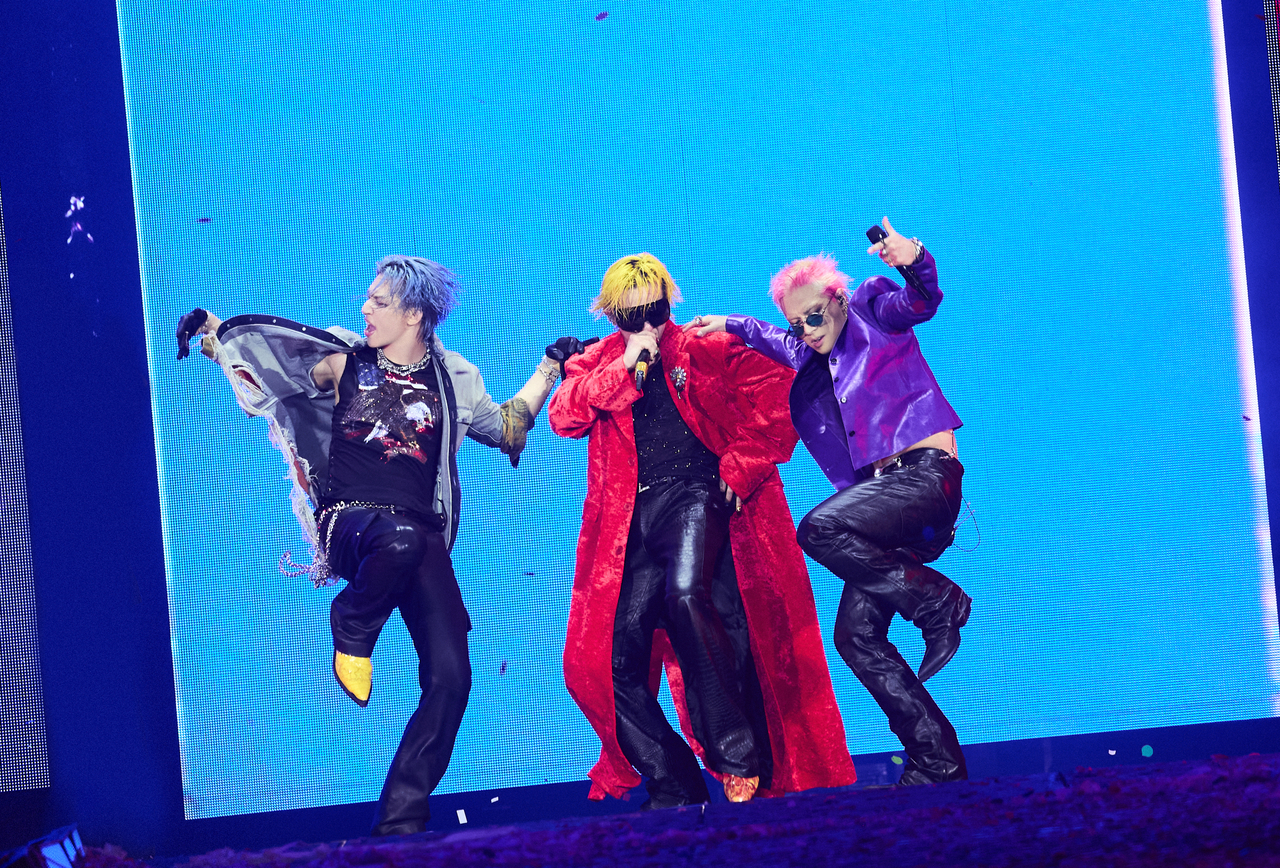
Melon released its Global K-Chart on Tuesday, combining data from Melon in Korea, Tencent Music in China and Line Music in Japan. Big Bang topped the latest weekly chart, covering Aug. 31 to Sept. 6. Earlier, BTS ranked first on the July monthly chart, and aespa took the top spot on the August monthly chart.
The details compiled over roughly three months since the chart's launch are even more revealing. Making the top 10 in all three countries' charts simultaneously proved as difficult as threading a needle. Only three acts managed it: Big Bang, BTS and aespa.
The country-by-country No. 1 picture looks nothing like the global chart. On Melon, girl group RESCENE — a comeback-surge icon — held the top spot for two consecutive months in July and August. On Japan's Line Music, BTS has held the throne for four straight months, from May through August. On China's Tencent Music, i-dle led in July, aespa took over in August, and EXO surged to the top of the September weekly chart. Tencent's rankings show the throne changing hands with nearly every comeback cycle.
In Korea, comeback-surge icon RESCENE dominates
Korea's chart is, in short, a melting pot of mass appeal and viral momentum. No matter how massive a fandom is, holding the top spot is difficult without capturing the broader public's ear — and even a little-known rookie can pull off a miracle comeback surge if they catch fire on TikTok or YouTube Shorts.
RESCENE's Cinderella story is the prime example. A "Love Attack" challenge craze sparked by YouTube video content swept through Melon's daily and weekly charts before ultimately pulling off the coup of topping Melon's August monthly chart. The group also landed "Pretty Girl" and its previous track "Deja Vu" on the charts at the same time, putting three songs in the monthly top 10 — a remarkable feat. RESCENE also held on to the No. 1 spot in Korea on the September weekly chart, followed by Big Bang at No. 2, Hearts2Hearts at No. 3, BTS at No. 4 and aespa at No. 5.

But RESCENE stumbled abroad, ranking 78th on China's Tencent chart and 39th on Japan's Line chart, leaving its overall global ranking at just 17th. An industry insider said, "The short-form video craze swept through Korea, but there is also an emotional factor at play among RESCENE's fans — the group's roots at a small or midsize agency — which created a gap compared to fans overseas."
Big Bang, often called the last of Korea's national groups, proved to be a rare cross-generational icon this time around. Korean listeners opened their ears just as enthusiastically to a familiar legend as they do to the latest trends.
Big Bang, returning as a full group for the first time in four years and four months with its new song "BiiiG," saw its artist ranking on Melon leap from 21st to second the moment the track dropped, and the song shot straight to No. 1 on the top 100 chart. Beyond breathless streaming from teenage fans, the sheer force of nostalgia — striking a chord with listeners in their 20s and 30s as well as their 40s — shook up the chart.
IU, often called the queen of Korean music, holds eighth place in Korea even without any new release. However, she ranks 38th in China and 45th in Japan. Hearts2Hearts, too, sits at third in Korea but 46th in China and 21st in Japan. A high ranking in Korea does not necessarily translate into global success.
In China, chart leaders turn over fast with every K-pop comeback
China's chart tells yet another story — an endless firepower battle marked by whirlwind turnover.
An official at a major domestic agency said, "Because physical album retail is difficult in China, fans there tend to pour all their energy into digital album downloads and streaming on Tencent platforms such as QQ Music." The official added, "In a way, the chart shifts every time because Chinese fans react so quickly to each K-pop group's comeback."
The latest Tencent Music top 10 lists EXO at No. 1, i-dle at No. 2, aespa at No. 3, Big Bang at No. 5, NCT 127 at No. 6, BTS at No. 7, G-Dragon at No. 8 and Seventeen at No. 10.

What is notable is that i-dle, which released the mini album "We Made" in July, jumped a staggering 26 spots in one leap. The group claimed the top spot in China, fifth globally. In August, aespa snatched the crown with a digital single, and in the first week of September, EXO — the local fandom's "eternal first love" — took over at No. 1. With turnover moving so fast, the throne changes hands almost without pause each time a new song drops.
China's market has its own peculiar formula for success. Industry insiders agree on one point: an overwhelming preference for members of Chinese descent.
Looking at the first week of September's chart, i-dle member Yuqi ranked just 56th globally but placed fourth on the Chinese chart as a solo entry. Seventeen's The8, too, ranked 75th globally but soared to ninth on the Chinese chart — outperforming his own group's overall ranking of 10th in China.
Japan's steadfast loyalty: rock-solid 'concrete' fandoms
Once Japanese fans commit, they stay committed. Japan's fandom culture is a sanctuary for loyalty untouched by passing trends. "Japan's music market values the emotional bond built steadily with an artist over time more than any single flashy hit," a domestic agency official said.
BTS's record is nothing short of astonishing. Despite the group's members serving in the military, BTS swept the monthly No. 1 spot for four straight months — May, June, July and August — and is still holding first place on the September weekly chart. A "concrete core" fandom that keeps streaming even older songs in everyday life — rather than relying on short-term promotional events — is driving this lock-in effect. Groups with such a solid loyalty infrastructure — one strong enough to sustain large-scale offline tours — enjoy virtually unbeatable staying power on Japan's chart.

Stray Kids far outpaced their standing in Korea (56th) and China (14th) by landing at No. 2 in Japan, driving their global ranking to 12th. TWICE, which has established itself as a national girl group in Japan, ranks 62nd in Korea but continues to show strength with 11th in China and third in Japan. Seventeen, which fills dome arenas on tour, shows similarly steady numbers — 42nd in Korea, 10th in China and 10th in Japan.
What is notable is that fourth- and fifth-generation girl groups also stand out in Japan — groups with Japanese members, similar to TWICE's Momo, Sana and Mina. ILLIT, whose members include Moka and Iroha, climbed as high as fourth in Japan, while sitting at just 18th in Korea and 58th in China. BABYMONSTER, too, shows exceptional firepower in Japan, ranking seventh there against 73rd in Korea and 63rd in China — a group that is particularly strong in the Japanese archipelago. BABYMONSTER counts Japanese members Ruka and Asa among its lineup. Le Sserafim, which includes Sakura and Kazuha, ranks ninth in Japan, and 44th in both Korea and China.
How Big Bang, BTS and aespa — the only three — conquered all three countries
With tastes and consumption habits diverging so sharply among the three countries, simultaneously ranking in the top 10 of all three is akin to reaching for the stars. That becomes clearer when looking at the country-by-country rankings of groups other than Big Bang, BTS and aespa, which managed to conquer the top 10 in all three.

IVE, which ranked fourth overall globally, placed ninth in Korea, 15th in China and 11th in Japan. Tomorrow X Together, which came in sixth globally, ranked just 34th in Korea but rose to 12th in China and eighth in Japan. Even top-tier idols run into barriers with fandoms abroad, or hit the wall of mass appeal at home.
Big Bang, meanwhile, topped the latest global chart while ranking second in Korea, fifth in China and sixth in Japan. The group's weapon is the aura of a "living legend" that unites generations. In Korea, its comeback drove nationwide streaming instantly, while its overwhelming recognition among Chinese audiences — built up steadily since the second-generation hallyu era — secured fifth place on Tencent. G-Dragon also became the only Korean solo act to make China's top 10, ranking eighth. On top of that, the group rallied Japanese fans seasoned by countless dome tours.
BTS is a global super IP, or intellectual property, that settled at fourth in Korea, seventh in China and first in Japan. Having held the No. 1 spot on Japan's Line Music for four straight months, BTS maintained balanced rankings across all three countries, demonstrating the safety net of a massive fandom. The group ranks second on the latest global chart.

Aespa ranked fifth in Korea, third in China and fifth in Japan, putting it third overall globally. The secret was an aggressive comeback strategy. After releasing its full-length album "LEMONADE" in Korea in May, the group followed with its Japanese debut single "KISS N TELL" in July, then a concert and the unit digital single "SYNK: aeXIS LINE" in August — pouring out new music and visuals every month.
In particular, member Ningning's popularity in China and aespa's intense fictional universe helped propel the group to third place there. Its official debut promotion in Japan pushed it to fifth on Line, and it also held fifth place on Melon. The group's savvy planning — precisely staggering different comeback timelines across the three countries — stands out.
This tri-country chart points to K-pop's new formula for success: expanding territory in each market requires a distinct strategy. In Korea, groups need short-form challenges and witty web variety content to stimulate the public's dopamine. In China, they need concepts and visuals that grab attention instantly, along with an intimacy with fans that rivals what local members provide. In Japan, the odds of "conquering" the market rise with consistent offline connection — from high-touch events to dome tours.
An industry insider said, "It is not easy for a group to emerge with the power to work simultaneously across such different markets, the way Big Bang and BTS have," adding, "Groups need to build more careful, sophisticated strategies tailored to each country and region."
shee@heraldcorp.com




