
'Act' provision has drawn criticism since the law was drafted, lawmaker says
Election law changes require bipartisan agreement, he adds
No party discussion on timeline for fabricated-indictment special prosecutor act
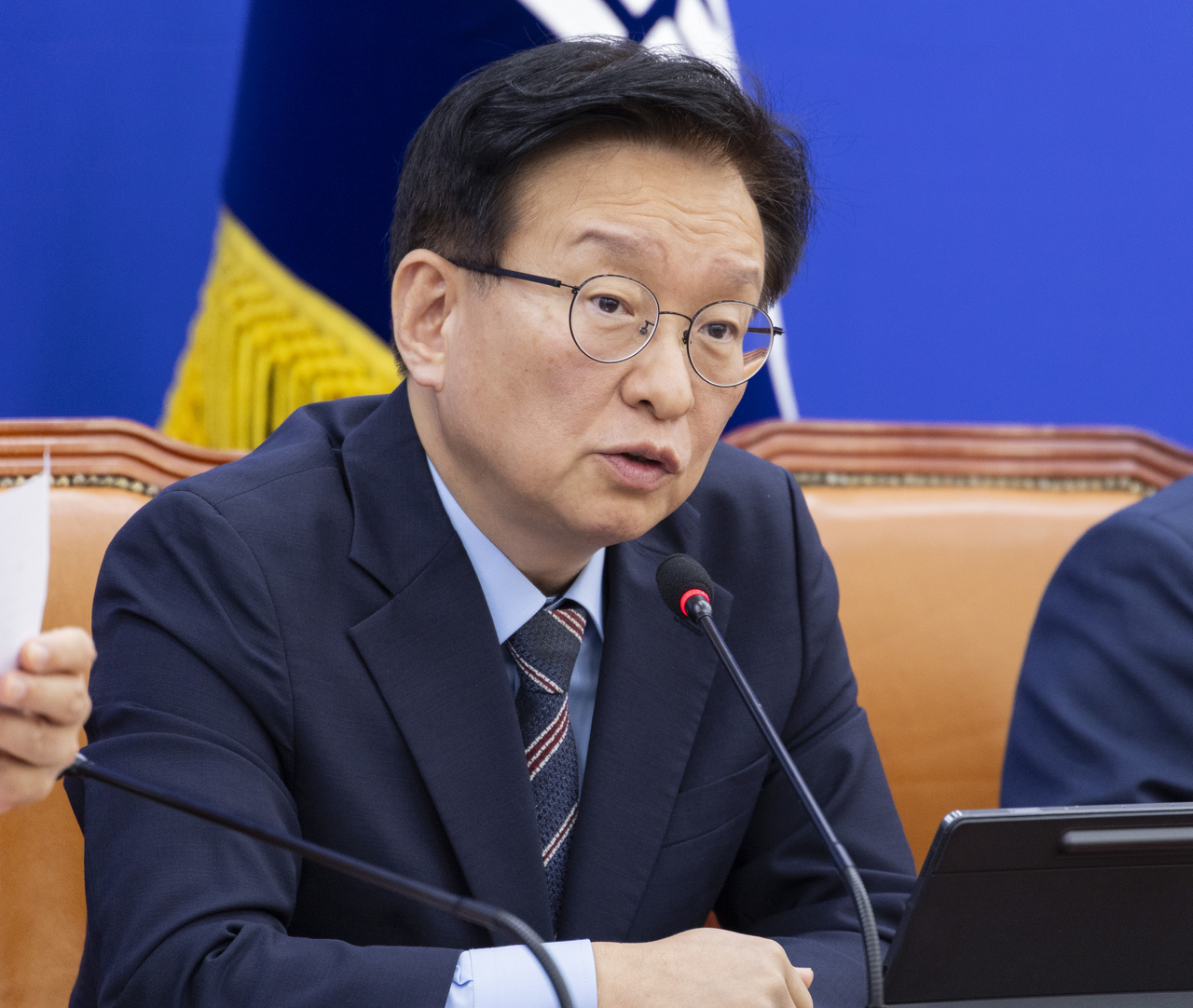
Kwon Chil-seung, policy chief of the Democratic Party of Korea, said Tuesday that the fabricated-indictment special prosecutor act is "somewhat removed from everyday livelihood issues" and that the party has held no discussions on when to take it up.
Speaking on MBC Radio that day, Kwon said the Democratic Party's position is to keep this regular session of the National Assembly focused squarely on livelihood legislation. He added that the party has reached no decision on the special prosecutor's authority to withdraw charges — "there is currently no party position, no internal discussion pointing in any direction" — and that "there is simply no plan for when to move forward with this bill."
On the false-statement provision of the Public Official Election Act, Kwon said the "act" element "has drawn criticism since the law was first drafted." He said removing the word "act" from the statute would result in a dismissal of charges, adding that doing so "would be far more consistent with legal principles and easier for the public to understand."
Cho Kuk, head of the Rebuilding Korea Party's policy research institute, had recently argued that President Lee Jae Myung's retrial on Public Official Election Act charges is not eligible for prosecutorial withdrawal, and that the case should instead be resolved through a legislative amendment granting a dismissal.
Kwon acknowledged that revising the Public Official Election Act is "a discussion that has been examined for many years," but said political obstacles have slowed progress. "There are political burdens whenever you try to amend it, and it would take a major triggering event — and that element has been somewhat lacking," he said.
Kwon said the party is not separately reviewing the option of deleting the provision, and stressed that any changes to election law must be made through bipartisan agreement. He also suggested the law is one that both ruling and opposition parties quietly want amended but are reluctant to say so openly.
He further said investigative and judicial bodies have been granted too much discretion under the current wording, allowing for arbitrary interpretation. "It can mean whatever you want it to mean — the scope for arbitrary reading is far too wide," he said. "It is right to narrow that scope and increase clarity wherever possible."
addressh@heraldcorp.com




