
Second-term campaign pledge white paper released; 5 policy areas, 50 detailed tasks finalized
Support to expand to all middle and high schoolers by 2030; field trip costs also covered up to 100,000 won
School violence 'relationship-restoration deliberation' system to expand from elementary to middle and high schools
Seoul education office's generative AI chatbot SenGPT set for expansion
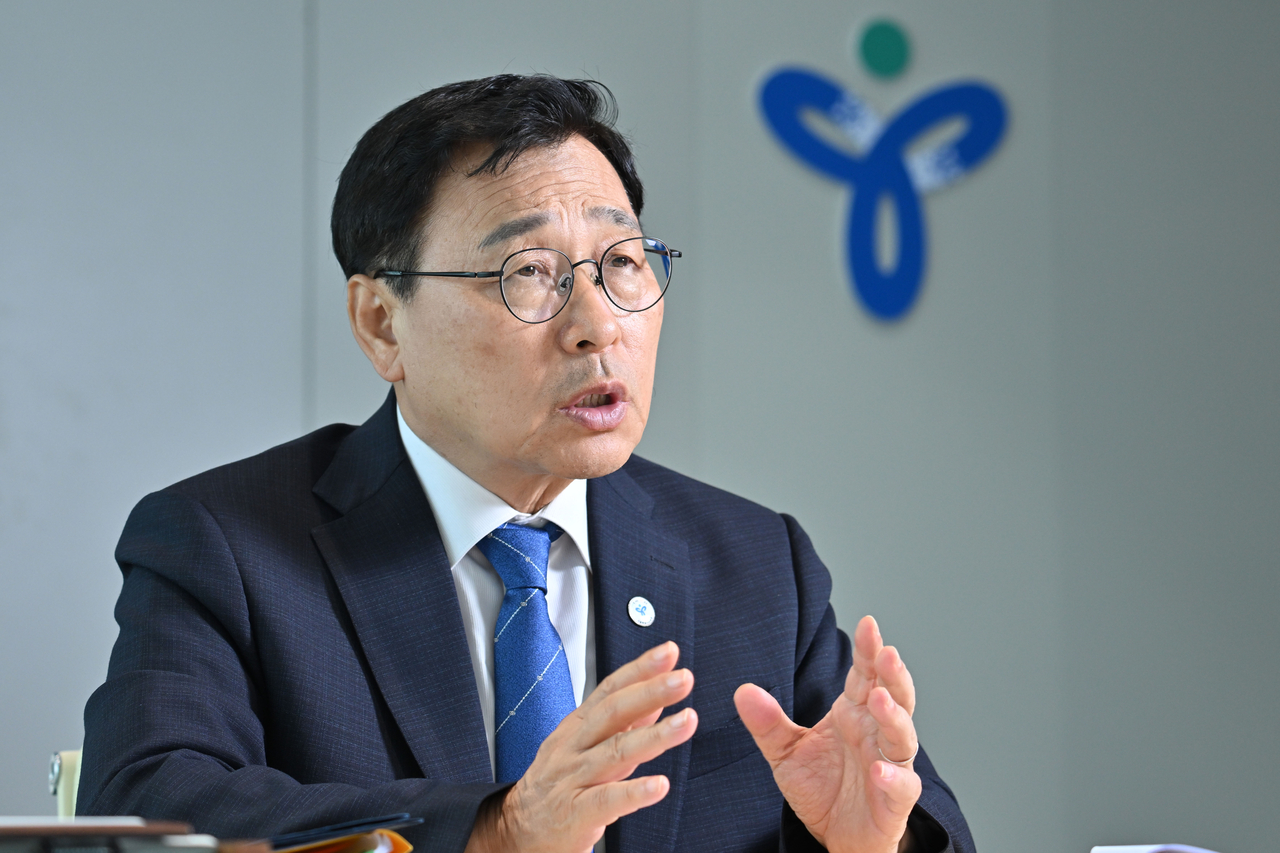
The Seoul Metropolitan Office of Education will provide up to 160,000 won ($118) per student annually to cover public transit commuting costs for middle and high school students. The support will begin with high school seniors in 2028 and expand to all middle and high school students by 2030.
The office released its "24th Superintendent Jeong Geun-sik Campaign Pledge Committee White Paper" on Tuesday, outlining the education vision for Superintendent Jeong's second term as "basic education for all, happy cooperative education." The office reviewed the 5 policy areas, 15 pledges, 66 detailed tasks and 270 action items from the election campaign, consolidating them into 5 policy areas, 15 pledges, 50 detailed tasks and 169 action items.
The five policy directions are: future-oriented holistic education centered on creativity and empathy; accountability-based education guaranteeing learning for all; sustainable democratic civic education; shared educational welfare; and a safe and peaceful school community. Detailed areas covered include AI and digital education, reading, arts and sports, foundational academic skills, early childhood education, career guidance and college preparation, free education, support for students with immigrant backgrounds, mental health, school violence and special education.
The transit support program will launch with high school seniors in 2028. Eligible students are those who commute by public transit on school days, and the program will cover one bus or subway trip per day up to 160,000 won per year. Coverage will expand to all high school grades in 2029 and to middle school students in 2030.
The education office plans to work with the Seoul Metropolitan Government, autonomous district offices and T-money to establish a payment and settlement system using transit card data, before seeking approval from the Ministry of Health and Welfare to create a new social security program. The total estimated cost of the transit support program from 2028 to 2030 is 60.44 billion won, with annual spending projected at around 29.3 billion won by 2030.
The office will also begin covering the cost of non-overnight field trips for elementary and middle school students starting in 2027, providing up to 100,000 won per student annually for admission fees, activity fees, vehicle rental and lunch, with the program expanding in stages through 2030. The total budget for this initiative is 26.08 billion won. To reduce teachers' liability burden during field trips, the office will also pursue legal reforms to protect teachers from liability, along with legal support, additional staff and dedicated field trip buses.
Free early childhood education will also be expanded. Private kindergartens will begin receiving curriculum cost support in 2027, with coverage extending to after-school programs at both public and private kindergartens and childcare centers by 2029. The office aims to raise the free early childhood education coverage rate from 80 percent in 2027 to 95 percent by 2030, with a total of 240.41 billion won earmarked for early childhood education pledges through 2030.
In the AI field, the office will expand SenGPT — its generative AI chatbot — as a tool to support teachers and administrative staff. Plans include creating a dedicated AI agent for each department based on its own operational manuals and guidelines, and adding multimodal capabilities such as image and video generation. The office is targeting 40,000 SenGPT subscribers by 2030, with a total of 4.5 billion won allocated to related projects.
In the white paper, Superintendent Jeong said "guaranteeing the fundamentals of education so that every student can fully realize their potential is both the starting point and the most important responsibility of education," adding that "only when policies are put into practice at schools and supported by the participation and cooperation of the educational community do they translate into the real change of student growth."
brunch@heraldcorp.com




