
Seoul Metro analyzed complaints filed from January through July this year, finding a 17.3% decline from the same period last year; heating and cooling complaints, which account for the largest share, fell by about 110,000 cases, or 21.5%

Complaints filed with Seoul's subway system have been on a downward trend this year.
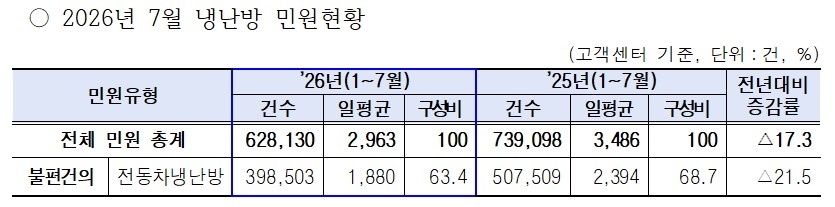
Seoul Metro said an analysis of complaints received from January through July showed a total of 628,130 cases — a 17.3% drop from the 739,098 recorded during the same period last year.
Heating and cooling complaints, which make up a significant portion of all grievances, led the overall decline, falling 21.5% — about 110,000 cases — from 507,509 to 398,503.
Notably, the drop came despite no change in cabin temperature standards. Seoul Metro attributed the improvement in part to stronger public communication about how the heating and cooling systems operate and the difference between set temperatures and perceived comfort, as well as to passengers' cooperation.
Train cabins automatically regulate temperature according to seasonal standards, but complaints about being too hot or too cold can arise simultaneously within the same car depending on crowding levels and individual sensitivity. Seoul Metro said it has continued to explain these characteristics to the public while also advising passengers on practical options such as checking real-time congestion and using designated mild-cooling cars.
Seoul Metro has also actively promoted non-contact complaint channels such as its Ddotta24 app to reduce the volume of heating and cooling complaints reaching its customer service center. When such complaints flood the phone lines, they can tie up call capacity for extended periods, potentially delaying the handling of urgent reports such as medical emergencies or assaults.
The operator runs a system that prioritizes emergency complaints, directing passengers with routine discomfort issues — such as temperature complaints — to use digital channels instead of calling.
Through Ddotta24, passengers can file a heating or cooling complaint without calling the customer center. They simply type "hot" or "cold" in the chat window and enter their line and car number to submit the complaint.
By contrast, complaints related to passenger conduct — including etiquette violations and behavior that disrupts order — rose from the same period last year, increasing by 2,797 cases (35.7%) and 271 cases (6.5%), respectively.
Seoul Metro said it plans to analyze complaint types and root causes in greater detail and expand public awareness campaigns to reduce everyday complaints and foster a better subway culture. It added that it will also review more efficient ways to handle heating and cooling complaints, which still account for more than half of all complaints, and seek greater public understanding and cooperation.
Ma Hae-geun, head of Seoul Metro's operations division, said the drop in heating and cooling complaints even amid record-breaking heat waves owed much to passengers who showed understanding and consideration for others with different temperature sensitivities. "We will continue to pay close attention to passenger discomfort and work to build a comfortable and safe subway environment that allows us to respond even more swiftly when urgent situations arise," he said.
seouldream01@heraldcorp.com




