
Expanded from 61 supporters at 20 stations last year to 100 at 25 stations this year, the program assists riders with ticketing, gate passage and facility navigation — with 96.8 percent of station staff saying the supporters help their work
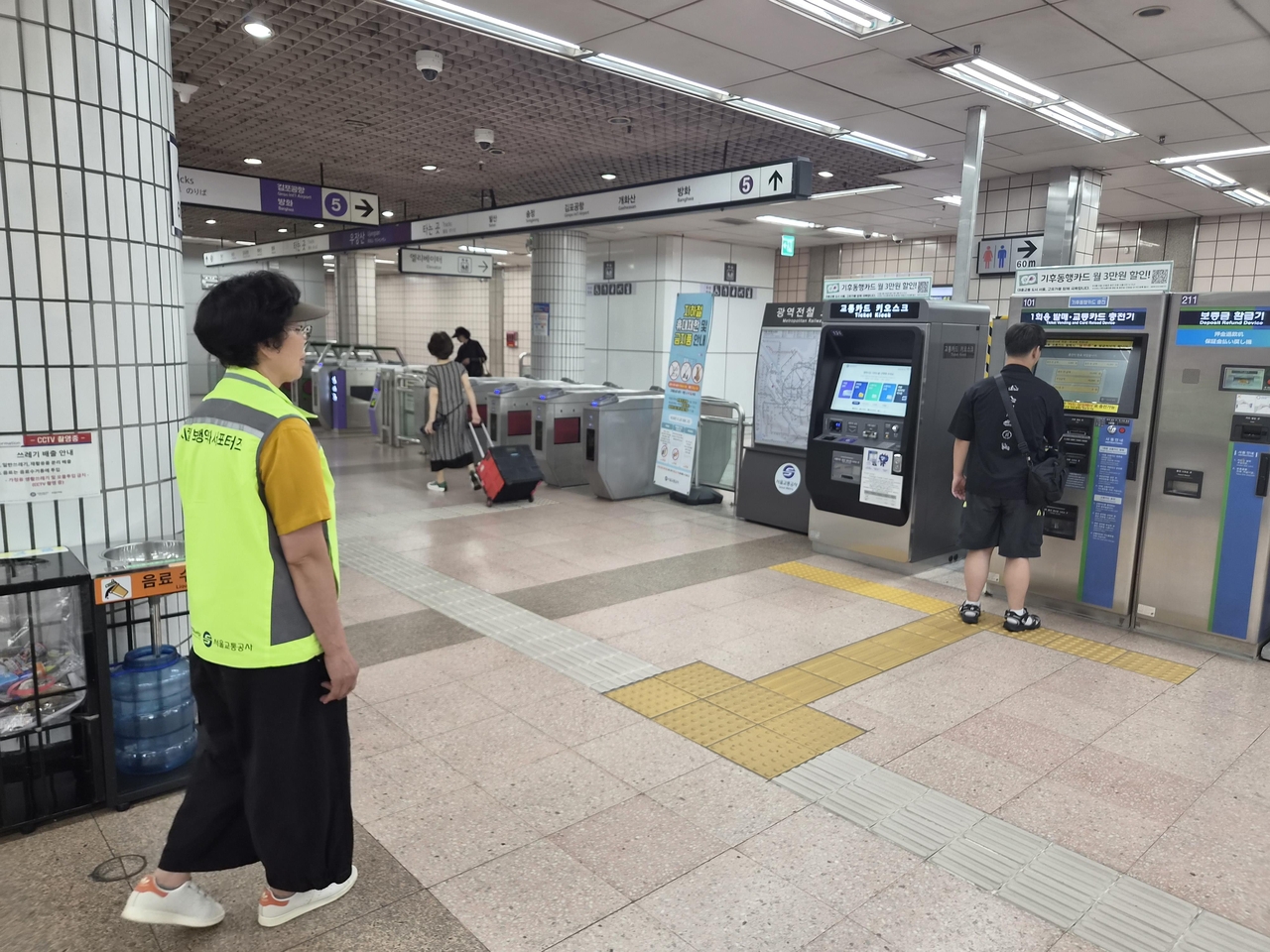
One hundred "mobility-impaired supporters" are now working across 25 Seoul subway stations this year, helping passengers who have difficulty using the transit system on their own.
The supporters assist riders throughout station premises — from operating ticket machines and passing through fare gates to locating elevators, restrooms and other facilities.
Seoul Metro announced it has expanded the program, run jointly with the Korea Employment Agency for the Elderly, from 61 supporters at 20 stations last year to 100 at 25 stations this year.
The program taps senior workers to help mobility-impaired passengers navigate the subway while also giving older adults access to public-sector employment.
Deployed at major stations across the Seoul subway network, the supporters guide passengers with limited mobility through boarding and alighting routes, help them use ticketing machines and pass through fare gates, and direct them to key facilities such as elevators and restrooms.
A satisfaction survey of staff at the 25 stations conducted after the expansion found that 96.8 percent of respondents said the supporters help with station operations. The most common areas of assistance were gate passage support (82 cases), ticketing support (66 cases), facility guidance (48 cases) and mobility assistance (45 cases).
At Gangdong-gu Office Station on Line 8, a supporter helped alert staff and attend to a passenger who suffered a medical emergency. A station employee said the supporters "provide real, practical help depending on what's happening on the ground."
Building on last year's pilot results, Seoul Metro also refined its deployment strategy and working arrangements this year. Supporters were concentrated at stations with high numbers of senior and disabled passengers not already covered by similar programs, directing resources where mobility assistance is most needed.
Working conditions for senior employees were also adjusted: the daily shift was shortened from five hours to three to better suit older workers.
Seoul Metro said it will continue to monitor the results of this year's expanded operation and gather feedback from the field, with plans to grow the program further. The agency said it aims to improve subway accessibility for mobility-impaired passengers while also expanding public employment opportunities for older adults.
Ma Hae-geun, head of Seoul Metro's operations division, said the supporters "serve as a reliable presence alongside mobility-impaired passengers throughout their subway journey," adding that the agency will "continue to pay close attention to improving accessibility and contribute to creating public-sector jobs for senior citizens."
seouldream01@heraldcorp.com



