20 of 24 participants who needed caregiver assistance achieve independent daily living; 3-meter walking time cut from 14.27 to 9.46 seconds
Program combines moderate-intensity exercise with props, brain stimulation and emotional support for measurable results
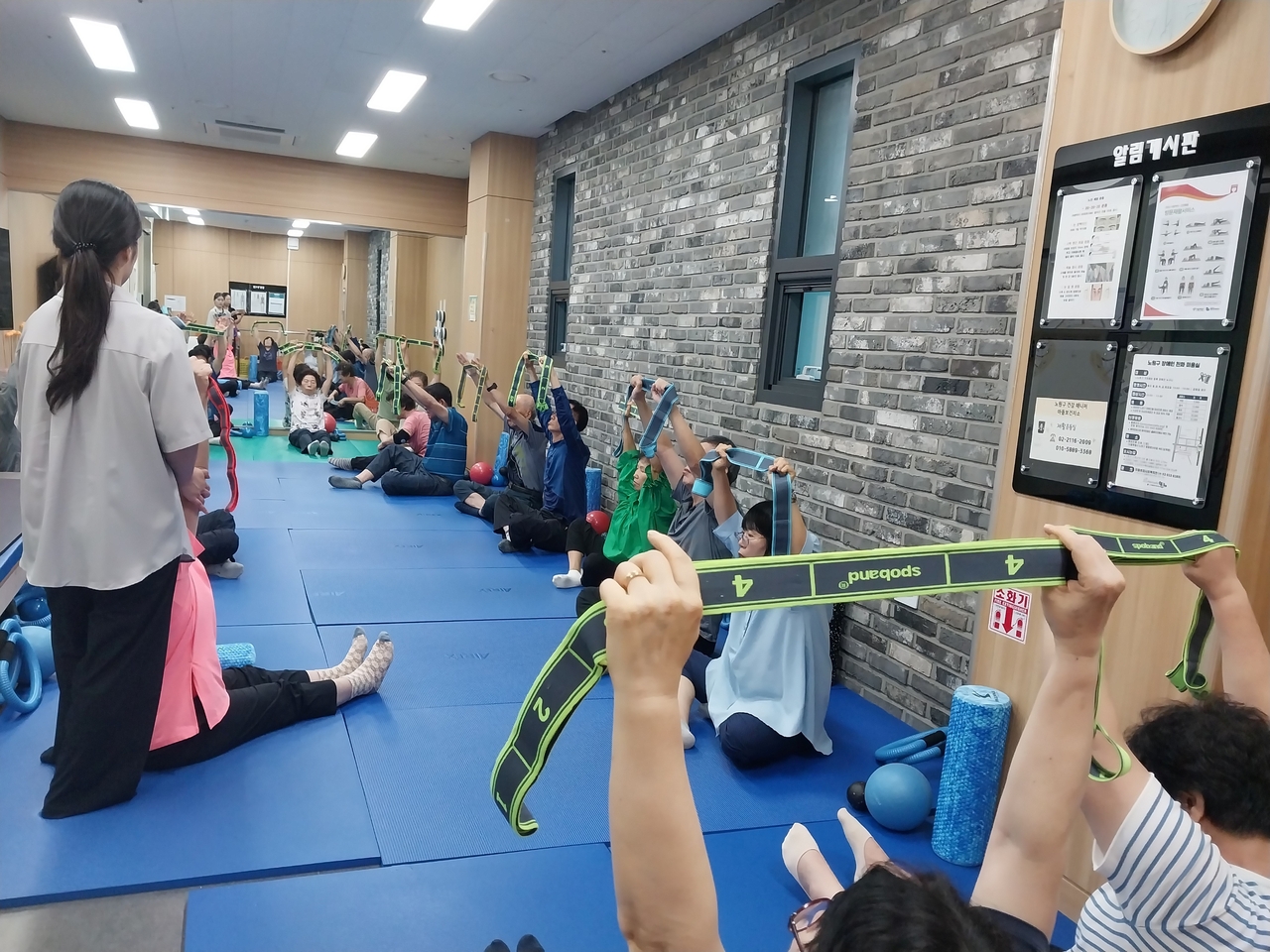
Nowon-gu in Seoul has reported that 20 of 24 participants who previously required caregiver assistance have achieved independent daily living through its integrated rehabilitation program for Parkinson's disease patients, known as "Brainnovation."
The district launched Brainnovation in September 2023 at the Madeu Community Health Center, becoming the first local government in the country to operate such a program. It combines physical activity with brain-function stimulation and emotional support to help Parkinson's patients recover physical function and regain independence in daily life.
Strong participant response and steady attendance led the district to expand the program to the Sanggye Community Health Center in 2024. It currently runs twice a week, with cumulative attendance reaching 6,940. Given the difficulty of early Parkinson's diagnosis, the program also accepts residents experiencing regular tremor symptoms, supporting early detection and management.
Measurable improvements in physical function have been documented. Agility and gait assessments showed that average 3-meter walking time fell from 14.27 seconds to 9.46 seconds. Performance on the 30-second sit-to-stand test — a measure of lower-body strength — rose from an average of 12.56 repetitions to 17.04, a gain of 4.48.
Particularly notable was the progress among participants who had struggled with daily tasks without caregiver help: 20 of the 24 reached a level of functional independence. Improved balance also reduced the risk of falls.
The program's effectiveness stems from its dual focus on physical and cognitive stimulation. Moderate-intensity exercises using props such as Thera-Band resistance tools and balance cushions build muscle strength and coordination while activating brain function. Lifestyle guidance and psychological support are incorporated alongside the physical component to address emotional challenges including communication difficulties and depression.
All exercise sessions are conducted under the supervision of physical therapists at the community health centers, with a focus on safe, moderate-intensity activity. Participants undergo regular assessments of physical function and psychological condition, and individualized exercise therapy is added as needed to maximize rehabilitation outcomes.
The district has also worked to strengthen the program's clinical foundation, consulting with the KDCA and building referral networks with local medical institutions including Eulji University Hospital and Sanggye Paik Hospital. Nowon-gu plans to continue raising public awareness about Parkinson's disease and the importance of early detection, while further developing a community-centered rehabilitation management system.
"Nowon is strengthening its capacity to address health and welfare needs in an aging society, drawing on a dense local public health network that includes a district health center and four neighborhood health centers," Nowon-gu District Mayor Seo Jun-o said. "We will continue to support residents' recovery and independence through specialized programs like Brainnovation that make full use of our local health infrastructure, helping people lead healthy lives."
seouldream01@heraldcorp.com