TV Asahi's Ono Koji covers brand's New York popularity and rise from pushcart to 3,000-plus stores
Cold-dough delivery system draws praise; reporter calls it 'best bakery in New York'
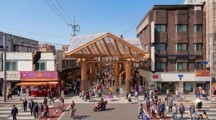
![Paris Baguette's Lexington Avenue location in Manhattan, New York [Sammidang Holdings]](https://wimg.heraldcorp.com/news/cms/2026/08/31/news-p.v1.20260831.5866ae8996804604a972a0c98b087966_P1.jpg)
Paris Baguette has drawn attention from the Japanese media as a global bakery brand that has become part of everyday life for consumers in New York.
Ono Koji, a correspondent at TV Asahi's New York bureau, published a piece on Aug. 19 covering the brand's popularity and growth under the headline "Long lines in New York! The taste of France born in Korea — from a pushcart to more than 3,000 stores worldwide, the secret to success from a bakery."
Ono described the morning scene at a Paris Baguette store one block from his bureau as "a bakery with a line every morning." He added that by 8:30 a.m., the shelves are filled with freshly baked croissants, sausage rolls and a variety of fruit-topped Danish pastries. "They're absolutely delicious," he wrote.
Ono, who was stationed at TV Asahi's Seoul bureau a decade ago, recalled stopping at Paris Baguette for bread and coffee on his way to work. "There was a Paris Baguette in front of every subway station," he said, noting that the chain now operates more than 3,000 stores not only in South Korea but also in France, the United States, China and Southeast Asia.
According to the article, Paris Baguette's roots trace back to a bakery that the late Heo Chang-sung, honorary chairman of SPC Group, started in 1945 in Hwangju, Hwanghae Province. Heo moved to Seoul with his family in 1948 and restarted the business, then fled to Busan when the Korean War broke out and continued baking there. After the war, he returned to Seoul and expanded the operation.
Heo's son, Chairman Heo Young-in, studied in the United States in the 1980s, where he learned Western baking techniques, and opened Paris Croissant in Gangnam, Seoul, in 1986. Two years later, in 1988, he launched the Paris Baguette franchise brand, drawing on the Paris Croissant know-how. Ono noted that Paris Baguette claimed the top market share in South Korea's bakery industry in less than a decade.
Ono credited quality and the systems that support it as the foundations of Paris Baguette's rise into a global chain. He cited past media interviews in which Heo Young-in — who honed his baking knowledge in Europe through his American studies — identified quality as the key to surviving in overseas markets. The brand, Heo argued, must use traditional French techniques and premium ingredients to produce goods that satisfy consumers in Europe and the United States.
Ono also highlighted the company's frozen-dough delivery system, which allows stores worldwide to serve freshly baked goods at consistent quality without relying on skilled bakers on-site. In markets like the United States, where skilled labor is scarce and wages are high, the model — factory-prepared frozen dough shipped to stores and baked on the premises — gives the brand a clear advantage in maintaining stable quality, he said.
Ono also noted that Paris Baguette in New York draws customers across racial and ethnic lines, not just a single demographic. "A Korean bakery with 'Paris' in its name is drawing lines in New York, and the customers coming through the door are from all walks of life," he wrote. "Right now, Paris Baguette is the best bakery in New York."
andy@heraldcorp.com