
Korail-SR integration launches; seats on Suseo-line routes to increase by 30%
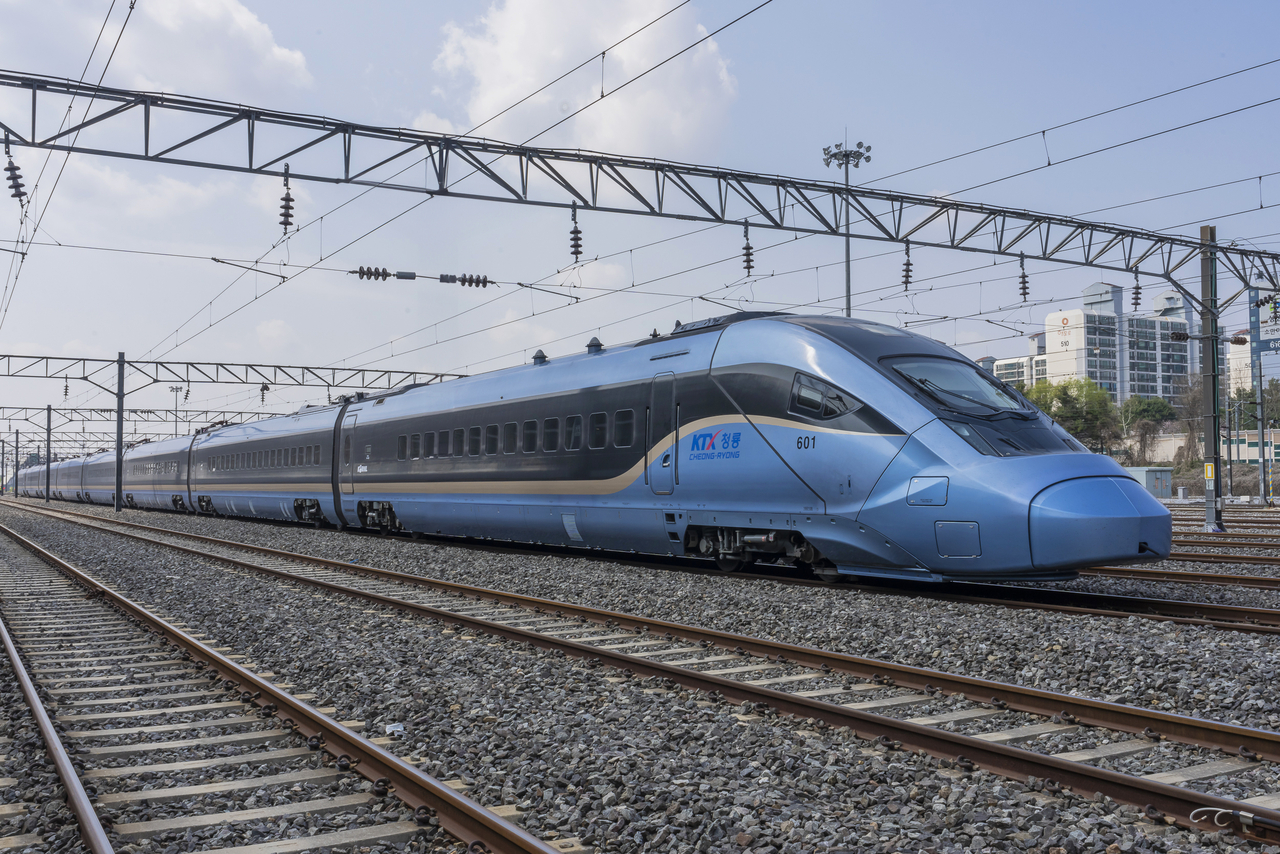
Korea's two high-speed rail operators will merge Tuesday, with KTX and SRT services combined under a single KTX brand after the integration of Korea Railroad Corporation (Korail) and SR is completed, the Ministry of Land, Infrastructure and Transport said Monday.
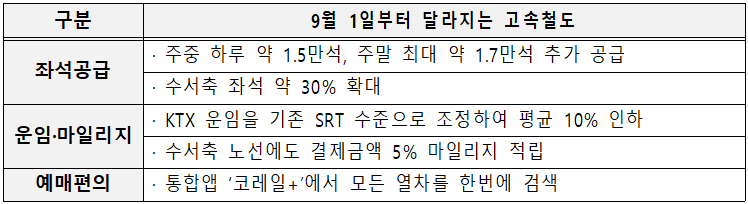
The merger will add roughly 15,000 seats per weekday and up to 17,000 on weekends through coupled train operations linking KTX and SRT services. Passengers departing from Suseo Station will see seat availability increase by about 30 percent.
KTX fares will fall by an average of about 10 percent, benchmarked against existing SRT pricing, and passengers on Suseo-line routes will earn mileage points worth 5 percent of their fare.
The separate Korail Talk and SRT ticketing apps will be merged into a single platform called Korail+.
Taken together, the integration will bring expanded seat supply, lower fares, improved mileage benefits and a unified booking service.
The ministry said it is treating recent fatal accidents at rail worksites with the utmost seriousness and will focus on safe train operations as its top priority. The remarks refer to the death of a Korail employee on Saturday who was struck by a freight train while performing shunting work near the tracks at Uiwang Station.
The ministry said it will strengthen field-focused safety management to prevent any safety gaps during the organizational and operational transition. The ministry and related agencies will conduct joint inspections before and after the merger launch, covering train crew education and training, the coupling and decoupling of linked trains, responses to delays and other irregular situations, and crowd management at stations as passenger numbers rise.
To maintain continuity and stability in train operations, Korail will temporarily establish an "integrated business management division" within its existing structure to absorb SR's operations and grant it the autonomous authority needed to run high-speed rail services from Suseo. The division will operate for up to three years during a stabilization period, with its duration to be determined after a review of integration progress and organizational stability at the one-year mark.
All SR employees will be taken on under a comprehensive employment transfer that preserves their existing working conditions, with details on employment, job duties, compensation and welfare to be worked out through labor-management consultations. Korail's financial health will also be continuously managed to ensure stable rail service and uninterrupted safety investment.
Over the longer term, starting in 2027, Korail plans to introduce 31 new high-speed train sets in stages — each comprising eight cars with 500 seats, about 90 more per train than the existing KTX-Sancheon. If rail infrastructure is expanded, including the addition of a second double-track section on the Pyeongtaek–Osong corridor, the number of services and available seats is expected to grow further.
"From the very start of this integration, we will put safety first, carefully inspect operations on the ground and make high-speed rail more convenient for passengers," Land, Infrastructure and Transport Minister Kim Yun-deok said. Korail President Kim Tae-seung said the company would also keep rail safety as its top management priority after the merger and "pay even closer attention to risk factors in the field."
smh@heraldcorp.com




