Number of SMEs up 2.4% from prior year
Workforce reaches 19.12 million; sales hit 3,324.2 trillion won
Solo-operator firms rise by 226,000 to 6.67 million
The number of small and medium-sized enterprises in South Korea has approached 8.5 million, with the total count, workforce and sales all rising from the previous year.
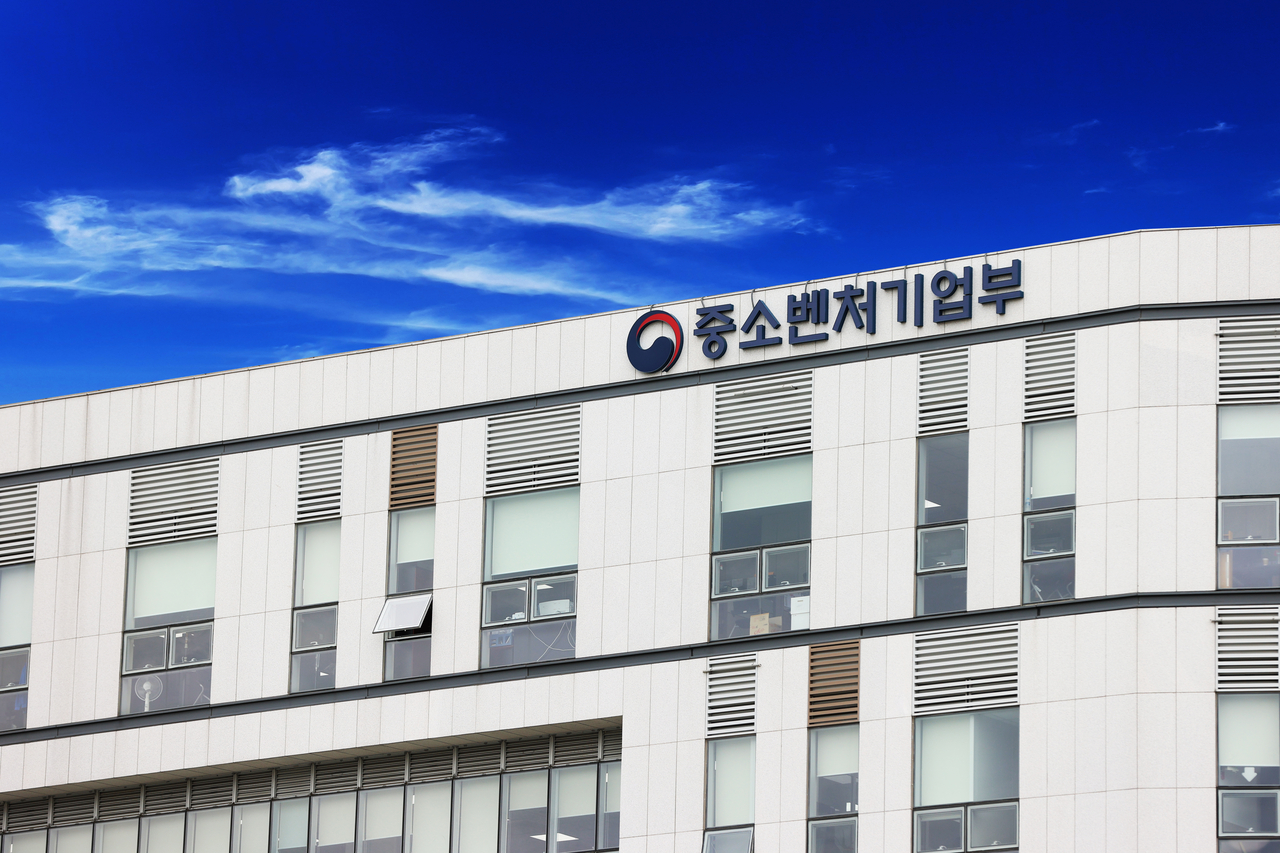
According to the "2024 SME Basic Statistics" released by the Ministry of SMEs and Startups on Monday, the number of domestic SMEs stood at 8,499,552 — up 200,637, or 2.4 percent, from the prior year.
The SME workforce grew by 7,157 people, or 0.04 percent, to 19,124,806. Sales rose 22.95 trillion won, or 0.7 percent, to 3,324.2 trillion won ($2.41 trillion).
SMEs accounted for 99.9 percent of all businesses by company count, 80.4 percent by workforce and 43.7 percent by sales.
The number of SMEs has consistently grown, rising from 7.714 million in 2021 to 8.043 million in 2022, 8.299 million in 2023 and 8.5 million in 2024. SME sales dipped from 3,309 trillion won in 2022 to 3,301 trillion won in 2023 before recovering to 3,324 trillion won last year.
By sector, wholesale and retail businesses added 38,232 firms, or 1.7 percent, from the prior year, while real estate firms increased by 31,651, or 2.6 percent. Electricity, gas and steam businesses grew by 26,511, or 15.8 percent, and professional, scientific and technology firms added 20,934, or 6.3 percent.
Manufacturing, by contrast, shed 5,715 businesses, or 0.9 percent, while facility management companies fell by 3,305, or 1.7 percent, and accommodation and food service businesses declined by 1,770, or 0.2 percent.
Employment grew in 11 sectors, led by health and social welfare, which added 37,705 workers, or 5.0 percent, and electricity, gas and steam, which gained 26,451 workers, or 15.1 percent. Seven sectors shed jobs, with construction losing 66,181 workers, or 3.5 percent, and wholesale and retail cutting 39,600 positions, or 1.0 percent.
On the sales side, manufacturing posted the largest gain at 9.4 trillion won, or 1.1 percent, followed by transportation and warehousing at 8.1 trillion won, or 5.6 percent, and health and social welfare at 7.8 trillion won, or 8.6 percent. Construction sales fell 11.5 trillion won, or 3.2 percent, and real estate revenue dropped 7.1 trillion won, or 6.7 percent.
SMEs in the Greater Seoul area numbered 4,477,130, up 114,951, or 2.6 percent, from the prior year. Outside the metropolitan area, the count reached 4,022,422, an increase of 85,686, or 2.2 percent — meaning the capital region posted a relatively faster rate of growth.
By organizational type, sole proprietorships totaled 7,411,042, up 167,506, or 2.3 percent, while incorporated companies reached 1,088,510, an increase of 33,131, or 3.1 percent.
Solo-operator firms saw particularly strong growth, rising by 225,754, or 3.5 percent, to 6,660,230. Businesses with two or more workers, however, fell by 25,117, or 1.4 percent, to 1,833,529.
Early-stage companies showed signs of decline. SMEs in operation for three years or less numbered about 2.598 million, down 3.7 percent from the prior year. Their combined workforce shrank 5.5 percent to about 3.866 million, and their sales fell 5.6 percent to 426.3 trillion won. SMEs with more than seven years in operation, by contrast, grew 6.2 percent to about 3.608 million.
boo@heraldcorp.com