
Budget trimmed by 3.5 billion won ($2.54 million), including 82 million won saved on a scaled-back inauguration ceremony
Funds redirected to welfare, safety, reconstruction support and future infrastructure
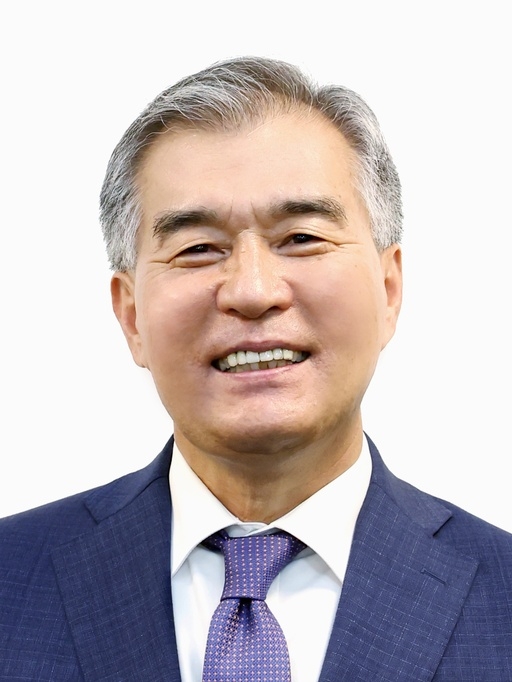
Kim Hyun-ki, newly elected Gangnam-gu District Mayor and widely regarded as one of Seoul's foremost budget experts after four terms as a Seoul Metropolitan Council member and a stint as council speaker, has overhauled the structure of the district's first supplementary budget under his administration.
Routine expenditures carried over from past practice were cut immediately, and programs deemed unlikely to deliver meaningful results were also eliminated. Funding was increased, however, in areas considered essential — youth support, services for senior residents and public safety.
Gangnam-gu submitted the supplementary budget proposal, worth about 47.8 billion won, to the Gangnam-gu Council on Friday.
The proposal was drawn up by reviewing existing budget lines from scratch, with the aim of concentrating resources on genuinely necessary projects despite constrained fiscal conditions.
The district applied what it calls a "three-no budget principle," under which spending is prohibited on projects that are unnecessary or non-urgent, have unclear objectives, or offer uncertain outcomes. Savings generated through this approach will be channeled entirely into resident welfare, public safety, reconstruction support and future infrastructure development.
Cutting routine spending and streamlining operations — a 3.5 billion won restructuring
The first supplementary budget of the ninth elected administration focused on eliminating unnecessary habitual expenditures and improving the efficiency of project delivery. District Mayor Kim led by example, scaling back his own inauguration ceremony. Rather than renting out COEX for a large-scale event as had been customary, he held a modest, no-frills ceremony, saving 82 million won.
An additional 240 million won was saved through more efficient staffing and changes to project execution methods, and 500 million won was cut through bid savings and contract review processes — bringing the total reduction to 3.5 billion won.
From welfare and safety to future industry and leisure — laying the groundwork for a 'Gangnam transformation'
The supplementary budget will prioritize welfare and safety, with funds also directed toward reconstruction support, future industries, and cultural and leisure programs that serve residents' daily lives and Gangnam's long-term growth.
The largest share goes to welfare and the social safety net, with 22.7 billion won allocated across four areas: a Gangnam-style real estate brokerage fee and moving-cost support program for youth, expanded child allowance and parental benefit payments, a customized care service for the elderly, and disability welfare.
About 4.3 billion won was set aside for safety and convenience improvements, covering aging road repairs on heated-cable sections, expansion of crime-prevention CCTV coverage, elevator replacement at the Malchukgeori pedestrian overpass, and preemptive measures against flood and winter disasters, including snow-removal preparations and stormwater drain dredging.
Approximately 1.2 billion won was allocated to projects aimed at accelerating reconstruction and building future infrastructure to strengthen the district's competitiveness: expanded public support for residential reconstruction projects, a revision to the district-unit plan for the Gaepo ICT special development promotion zone, and designation of the Suseo robot special development promotion zone. These initiatives are expected to serve as a catalyst for transforming Gangnam's aging residential environment and building an ecosystem for advanced future industries.
Meanwhile, 700 million won was earmarked for cultural and leisure projects: development of the Daemosan Geulmaru cultural forest, a feasibility study for the Maebongsup Nurimgil trail, remodeling of the performance venue at Yangjae Stream's Yeongdong 3rd Bridge, and installation of nighttime lighting at the Tancheon park golf course. Once completed, these projects are expected to expand rest, cultural and leisure spaces that will "delight residents."
"This supplementary budget focused on removing unnecessary practices and sources of waste under difficult fiscal conditions, and directing the savings toward resident welfare and local development," District Mayor Kim said. "The budget confirmed as the first supplementary budget of the ninth elected administration will be executed swiftly and transparently before year's end, so that residents can feel the 'Gangnam transformation' in their daily lives."
seouldream01@heraldcorp.com




