
Caseload was triple the average across Jeju's three missing-persons units; no duty logs or investigation reports found for some cases
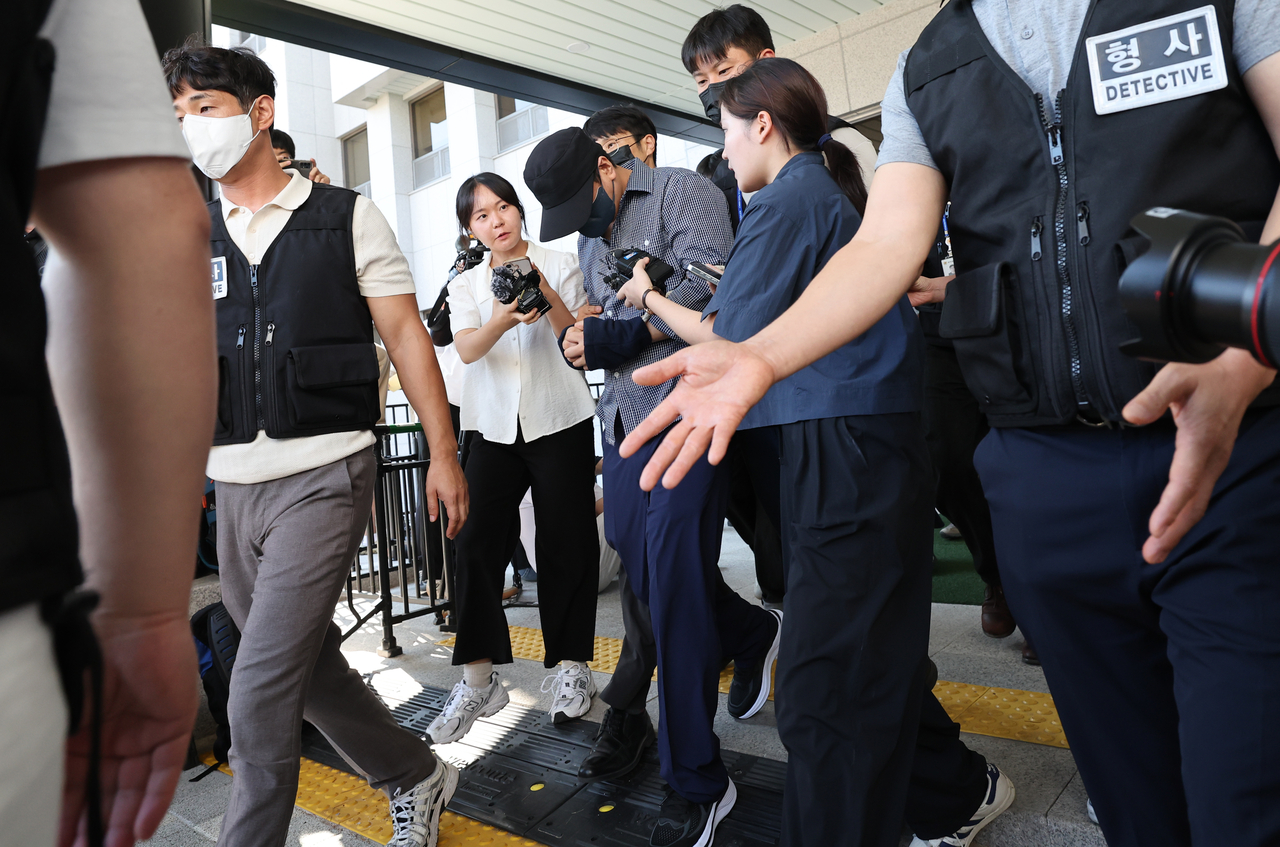
A serving police officer arrested on suspicion of falsely closing missing-person reports in Jeju single-handedly resolved about 30 percent of all adult missing-person cases filed on the island during his time on the missing-persons unit, newly released data show. The figure is more than three times the average caseload of other officers on the team, drawing intense scrutiny to the results of an ongoing comprehensive review by police.
According to data submitted Sunday by the Korean National Police Agency to People Power Party lawmaker Kim Jae-seop, a total of 1,048 adult missing-person reports were filed across Jeju from March last year — when Officer A began working on the missing-persons team at the Jeju Western Police Station — through the end of July this year.
Of those, Officer A closed 298 cases, accounting for 28.44 percent of all reports received — roughly three in every 10 adult missing-person cases on the island handled by a single officer.
A total of 1,047 adult missing-person cases were resolved or closed in Jeju during the same period — 687 last year and 360 this year — with Officer A responsible for 28.46 percent of those closures.
Officer A's caseload stands out even when measured against the full staffing of Jeju's three police station missing-persons units. The units at Jeju Western, Jeju Eastern and Seogwipo police stations together employ 12 officers. Dividing the total closures evenly among them yields an average of 87 to 88 cases per officer — less than a third of Officer A's 298. His individual tally in effect matched the entire missing-person output of a single Jeju police station.
Observers note it is highly unusual for one officer to close roughly 30 percent of all adult missing-person cases, a category that encompasses a wide range of situations including voluntary disappearances. The anomaly has fueled growing concern that Officer A may have falsely or inadequately closed additional cases without actually confirming the whereabouts of the missing individuals.
Officer A was recently detained on charges of falsely closing the disappearance of a woman surnamed Jang, in her 30s, reported missing in May, and a man surnamed Park, in his 60s, reported missing last month. In the Jang case in particular, no duty logs or investigation reports were found to have been written between the date the report was filed and the date it was closed. A police official said guidelines require officers to report to a supervisor and obtain approval before closing a missing-person case, but it remains unclear whether that procedure was followed in the Jang case.
Police are conducting a comprehensive review of all cases Officer A handled to determine whether additional false closures exist. However, they have not disclosed the current status of the review or its specific scope.
psj@heraldcorp.com




