'The past doesn't matter anymore,' they say — but is the Shanghai scandal really just a private affair?
The episode raised questions about diplomatic integrity, institutional trust and information management — what did Incheon's screening panel actually examine?
The first economic chief appointment of the ninth elected administration puts Park Chan-dae's selection criteria to the test
The choice of who leads Incheon's economic future may define the success — and political fate — of the Park administration
Laozi's Tao Te Ching contains the phrase "sangseonyaksu."
It means the highest good is like water. Water benefits all things without asserting itself, always flowing to the lowest place.
The virtues expected of a public official are not so different. The greater one's power and ability, the more one must adopt a humble posture to earn the public's trust — and a position in public service is fulfilled not by individual competence alone, but by moral integrity and a sense of responsibility.
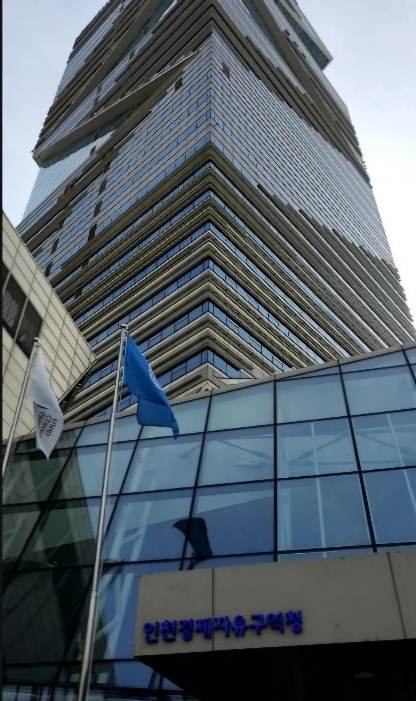
It is this principle that comes to mind when watching the selection process for the ninth commissioner of the Incheon Free Economic Zone Authority.
Incheon Mayor Park Chan-dae now stands at a critical crossroads — for the first time since the launch of the ninth elected city administration, he must choose the person who will lead Incheon's economy.
On Friday, Incheon city narrowed the field of five interview candidates for the next IFEZ commissioner down to three finalists. What remains is Mayor Park's final choice and the appointment consultation process with the Ministry of Trade, Industry and Energy.
Among the finalists, however, are a central government official who previously faced questions over public ethics in connection with the so-called "Shanghai scandal," and a former IFEZ commissioner who was indicted on bribery charges during his earlier tenure.
The remaining candidate, by contrast, is reported to have built a long career as a specialist in investment attraction.
Ultimately, both candidates with past controversies passed the review of Incheon city's screening panel.
Moreover, word had circulated in the local community even before the open recruitment process began that a particular central government official was already being considered as the next IFEZ commissioner — fueling talk of a predetermined appointment.
Now that the individual has made the final shortlist, the so-called "Shanghai scandal" — which rocked South Korea's diplomatic community in 2010 and 2011 — is being revisited.
The question is whether this can simply be dismissed as an old personal controversy.
Times have changed — but this was not merely a personal matter
Times are clearly changing. In the past, politicians and senior officials caught up in romantic scandals often resigned or stepped down from public office. The individuals involved — and even their families — had to bear social condemnation and political consequences.
Today, however, there is a growing view that the state and society should not intrude excessively into the personal relationships of consenting adults, and that private life and professional capacity should be judged separately.
A person's future cannot be permanently blocked simply because of past mistakes or controversies. Yet not every incident can be buried under the label of "private life."
The Shanghai scandal, in particular, went beyond a matter of personal relationships. It raised serious questions about the professional discipline of South Korean diplomats and overseas missions, the credibility of state institutions, and the management of sensitive information within diplomatic posts.
The episode left lasting damage to the reputation and institutional discipline of South Korea's diplomatic community, and became an occasion for international scrutiny of lax standards among Korean diplomatic personnel.
It is precisely on this point that the current IFEZ commissioner appointment demands a different level of scrutiny than an ordinary "past private-life controversy."
If something is purely a private matter, it may be set aside as time passes.
But if questions of public-service discipline, institutional credibility and the management of official information arose alongside it, whether those issues can also be classified as mere private matters is an entirely separate question.
This appointment is therefore not simply a matter of who becomes commissioner.
It is a question of what Mayor Park Chan-dae chose to verify — and what criteria he prioritized — in making his first selection of the key economic leader of Incheon since the ninth elected administration took office.
Did the screening panel look only at 'competence,' or did it also examine 'trustworthiness'?
The deeper concern lies with the screening panel's verification process. The IFEZ commissioner is not an ordinary senior civil servant.
This is the person who oversees large-scale development projects in Songdo, Yeongjong and Cheongna, foreign investment attraction, negotiations with global companies, and policy coordination with the central government — in short, the commander of Incheon's economy.
Competence and expertise are indispensable. But they are not all that is required of an IFEZ commissioner.
Three questions should also serve as essential criteria in evaluating candidates: whether domestic and foreign investors can trust the appointee, whether Incheon's civil service community can accept the person as its leader, and whether the individual can earn public trust as the face of the city of Incheon.
Yet no one knows how thoroughly the panel examined the past public-ethics controversies during this review.
An explanation is needed — whether the panel sufficiently reviewed the candidates' past controversies, and if so, whether it concluded that their current expertise and subsequent public-service record were strong enough to outweigh the earlier problems.
The argument here is not that a candidate should be permanently disqualified simply because of past controversy.
But if the city failed to properly scrutinize a troubled past while selecting the most senior official to be entrusted with Incheon's economy, it would be difficult to call that a competence-based appointment. It would be hard to escape the criticism that the panel simply abandoned its duty to verify.
Now it is Mayor Park Chan-dae who must answer
If the screening panel's role was to narrow down and recommend candidates, the responsibility for the final choice rests with Mayor Park Chan-dae.
This appointment is particularly significant as the first selection of an economic chief for Incheon since the launch of the ninth elected Park administration.
Its symbolic weight is considerable. It is the first appointment that will reveal what standards the Park administration intends to apply — balancing expertise and moral integrity, public-service ethics and institutional trust — when naming senior officials going forward.
If the rumors of a predetermined candidate prove accurate, Mayor Park will owe citizens an explanation: why this person, and whether he concluded, even after fully examining the past controversy, that the individual possesses sufficient competence, expertise and public trust to be entrusted with the Incheon Free Economic Zone.
But if the matter is brushed aside with nothing more than "it's all in the past," the story takes on a different character.
The Shanghai scandal is not recorded simply as an episode of personal misconduct.
It was an affair that sent shockwaves through South Korea's diplomatic community — one in which lapses in official discipline, a collapse of institutional credibility at overseas missions, and failures in the management of official information all came to the surface together.
Whether it can therefore be tidily filed away as "something that happened long ago," on the same level as an ordinary private-life controversy, requires separate scrutiny and explanation.
If a particular candidate carries the "Shanghai scandal" label throughout a three-year term, it will weigh on the individual personally — and on the internal organization of the IFEZ Authority as well.
A first test of what standards for competence and public trust actually mean
The IFEZ commissioner holds considerable authority. The position exerts significant influence over Incheon's future industries, the city's competitive standing, large-scale development projects and the direction of global investment attraction.
For that very reason, the role demands not only a higher level of competence but also a stricter standard of public trust.
"The highest good is like water," the saying goes — and water flows of its own accord to the lowest place.
In choosing the person to occupy the highest position in Incheon's economy, what the Park administration ultimately needs is not simply an impressive resume.
This appointment is not an occasion to relitigate the past of any individual candidate.
It is, rather, the first test that reveals what kind of mayor Park Chan-dae is when it comes to selecting people — and what standards Incheon city actually applies to the competence and public trust it demands of its most senior officials.
The principle of sangseonyaksu — that the higher the position one seeks, the more one must adopt a humble posture and seek the judgment of the people — may be precisely the lesson most needed in this appointment process right now.
The selection of an IFEZ commissioner to lead Incheon's economic future has become, for Mayor Park Chan-dae, a moment of choice that goes beyond a routine personnel decision — one that may well determine the success of his administration and his own political future.
gilbert@heraldcorp.com