
A visit to Orion's contract potato farms in Gangwon Province
New climate-resilient varieties pay off big
Orion steps up variety development, cultivation and harvest management
Fresh-potato Pocachip sales up 36% from three years ago

"Every single potato feels like my own child. I grew them, so I want to send only the best ones. Orion is truly serious about potatoes, too. We survive because of Orion, and Orion survives because of us farmers — isn't that how it works?"
About an hour's drive along winding mountain roads from Jinbu KTX Station in Pyeongchang-gun, Gangwon Province, trucks loaded with sacks of potatoes passed in both directions Thursday afternoon. Beyond them, a 3,300-square-meter potato field emerged from the hillside. Even a brief moment standing still was enough to break a sweat in the scorching heat, yet the field buzzed with workers harvesting fresh potatoes destined for Orion's Pocachip chips.
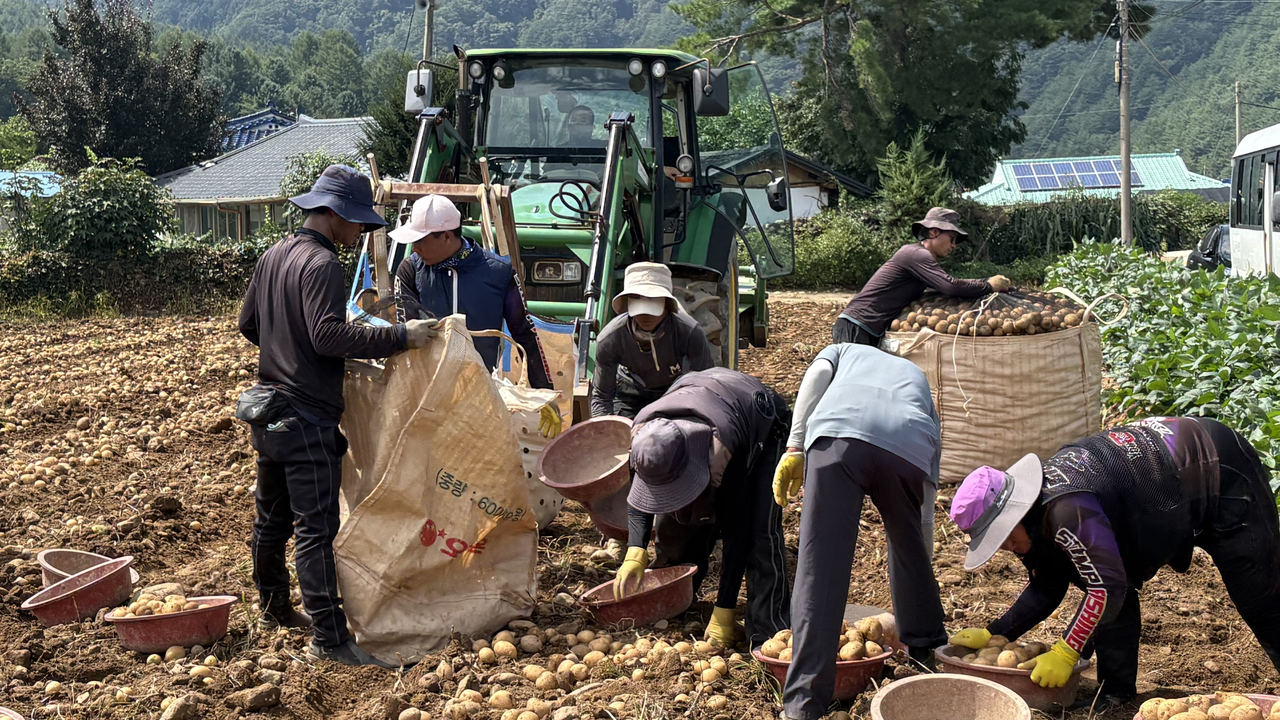
As a tractor turned the soil, potatoes tumbled out in clusters. Fifteen workers moved their hands without pause, sorting the potatoes by size into red basins. Those larger than an adult woman's fist were set aside first. Cracked or green-tinged potatoes were then filtered out, leaving only those suitable for Pocachip. The snack uses only potatoes weighing between 80 and 200 grams — the right size for a single bite. In under 30 minutes, a 600-kilogram sack was filled with fresh Gangwon Province potatoes.
This is land where Choi Seung-wan, 46, has been farming potatoes for two generations. His father began a contract-growing arrangement with Orion in 1989, and Choi took it over in 2002. What started as a 13,200-square-meter operation has grown to roughly 132,000 square meters. He now supplies Orion with 300 to 400 tons of potatoes a year.
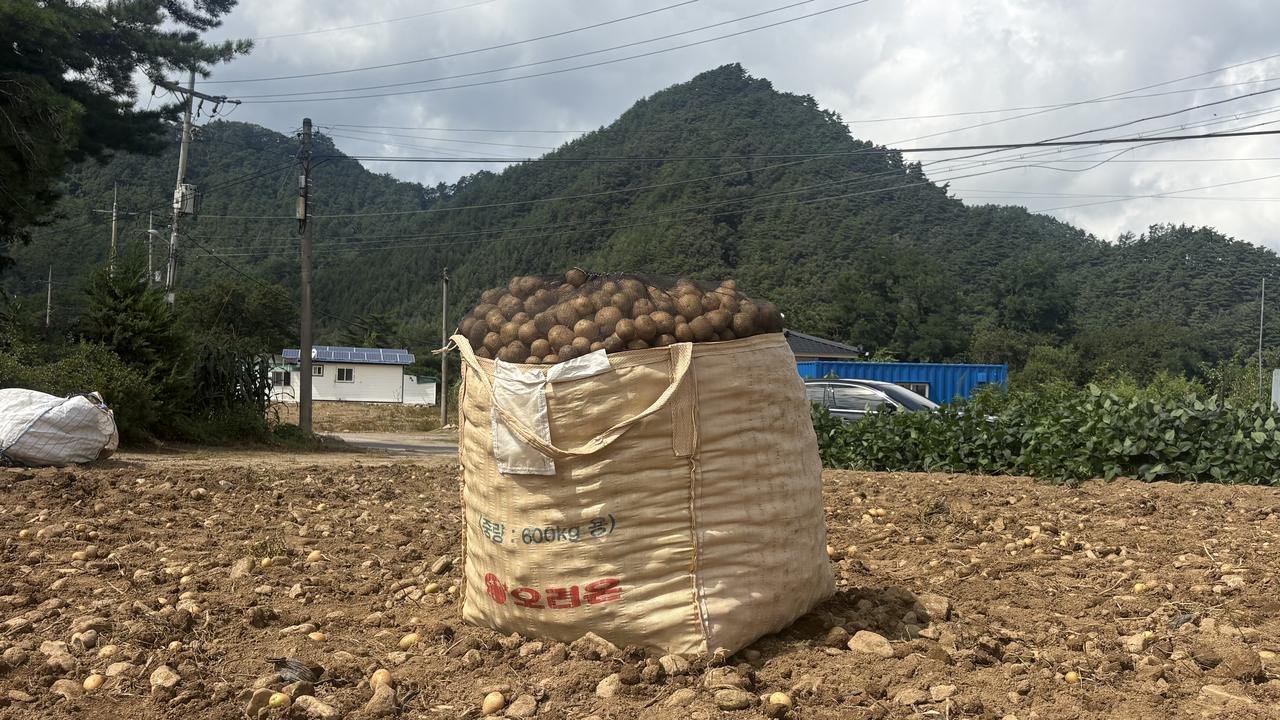
The potatoes harvested that day had no name yet — they were referred to only by a number, because they are an experimental new variety under development at Orion's Potato Research Institute. Planted for the first time this year, the variety has not yet been officially registered. The results, however, have exceeded expectations. A farm needs to yield at least 10 kilograms of potatoes per 3.3 square meters to turn a profit; this variety is producing 15 to 16 kilograms.
"It's the first year I've grown this variety, and the yield came out better than I expected," Choi said with a smile. "Variety matters a lot with potatoes. Good seed potatoes mean higher yields and more stable income for farmers." Throughout the growing process, he stayed in close contact with Orion's team. "We were in touch as often as a couple in a relationship," he said, adding, "Orion benefits because it can make better snacks, and we benefit because we can increase our yields."
Orion's heavy investment in new variety development comes down to taste. Potato chips are made by frying raw potatoes directly, which means the quality of the source potato determines the flavor and texture of the final product. That is why the company scrutinizes not only starch content and yield but also the color and any defects that appear after frying.
Climate change, however, is making it increasingly difficult to secure stable yields with existing varieties alone. Extreme summer heat and heavy downpours have taken a toll even on Sumi, one of the most widely grown potato varieties in Korea, causing misshapen potatoes and declining harvests.
To address this challenge, Orion operates a dedicated Potato Research Institute focused on developing processing varieties suited for snack production. Founded in 1988, the institute is one of only three operations worldwide — alongside PepsiCo and Japan's Calbee — that conduct potato variety research specifically for potato snacks.
The institute has developed three domestic varieties: Dubaek, Jinseo and Jeonggam. Dubaek, developed in 2000, is particularly popular among farmers for its high starch content and productivity. In China, Orion developed a new variety, OA2132, in 2024. About 15 potato varieties are currently grown on domestic farms under contract, and 20 percent of them were developed by Orion.
Orion also puts considerable effort into on-the-ground farm management. The company currently sources potatoes from around 300 contract farms nationwide. Its AGRO team, which handles variety development, farm management and raw material supply, visits farms directly to monitor growing conditions and check yields by variety. "I drive 40,000 to 50,000 kilometers every year visiting farms across the country," said Lee Geon-seung, an assistant manager on the AGRO team. "From planting through growth management to harvest, we check on the potatoes together with the farmers and provide support wherever it's needed."
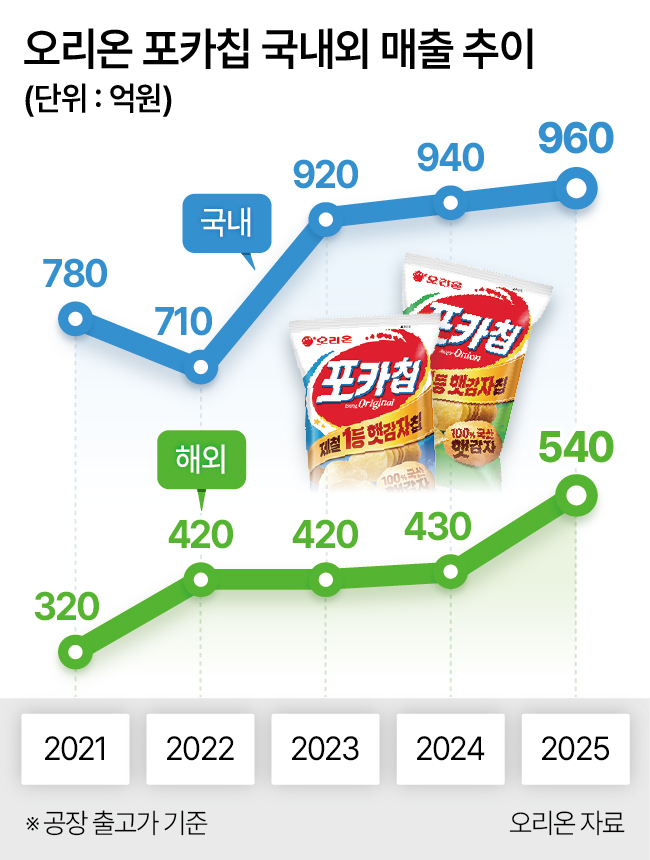
Orion topped the domestic potato snack market in 1994 and in 2012 became the first potato snack brand to surpass 100 billion won ($72.4 million) in annual sales. Demand has climbed further in recent years, driven by growing consumer interest in seasonal snacks made with freshly harvested potatoes. Pocachip sales made from domestically grown fresh potatoes between June and November last year rose 36 percent compared with the same period in 2022. Average monthly sales during the peak harvest months of June through August last year ran more than 10 percent above the full-year monthly average.
Orion plans to expand production capacity to keep pace with rising demand. The company intends to add a Pocachip production line at its Cheongju factory in the second half of this year, increasing capacity by up to 50 percent.

siuu@heraldcorp.com




