"I've quit drinking to meet as many residents as possible"
'Dobong Great Transformation' aims to turn a pass-through city into a destination
Seoul Arena opening seen as pivotal moment to redraw Dobong's economic map
'Dobong Smart Care 3.0' to close gaps in social welfare services
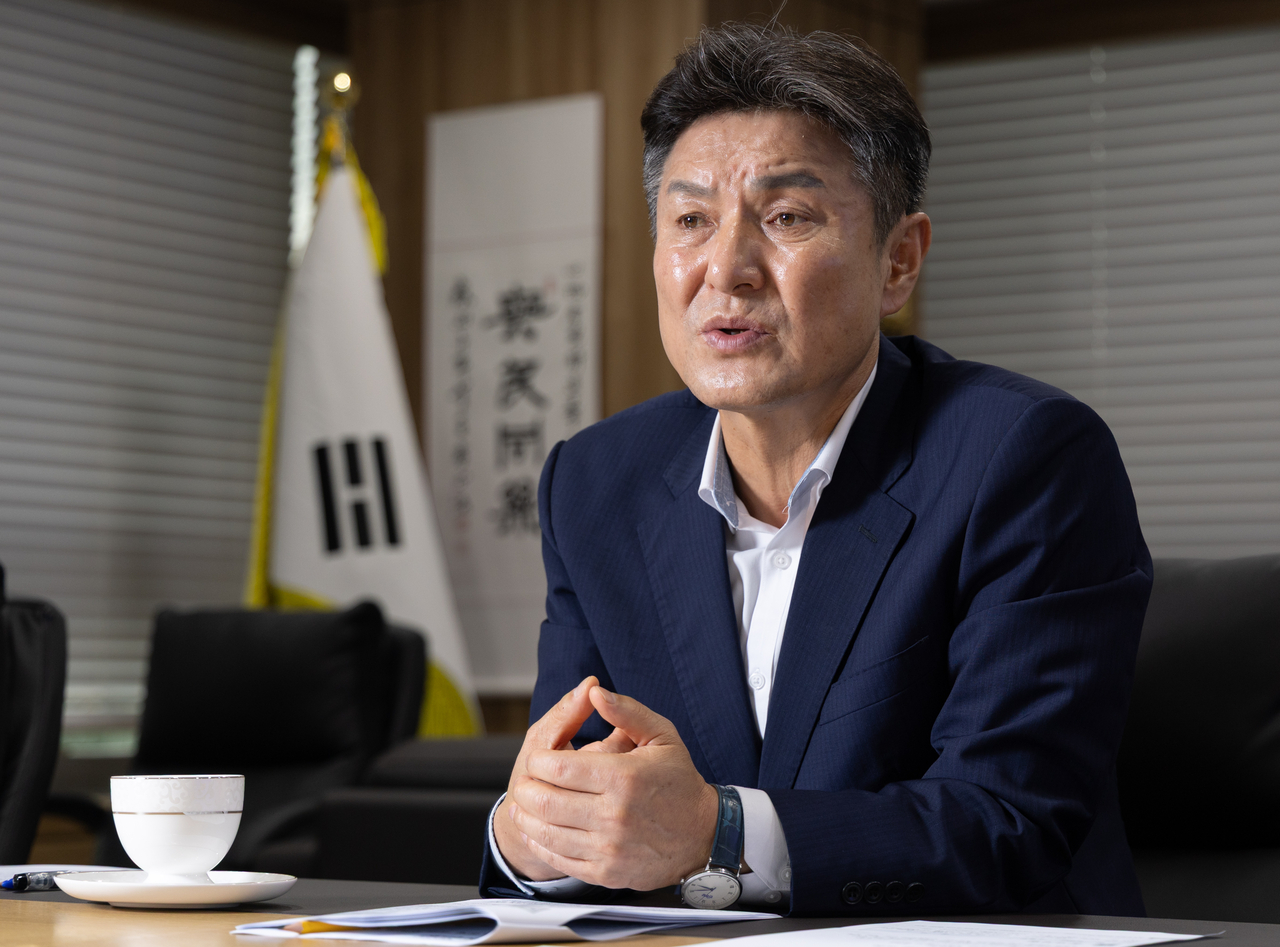
Dobong-gu District Mayor Kim Dong-wook says he has not had a drink in nine months — a notable sacrifice for a self-described lover of alcohol. The abstinence began when he started preparing for last November's election and has continued since he took office. Kim says he is holding off on something he enjoys to keep up with a packed daily schedule and meet as many residents as possible. He said he is willing to go without alcohol for his entire term if that is what it takes to complete his signature vision, the "Dobong Great Transformation." Born in Jeongeup, North Jeolla Province, Kim has lived in Dobong-gu for 50 years since his elementary school days, and he said he spends each day thinking about how to develop the district. The Herald Business sat down with Kim at his office in the district hall on Friday to hear his blueprint for the Dobong Great Transformation. The following is an edited transcript of the interview.
— What are your thoughts on being elected district mayor under the ninth round of local elections?
▶ I feel less the joy of winning and more the weight of responsibility to solve, one by one, the challenges Dobong faces. I believe what residents wanted in this election was not simply a change of faces. I take it as a mandate to accelerate long-awaited projects, pay closer attention to issues that touch people's daily lives, and deliver visible results from district administration. The next four years must not be spent explaining plans — they must be spent turning what we have prepared into real outcomes. I will move quickly on what can be done and persuade the Seoul Metropolitan Government, the central government, and public institutions to find solutions where the district's own authority falls short. For anything Dobong needs, I will work with anyone regardless of party or political interest, and if necessary I will become "Dobong's lobbyist" and get out there myself. I will listen to residents in the field and show the answers through policy and results. I will prove that the change residents chose was the right one through a transformed Dobong.
— You have put forward the Dobong Great Transformation as the governing vision for the ninth term. In what direction do you plan to bring change across the economy, transportation, housing and welfare over the next four years?
▶ The Dobong Great Transformation is a governing vision that connects Dobong's growth assets and key projects into a single development strategy — driving change across the economy, transportation, housing and welfare, and returning those gains to residents' everyday lives. The first pillar is turning Dobong from a city people pass through into one where they stay. By linking major projects around Changdong Station — including Seoul Arena and the Changdong private station complex — we will channel the energy of performances and culture into local consumption and a more vibrant commercial district. We will build a "Changdong economic engine" where visitors stay, eat, enjoy themselves and spend money, and where that commercial vitality leads to business attraction and job creation. The second pillar is connecting Dobong faster and stitching back together urban spaces that have been cut off. GTX-C and the Changdong Station transit hub will improve access to central Seoul and Gangnam, and we will push to put the Gyeongwon Line underground to reconnect residential areas divided by the railway. The third pillar is transforming aging residential environments and making every neighborhood in Dobong a good place to live. We will invigorate reconstruction and redevelopment projects, develop public sites, expand everyday amenities, and improve housing conditions tailored to each area's circumstances. The results of the Dobong Great Transformation cannot be measured by the size of buildings or the budget spent. The core of the ninth-term Dobong Great Transformation is turning Dobong's potential into real outcomes and making sure residents feel those outcomes in their daily lives.
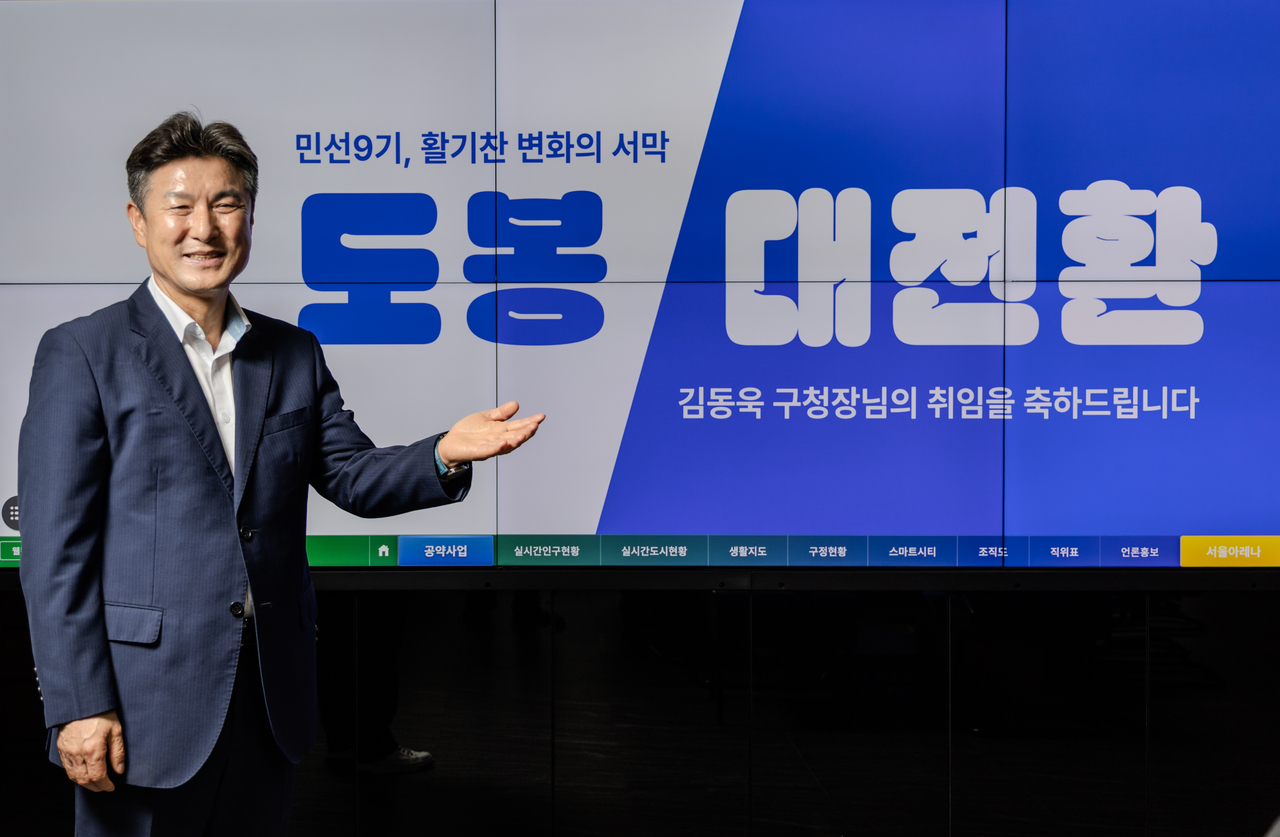
— The opening of Seoul Arena next year is seen as a pivotal moment that could redraw Dobong's economic map. How do you plan to channel the arena's energy into sales and foot traffic for the local commercial district?
▶ The opening of Seoul Arena next year is an important opportunity to breathe new life into Dobong's local economy. After it opens, about 2.7 million visitors are expected to come to Changdong annually. But visitor numbers are not what matters most. What matters is making sure people who come to Dobong for performances stay longer, spend money, and let that energy flow into the local commercial district, accommodation and tourism. We plan to hold merchant-led festivals and discount events timed to performance schedules, and to link those with a Changdong K-food specialty street and a nighttime economy revitalization project. To that end, a "Changdong Economic Engine Task Force" led by the deputy district mayor is already coordinating preparations across culture, commerce and transportation. Accommodation and tourism infrastructure must also be in place for visitors to stay longer. In the short term we will make use of existing lodging facilities and expand registrations for urban homestay businesses — including D-HOME (Dobong Homestay) — to broaden accommodation options. Next December, a large-scale K-culture festival called "Phenomenon," billed as Korea's answer to Coachella, is scheduled to be held at Seoul Arena and Goyang Kintex. The event will combine K-pop performances, a global fandom awards ceremony, and K-culture exhibitions and experiences. Combined across both venues, it is projected to draw 520,000 visitors and generate an economic impact of around 1 trillion won ($724 million). We will not be satisfied with simply drawing large crowds — we will make sure those visits translate into a more vibrant commercial district and stronger accommodation and tourism in Changdong.
— Beyond the economy, transportation and development projects, what new policies unique to the ninth term will residents feel directly in welfare and education?
▶ If Seoul Arena and the transportation and development projects are about changing Dobong's future, welfare and education are about changing residents' present. In the ninth term, alongside the city's big transformations, we will also create changes that residents can feel immediately in their daily lives. A prime example is "Dobong Smart Care 3.0," through which we plan to close every gap in the care safety net. The core is building a system that uses AI and the Internet of Things to monitor warning signs and, when a crisis occurs, quickly dispatches on-site checks and the necessary care services. This will not be a cold smart-care system where technology replaces people — it will be one where technology spots danger first and people then go out to provide care in person. We will also put special emphasis on education. I am told that in one apartment complex in the district, families move away to Nowon and other areas when their children reach the fourth or fifth grade of elementary school because there is no middle school nearby. I have pledged to be an "education district mayor," so I will work to expand children's potential and ensure no child is left behind in learning. In the ninth term we will launch new education initiatives while also updating existing ones to keep pace with a changing educational environment and students' needs. We will particularly strengthen career and vocational experience programs so students can explore a wide range of jobs and workplaces firsthand and discover their own aptitudes and possibilities. Working through the Career and Vocational Experience Support Center, we will also deepen existing programs to broaden the scope of career exploration. School support funds will be concentrated on investments that genuinely strengthen educational quality, rather than being distributed as token handouts.
ikson@heraldcorp.com