GTX-D Y and E lines sought in 5th National Railway Network Plan
Land Ministry to announce plan by November
Incheon National University medical school, public healthcare also pressed
Kim: 'Incheon must not be left out of national policy'
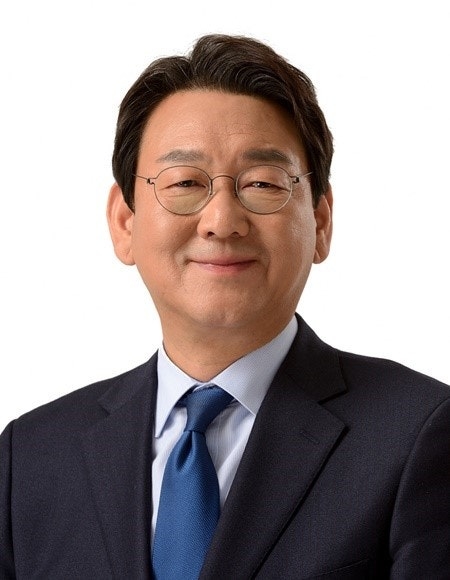
Rep. Kim Kyo-heung of the Democratic Party of Korea raised a series of pressing Incheon issues at a National Assembly budget committee hearing Wednesday, calling on the government to take decisive action on expanding the metropolitan rail network, establishing a medical school at Incheon National University and closing the city's coal stockpile depot.
Kim questioned Minister of Land, Infrastructure and Transport Kim Yun-deok and Minister of Health and Welfare Jeong Eun-kyeong at the budget and accounts special committee's economic ministry session, pressing both on Incheon's transportation and healthcare infrastructure.
Kim opened by highlighting the transportation burden facing residents in the northwestern metropolitan area. "Residents of Incheon and northwestern Gyeonggi Province spend hours commuting to and from Seoul each day," he said, adding that Incheon International Airport — used by more than 100 million passengers a year — remains heavily dependent on the airport rail link.
He called for the GTX-D Y and E lines and an extension of the Daejang-Hongdae line to Cheongna to be included in the government's forthcoming Fifth National Railway Network Construction Plan.
Kim said easing the metropolitan area's transportation congestion was not simply a local grievance but a matter affecting the daily lives and economic activity of the entire Greater Seoul region, and urged the government and fiscal authorities to engage in active consultations.
Land Minister Kim Yun-deok said the ministry shared concerns about transportation conditions in the metropolitan area and that the Fifth National Railway Network Construction Plan was on track to be announced by November, pledging efforts to improve mobility for residents.
Kim also raised the issue of Incheon's weak public healthcare foundation.
According to Kim, Incheon records a relatively high rate of so-called "preventable deaths" — fatalities from conditions that are treatable — while public medical institutions and public hospital beds remain comparatively scarce.
He also noted that emergency patients from outlying islands, including the five West Sea islands, face significant delays in being transferred to major hospitals on the mainland, raising the risk of missing the critical treatment window.
"Incheon's public healthcare infrastructure is not adequate given the city's population size and its standing as an international city," Kim said. "The reality of healthcare in Incheon should not be judged simply on the grounds that it has private university medical schools and large hospitals."
He argued that as a city with a world-class airport and seaport, Incheon needs a stronger public healthcare system capable of handling infectious disease response and essential medical services.
The establishment of a medical school at Incheon National University emerged as a central issue in that context. Kim said Incheon National University stood out as a prime example of a regional national university hub that effectively lacks a medical school, and called for active consideration of setting one up there.
He also proposed that by making use of the university's former campus site and Incheon Medical Center, a medical school and affiliated training hospital system could be built without securing a large new site or committing enormous construction costs.
Health Minister Jeong said she agreed that public healthcare plays a vital role not only in responding to crises such as infectious diseases and disasters but also in delivering essential medical services, and said the ministry would review the question of establishing a medical school at Incheon National University and consult with Incheon city.
Kim also raised the issue of the Incheon coal stockpile depot, calling on the government to actively develop a plan for closing the facility and repurposing the site, and urging fire prevention measures for large-scale logistics facilities.
"Incheon is the gateway to the metropolitan area and a strategically vital city with an airport and seaport," Kim said. "The government must make responsible decisions so that Incheon residents no longer suffer policy neglect and exclusion in transportation, healthcare and industrial infrastructure."
gilbert@heraldcorp.com